
Community find
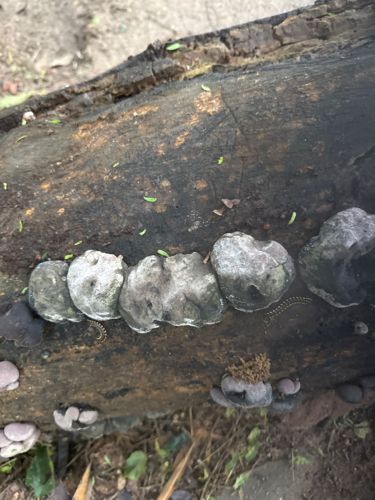
False Tinder Fungus
Phellinus igniarius
- Group
- Polypore
- Season
- Found year-round, as these perennial polypores can persist for multiple years on their substrate.
- Habitat
- Growing on a decaying log, indicating a preference for dead wood as a substrate. Likely found in wooded areas, forests, or anywhere dead hardwood or softwood logs are present.
- Key characteristics
- The fungus appears as bracket-like or hoof-shaped growths on the side of the decaying log. The surface of these fruiting bodies is greyish to whitish, somewhat rough or bumpy, and they seem to have concentric growth rings. The underside (pore surface) is not clearly visible but typical for polypores, it would consist of a dense layer of pores.
- Look-alikes
- Clypeus artemisiae (Artist's Conk) or other Phellinus species. Distinguishing features often involve examining the pore surface, context color, and spore characteristics, which are not visible in this image.
- Ecological role
- This fungus is saprophytic, meaning it derives nutrients from decaying organic matter, in this case, dead wood. It plays a crucial role in the decomposition of wood, returning nutrients to the ecosystem and helping to clear fallen timber.