Community find
Gem-studded Puffball
Lycoperdon perlatum
- Group
- puffball
- Spore print
- Olive-brown
- Size
- 2-6 cm diameter at the top, 3-10 cm height.
- Season
- Summer to late autumn, often appearing after heavy rain.
- Habitat
- Grows on the ground in a variety of habitats including forests, grassy clearings, and along roadsides; can grow in soil or among leaf litter.
- Distribution
- Cosmopolitan distribution; found throughout North America, Europe, Asia, and other temperate regions.
- Key characteristics
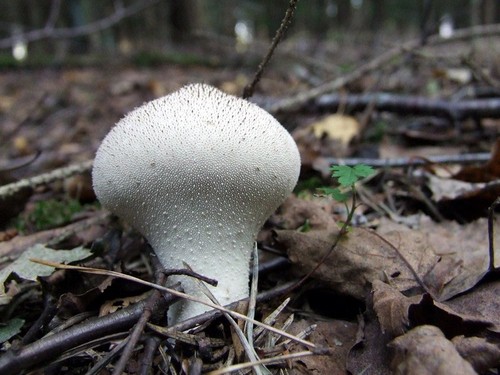
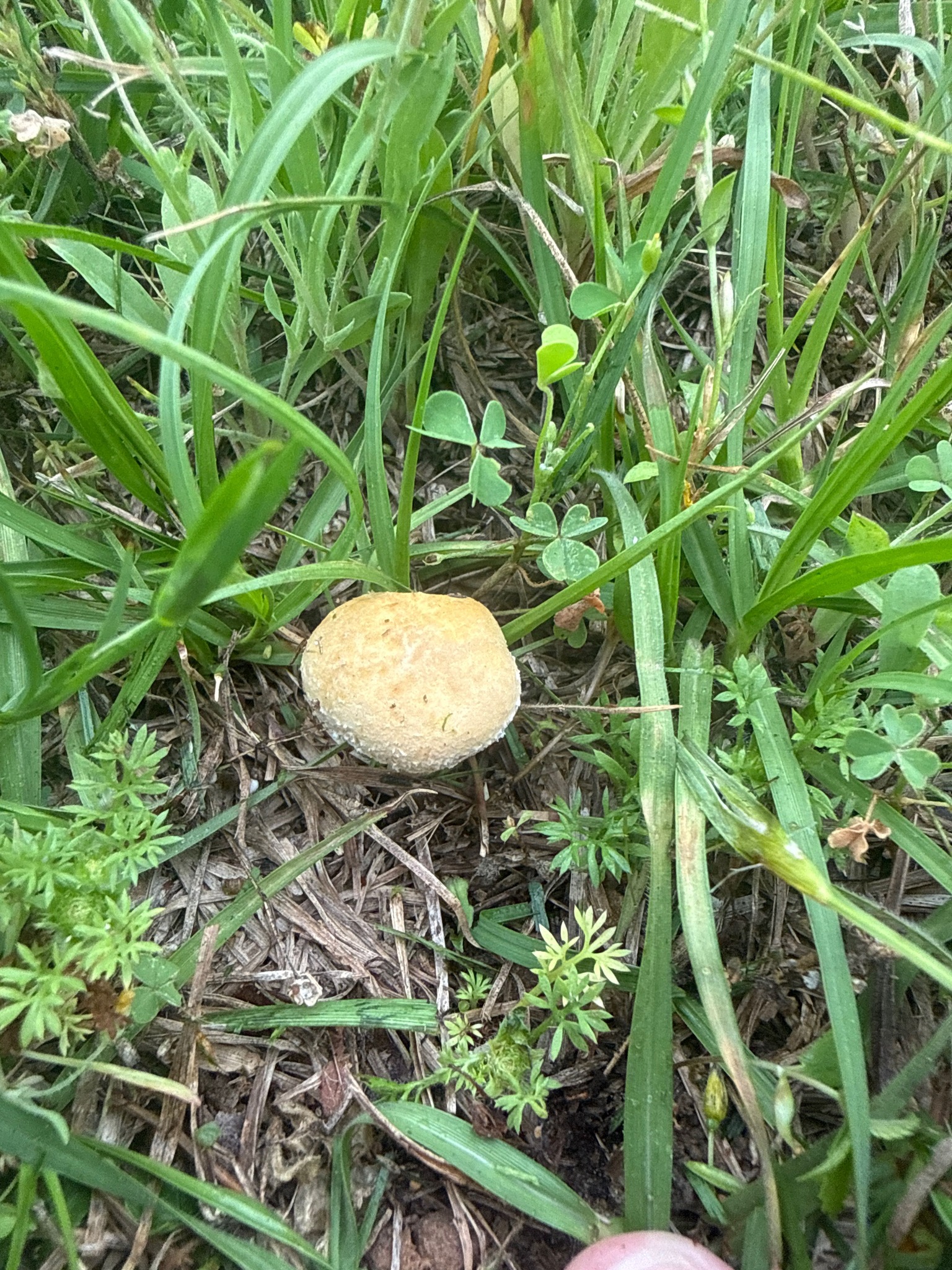
- Globose to pear-shaped fruiting body covered in short, cone-shaped spines or warts that leave a net-like pattern when they fall off.
- Fruiting body
- The fruiting body is 2 to 6 cm wide and 3 to 10 cm tall, often with a distinct 'stem' or sterile base. The outer surface (exoperidium) is white to cream and covered in small spines. The interior (gleba) starts white and firm, turning into a powdery olive-brown mass of spores as it matures. An apical pore at the top releases spores.
- How to recognise it
- Look for the characteristic 'pearls' or spines on the surface. If you rub your thumb over the surface, the larger spines should fall off easily, leaving a characteristic reticulate pattern behind.
- Look-alikes
- Lycoperdon pyriforme (grows on wood, not soil) and Calvatia species (larger, often lack the distinct 'pearl' spines).
- Ecological role
- Saprophytic, breaking down organic matter in the soil and leaf litter.
- Notes
- When mature, the fruiting body functions like an organic bellows; raindrops hitting the surface compression the internal air, forcing puffs of spores out through the central hole to be carried by the wind.