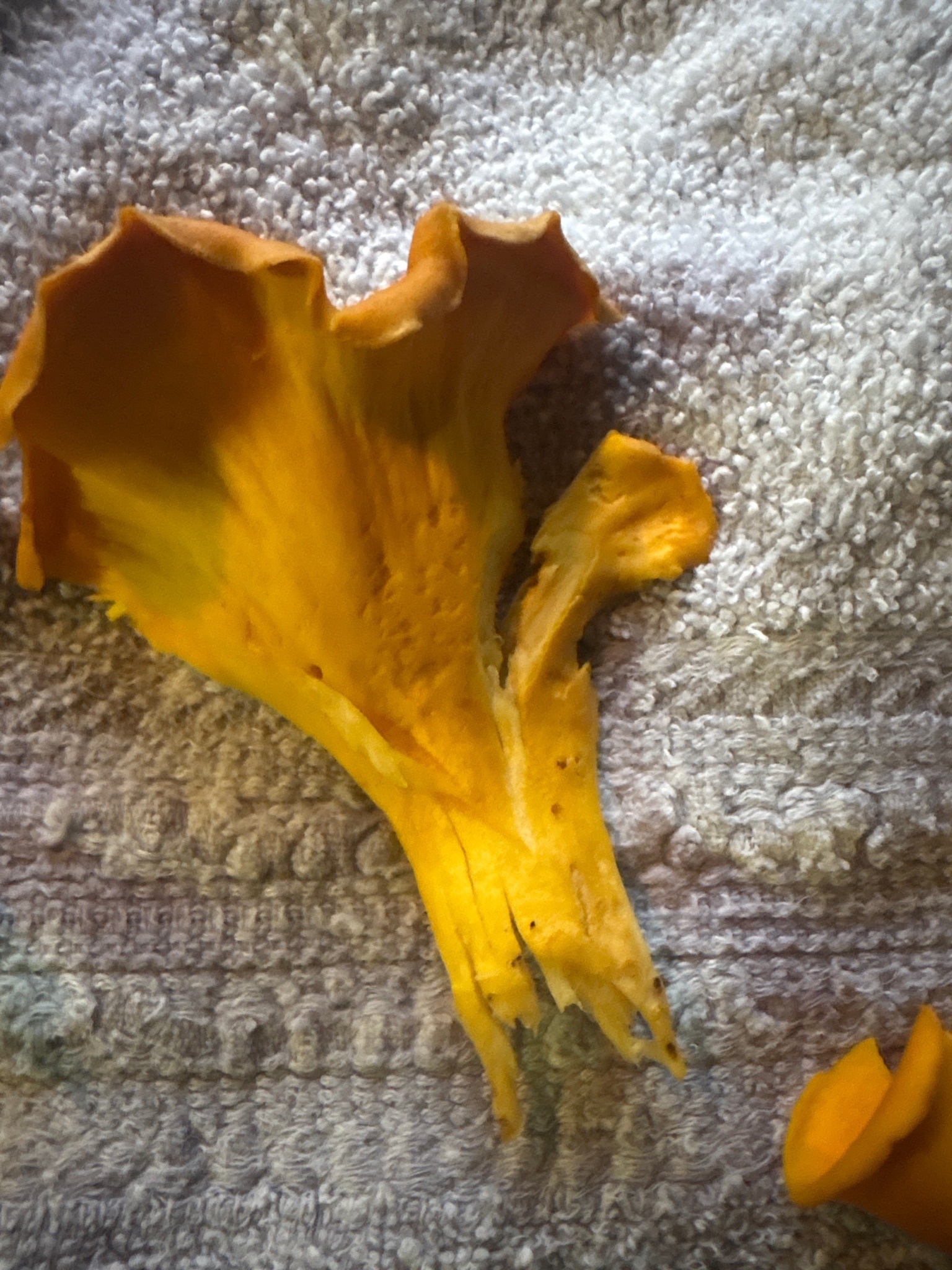
Community find
Golden Chanterelle
Cantharellus cibarius
- Group
- Chanterelle / Cantharelloid
- Spore print
- Pale yellow, cream-colored, or white.
- Size
- Cap diameter: 3-10 cm; Stipe length: 3-8 cm; Stipe thickness: 1-2 cm.
- Season
- Summer to early autumn, especially after heavy rains.
- Habitat
- Grows on soil, typically near hardwood trees (like oak and beech) or conifers (like pine and spruce) with which it forms mycorrhizal relationships.
- Distribution
- Widespread across North America, Europe, and parts of Asia.
- Key characteristics
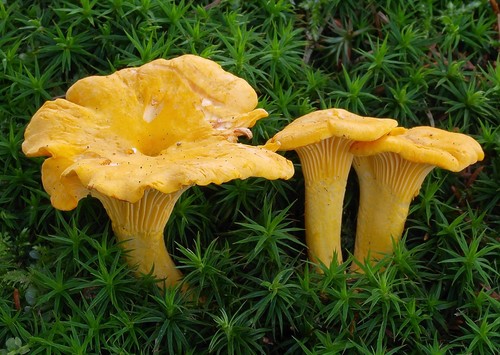
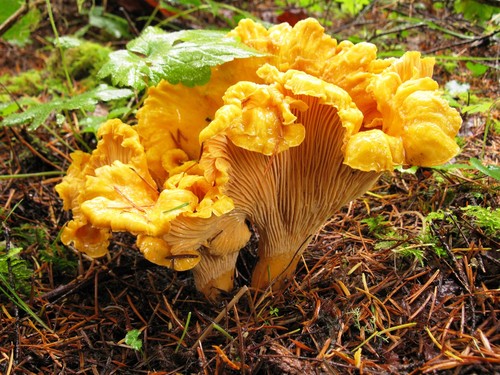
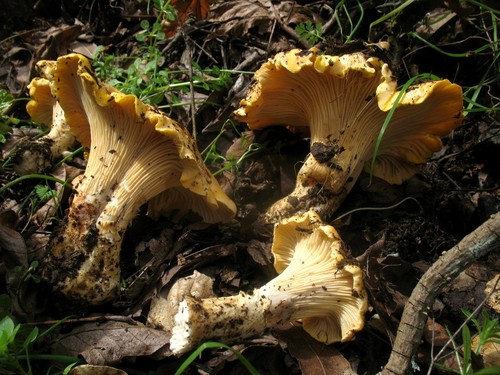
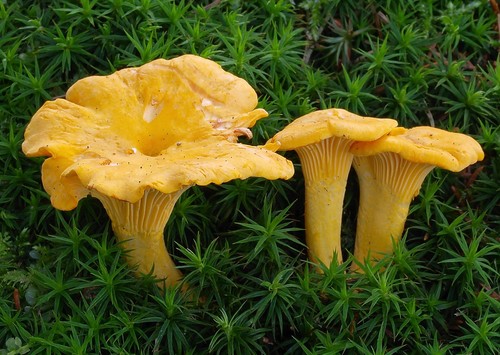
- Vibrant egg-yolk yellow to orange-yellow color, funnel or trumpet shape, wavy and irregular cap margins, blunt ridge-like false gills that run down the stem.
- Fruiting body
- Cap is convex when young, expanding and flattening into a funnel shape with wavy or lobed margins. Underneath are blunt, fork-branched ridges (false gills) that extend down the stipe (decurrent). Stipe is solid, pale yellow to golden, tapering towards the base.
- How to recognise it
- Check for blunt, shallow, ridge-like folds instead of blade-like true gills. The flesh inside is pale/white, and the mushroom emits a pleasant fruity, apricot-like scent.
- Look-alikes
- Hygrophoropsis aurantiaca (False Chanterelle) which features true, sharp, blade-like gills that fork repeatedly; Omphalotus olearius (Jack-o'-Lantern mushroom) which grows in dense clusters on wood with true, sharp gills.
- Ecological role
- Mycorrhizal fungus forming mutually beneficial symbiotic relationships with host tree roots.
- Notes
- Chanterelles cannot be easily cultivated artificially because of their complex mycorrhizal relationship with living trees, relying on forest ecosystems to grow.