Community find
Golden Chanterelle
Cantharellus cibarius
- Group
- Chanterelle / Ridged Fungus
- Spore print
- Pale yellow to cream-white.
- Size
- Cap diameter: 3-10 cm; Stipe length: 3-8 cm; Stipe thickness: 1-2 cm.
- Season
- Late spring through early autumn, typically abundant after heavy rains during warm weather.
- Habitat
- Grows on the ground (terrestrial) in hardwood and coniferous forests, often associated with oaks, beeches, pines, and firs in mossy or leaf-littered soil.
- Distribution
- Widespread across temperate regions of North America, Europe, Asia, and parts of Africa.
- Key characteristics
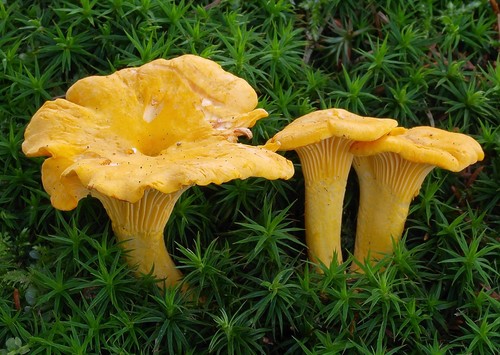
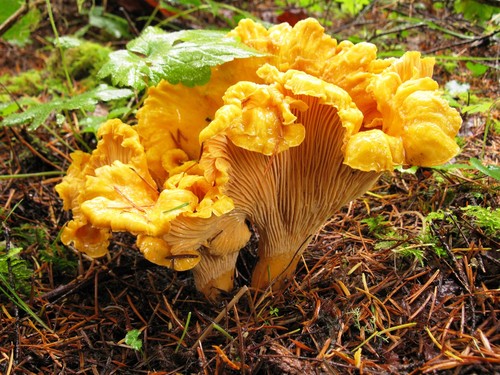
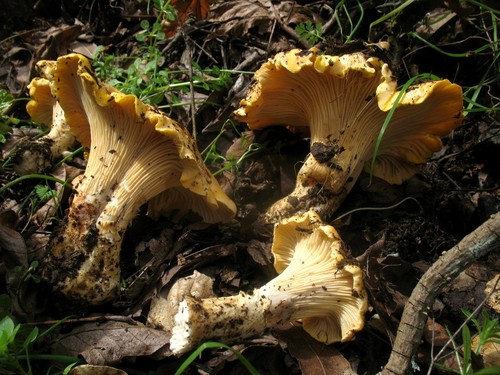
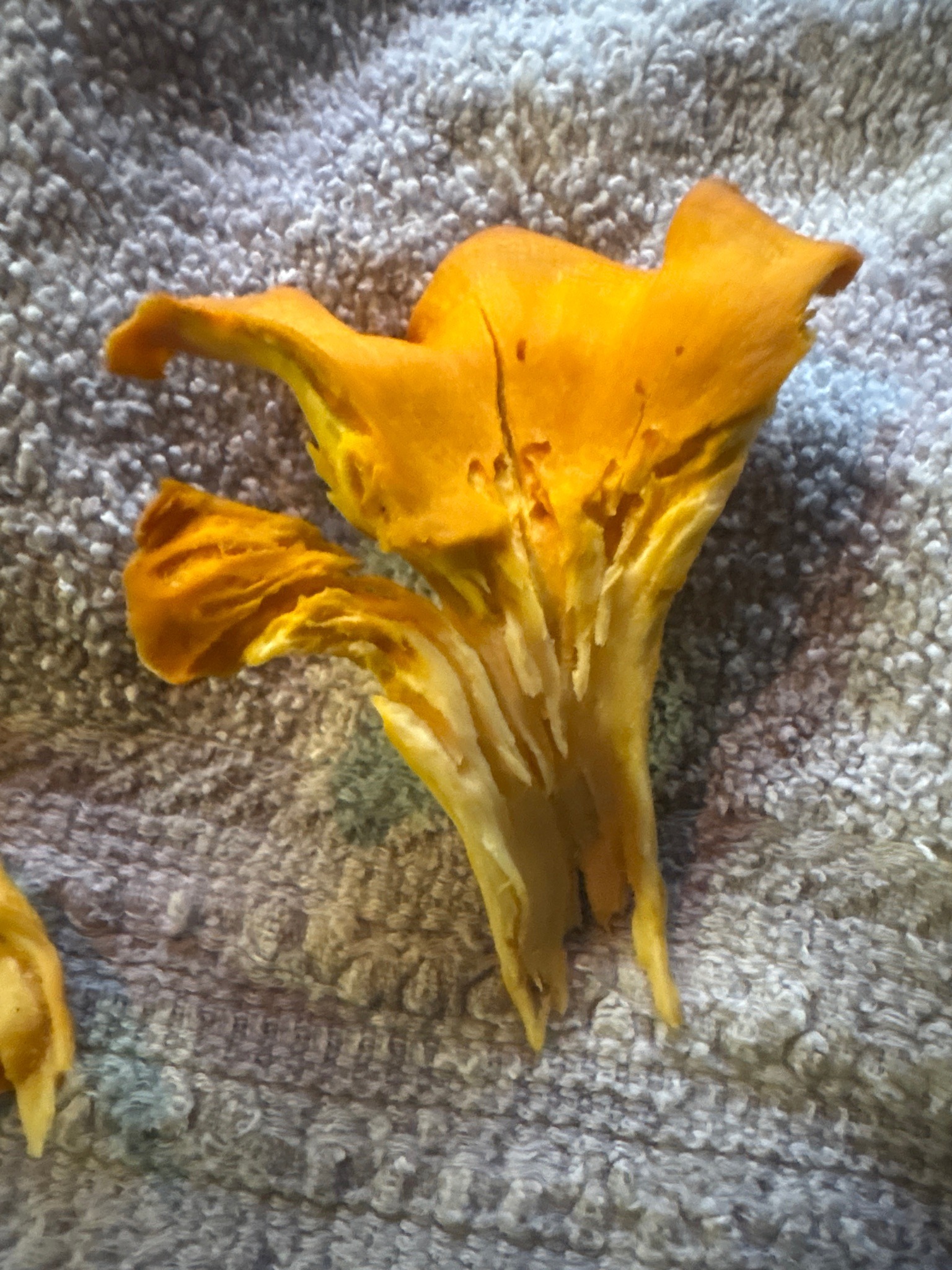
- Vibrant egg-yolk yellow to golden-orange color, solid fibrous stem with interior flesh that peels like string cheese, wavy funnel-shaped cap, and decurrent, fork-like blunt ridges instead of true sharp gills.
- Fruiting body
- Cap is convex when young, becoming funnel- or trumpet-shaped with age, with undulating, wavy margins. The underside features vein-like false gills (ridges or folds) that run downward along the upper part of the stem (decurrent). Stem is solid, smooth, tapers slightly towards the base, and is continuous with the cap.
- How to recognise it
- Look for false gills consisting of blunt, cross-veined ridges running down the stem, solid white-to-pale interior flesh when split vertically, and growth out of the soil rather than directly on decaying wood.
- Look-alikes
- Omphalotus olearius (Jack-o'-Lantern mushroom) which grows in dense clusters directly on wood and features true, sharp, non-forking gills; Hygrophoropsis aurantiaca (False Chanterelle) which grows on decaying wood or woodchips with true, crowded, orange gills.
- Ecological role
- Mycorrhizal fungus that forms symbiotic relationships with the roots of host trees, aiding in nutrient exchange.
- Notes
- Chanterelles produce a compound that gives them a distinct fruity aroma, often compared to apricots or peaches. Because they are mycorrhizal fungi reliant on tree roots, they cannot be cultivated commercially on artificial substrates like standard button mushrooms.