
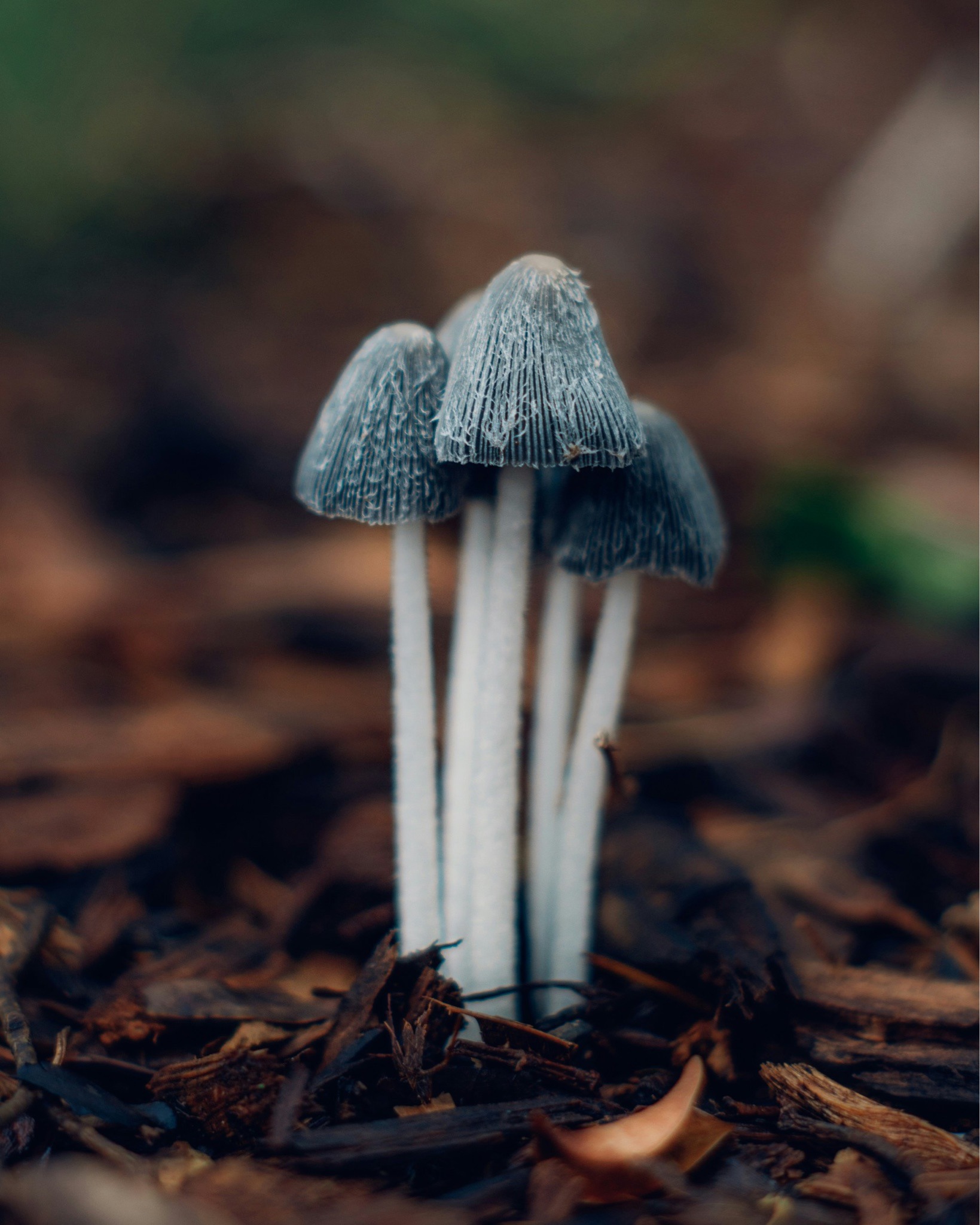
Community find
Hare's Foot Inkcap
Coprinopsis lagopus
- Group
- gilled mushroom
- Spore print
- Black
- Size
- Cap 1-4 cm wide when expanded; stipe 5-10 cm tall and 2-5 mm thick.
- Season
- Typically appears from summer to autumn, often following rain.
- Habitat
- Found growing on wood chips, mulch, rich garden soil, or composted manure.
- Distribution
- Widely distributed throughout the Northern Hemisphere, including Europe and North America.
- Key characteristics
- Grey, conical to bell-shaped cap covered in white, woolly fibrils; slender, fragile white stem; gills start white, turn black, and eventually deliquesce (liquefy).
- Fruiting body
- Cap is initially cylindrical-ellipsoid, becoming bell-shaped and then flattening; surface covered in silver-grey hairs (veil remnants). Hymenophore consists of crowded free gills. Stipe is white, hollow, and very fragile with a slightly hairy surface.
- How to recognise it
- Look for the distinctive 'shaggy' or 'woolly' white veil on the grey cap and the tendency for the gills to turn to black ink quickly. They are extremely short-lived, often dissolving within hours of fully expanding.
- Look-alikes
- Coprinopsis radiata (smaller, grows on dung), Coprinus comatus (much larger and shaggier), Coprinopsis atramentaria (smoother cap).
- Ecological role
- Saprophytic, breaking down organic matter like wood chips and leaf litter.
- Notes
- The species name 'lagopus' means 'rabbit foot' in Greek, referring to the woolly texture of the young cap. This mushroom is a common subject in mycological research because it is easy to grow in laboratory settings and its cell division can be synchronized.