Community find
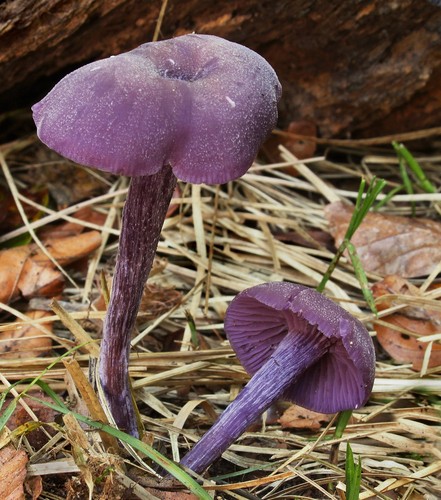
Laccaria species (possibly Laccaria amethysteo-occidentalis or Laccaria bicolor)
Laccaria sp.
- Group
- gilled mushroom
- Spore print
- White to lilac
- Size
- Cap diameter: 1-6 cm; Stipe: 3-10 cm long, 0.3-1 cm thick.
- Season
- Typically fruits from late summer through late autumn, or year-round in milder coastal climates.
- Habitat
- Commonly found growing on soil in mixed forests, particularly under conifers or hardwoods. They are often found in mossy areas.
- Distribution
- Widespread across North America, Europe, and parts of Asia.
- Key characteristics
- Small to medium-sized mushrooms often possessing purple, lilac, or reddish-brown tones. They have thick, widely spaced, waxy-looking gills that are typically adnate to decurrent. The stems are tough, fibrous, and often have colorful mycelium at the base.
- Fruiting body
- The cap is initially convex and becomes flat or depressed with age, often with a wavy margin. The gills are thick, well-spaced, and follow the cap color. The stipe is fibrous, cylindrical, and relatively tough compared to the cap.
- How to recognise it
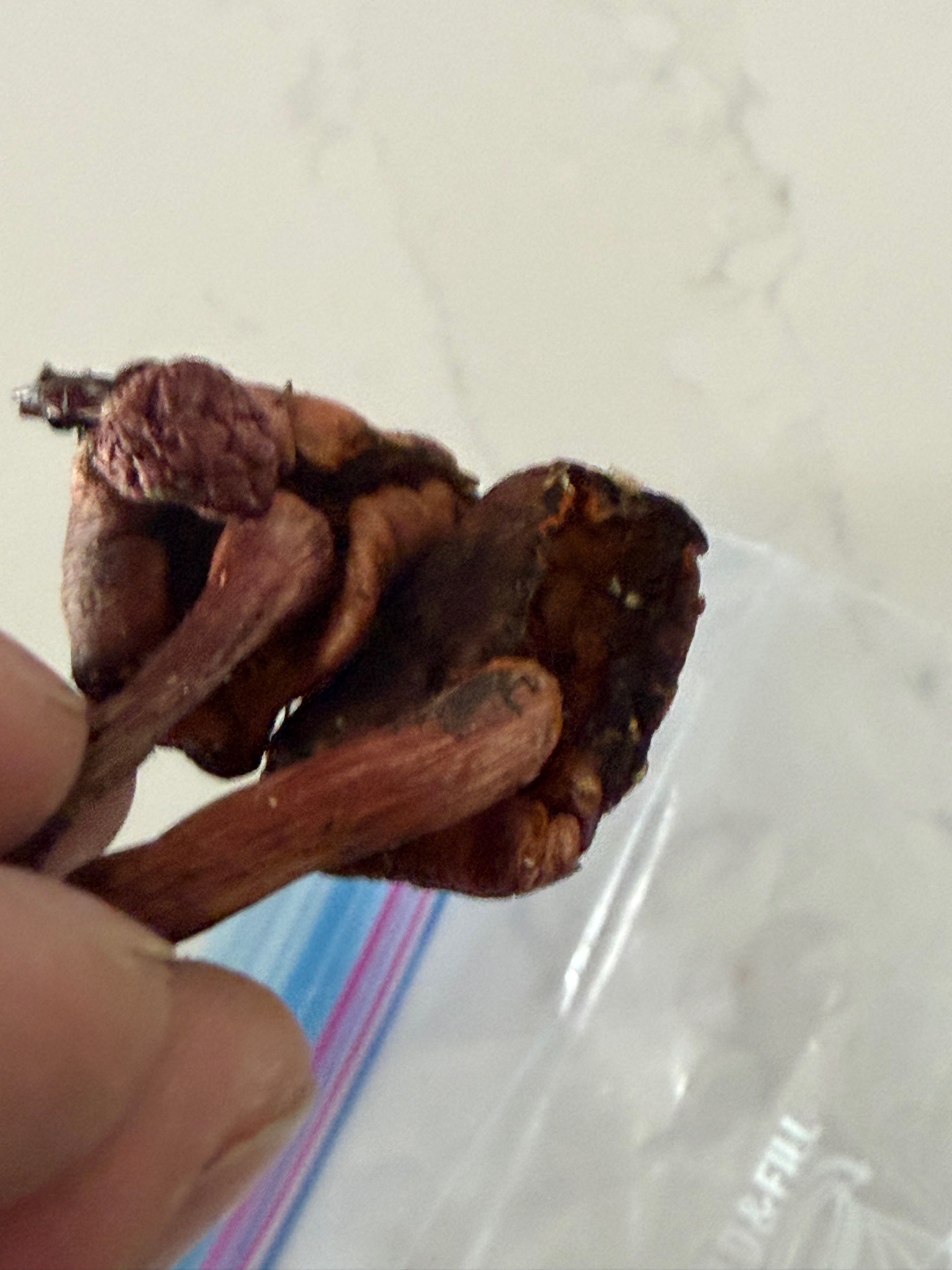
- Look for a fibrous, tough stem and thick, waxy-textured gills. Dehydrated specimens (like in the image) often turn brown or reddish-brown but can sometimes show a base of colorful mycelium.
- Look-alikes
- Gymnopus species (shorter, thinner stems), Cortinarius species (which have a web-like cortina and brown spores), and Mycena species (usually more fragile).
- Ecological role
- Mycorrhizal, forming a symbiotic relationship with the root systems of various tree species.
- Notes
- Laccaria species are known as 'deceivers' because their appearance can change drastically depending on moisture levels—a phenomenon known as being hygrophanous. They are often used in scientific studies regarding mycorrhizal associations.