Community find
Mulch Fieldcap
Agrocybe dura
- Group
- gilled mushroom
- Spore print
- Dark brown to cinnamon-brown.
- Size
- Cap diameter: 3-8 cm; Stipe length: 4-10 cm, width: 0.5-1.2 cm.
- Season
- Spring through autumn, especially after heavy rains in warm weather.
- Habitat
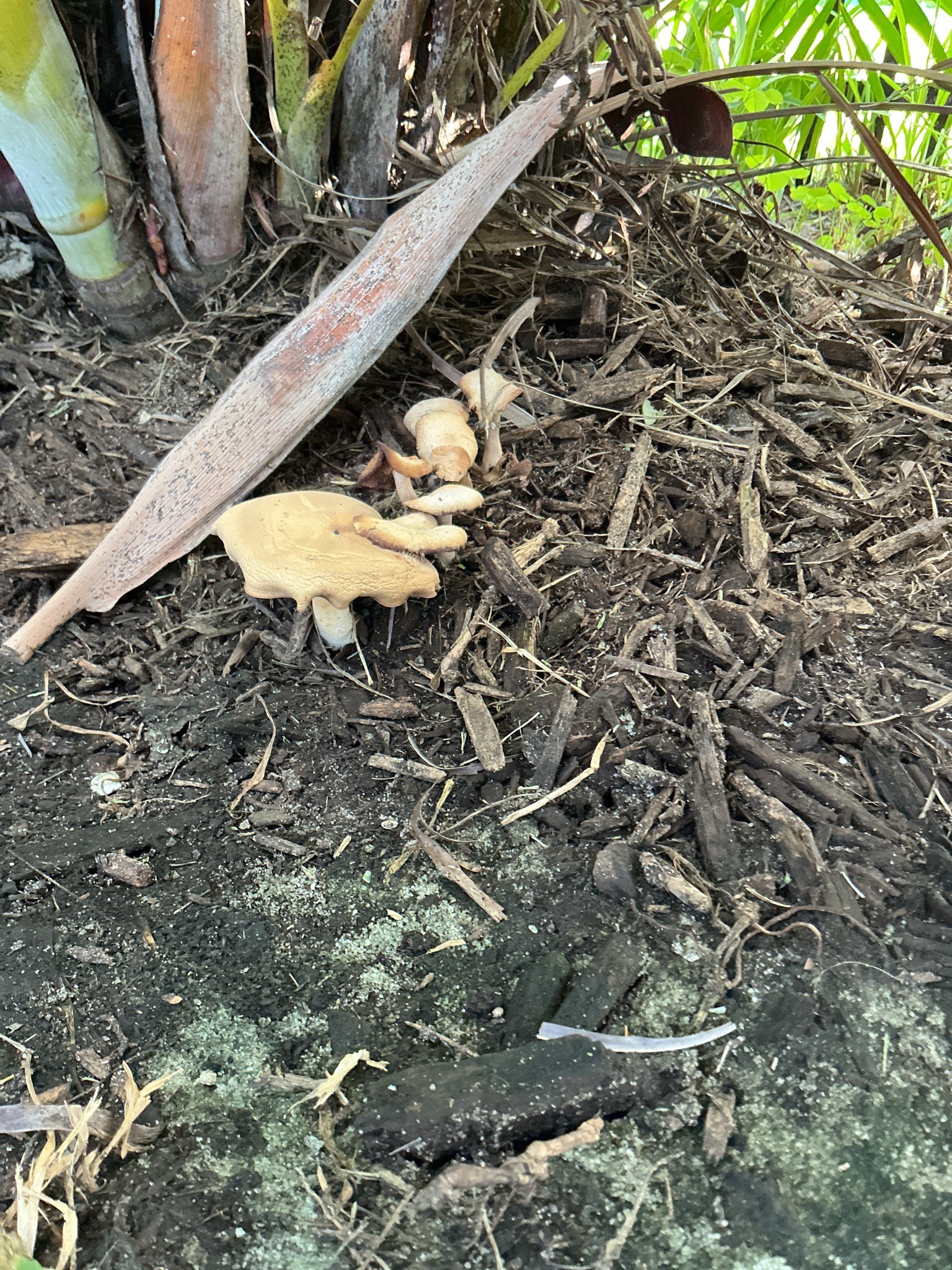
- Grows on wood chips, bark mulch, rich soil, lawns, gardens, and landscaped areas.
- Distribution
- Widespread across North America, Europe, and temperate regions globally.
- Key characteristics
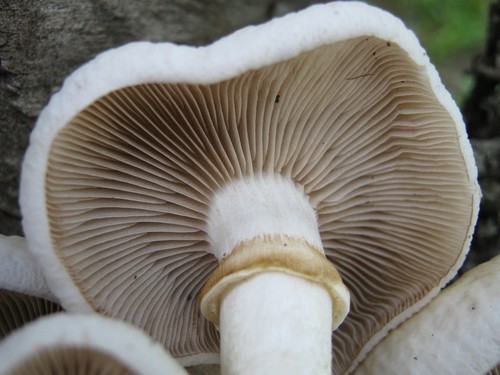
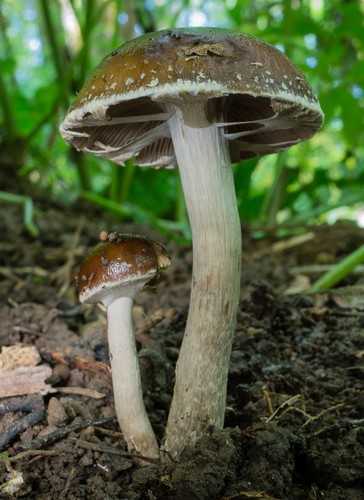
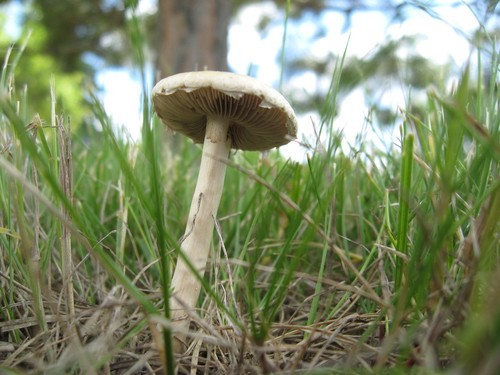
- Creamy yellowish to pale tan-brown convex to flattened cap, smooth surface that may crack in dry weather, pale whitish to brownish attached gills, robust central stem often with a membranous ring.
- Fruiting body
- The cap is 3-8 cm wide, initial convex expanding to broadly convex or flat, pale buff to yellowish-tan, often cracking in dry conditions (areolate). Hymenophore consists of close to crowded gills, initially pale cream becoming cinnamon-brown as spores mature. Stipe is 4-10 cm tall, 0.5-1.2 cm thick, whitish to pale tan, often bearing a delicate ring near the top.
- How to recognise it
- Look for pale tan/buff caps growing directly from wood mulch, a fragile ring on the upper stem, and dark cinnamon-brown spore prints.
- Look-alikes
- Agrocybe praecox (Early Agrocybe) which typically appears earlier in spring, Agrocybe pediades, and various Stropharia species found in mulch.
- Ecological role
- Saprophytic, breaking down woody debris, mulch, and organic matter in soil.
- Notes
- Agrocybe species are among the most common mushrooms to appear in suburban landscaping, urban flower beds, and freshly mulched garden beds due to their efficient decomposition of wood chips.