
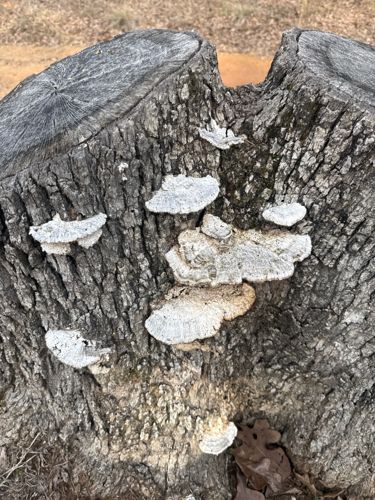
Community find
Oak Bracket / Maze Polypore
Daedalea quercina
- Group
- polypore
- Season
- Perennial, though it produces new spores mainly in the summer and autumn. The fruiting bodies can persist for several years.
- Habitat
- Typically grows on dead wood or stumps of deciduous trees, specifically favoring oak (Quercus species). It is often found in woodlands and parks.
- Key characteristics
- Thick, corky, fan-shaped or semicircular brackets. The upper surface is grayish to ochre-brown, often zoned and finely hairy when young. The underside features a distinctive labyrinth-like or maze-like pore surface (daedaleoid), which is creamy to brownish. It is tough and woody in texture.
- Look-alikes
- Trametes betulina (Gilled Polypore) which has clearer gill-like structures rather than a maze; Daedaleopsis confragosa (Thin-walled Maze Polypore) which has thinner brackets and often turns reddish when bruised.
- Ecological role
- Saprophytic fungus that causes brown rot in the heartwood of hardwood trees, breaking down cellulose and leaving behind lignin which contributes to soil health and forest structure.