Community find
Orange Polypore
Pycnoporus sanguineus
- Group
- polypore
- Spore print
- White
- Size
- Cap 2-10 cm wide, 1-5 cm deep, and 0.2-0.8 cm thick. Stipe is absent or very rudimentary.
- Season
- Year-round in tropical and subtropical climates; summer and fall in temperate regions.
- Habitat
- Grows on dead hardwoods, often in sunny, exposed locations such as fallen logs and sticks.
- Distribution
- Pantropical and subtropical regions, including the Southern United States, Central and South America, Africa, and Asia.
- Key characteristics
- Fan-shaped or semicircular cap, bright orange to cinnabar-red color, leathery texture, pore-bearing underside.
- Fruiting body
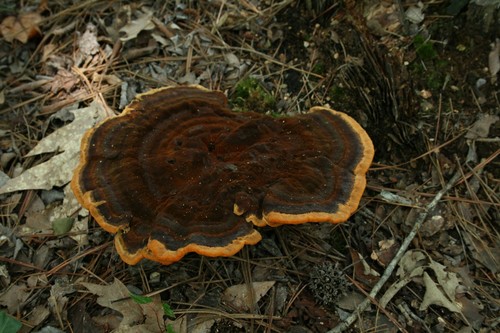
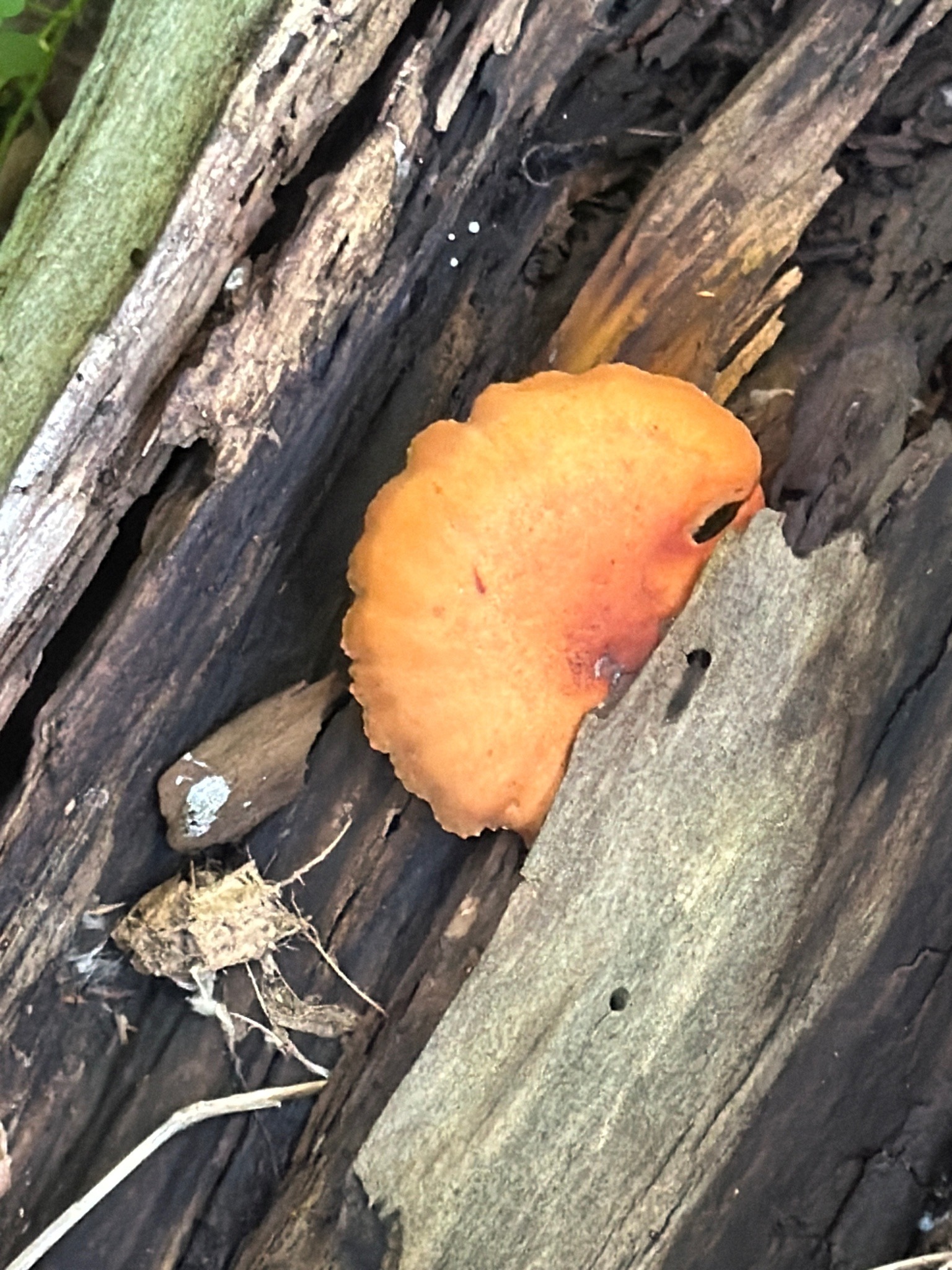
- Cap is sessile, fan-shaped to semicircular, relatively thin and leathery. Surface is finely tomentose to glabrous and bright orange. Hymenophore consists of minute, bright red-orange circular pores.
- How to recognise it
- Note the intense, vibrant orange-red color that persists even when dried, the very fine pores on the underside, and the leathery, flexible texture.
- Look-alikes
- Trametes cinnabarina (typically thicker and found in northern temperate regions) and Trametes coccinea.
- Ecological role
- Saprophytic, causing white rot by breaking down lignin and cellulose in dead wood.
- Notes
- The bright pigments in this fungus are mainly due to cinnabarin, which has been studied for its potential applications in biotechnology and bio-dyes.