Community find
Violet-toothed Polypore
Trichaptum biforme
- Group
- polypore/crust fungus
- Spore print
- White
- Size
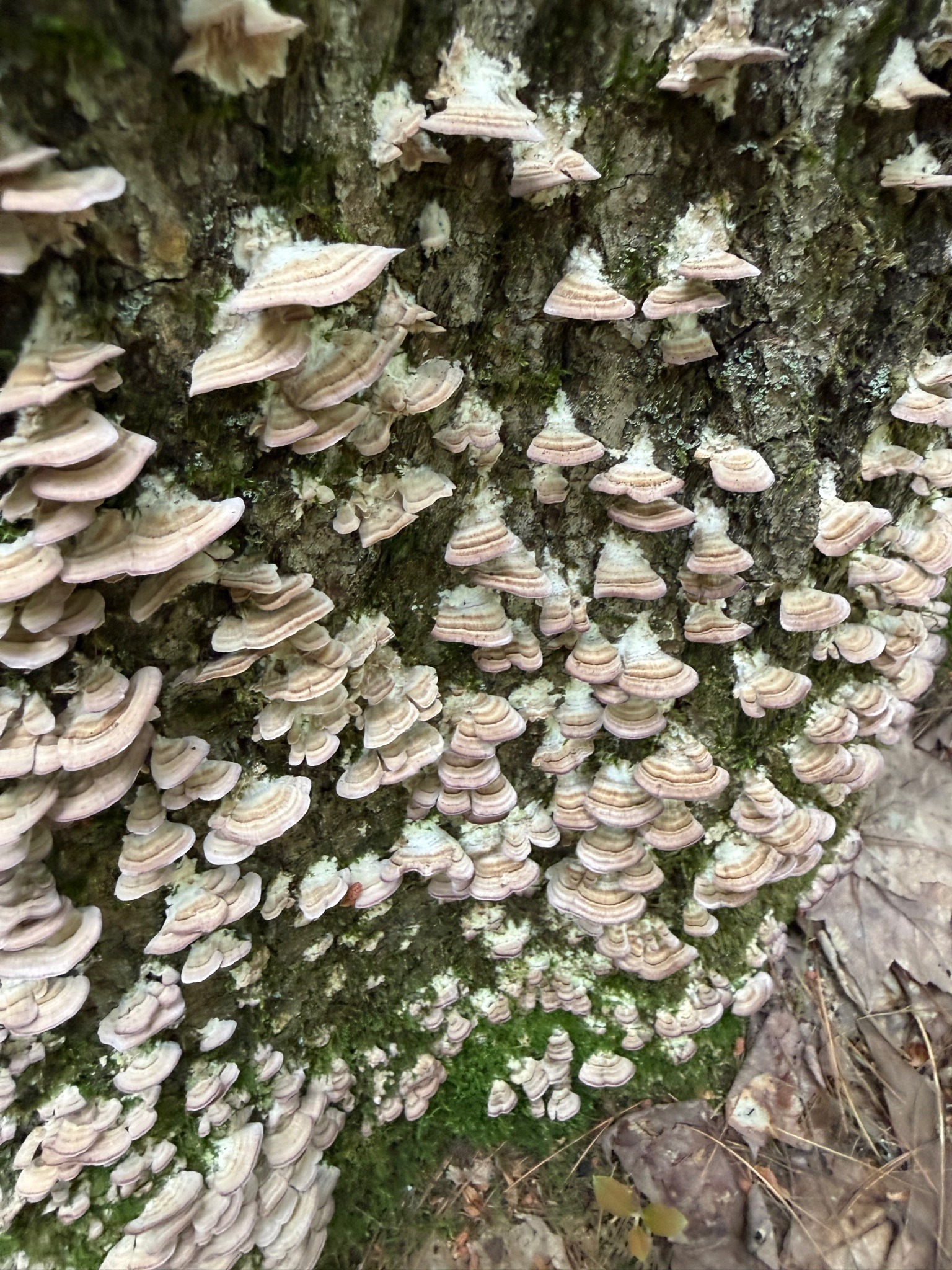
- Individual caps are 1-7 cm wide and 1-3 mm thick; often found in massive tiered colonies covering large sections of logs.
- Season
- Year-round, with active growth in spring, summer, and fall.
- Habitat
- Grows in large, overlapping clusters on the deadwood of deciduous hardwood trees, occasionally on conifers.
- Distribution
- Widely distributed throughout North America, Europe, and Asia.
- Key characteristics
- Zoned, shelf-like caps with a hairy or velvet-like upper surface and a distinct violet-colored pore surface on the underside (fading to brown with age).
- Fruiting body
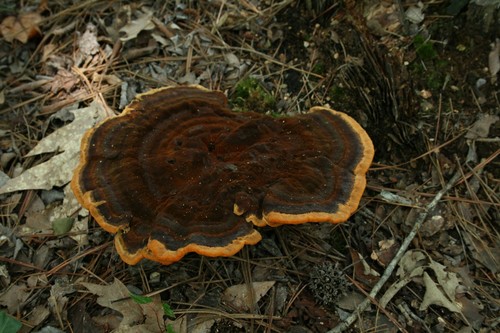
- Caps are fan-shaped, semicircular, and thin. The top surface is greyish-white with concentric zones of color and a lilac margin when young. The fertile surface (undercut) is composed of angular pores that eventually become tooth-like or ragged, typically showing a vibrant violet or purple hue.
- How to recognise it
- Look for the intense violet color on the margin and the pore surface. Note whether the 'pores' have broken down into jagged teeth, which is a key diagnostic feature of the genus Trichaptum.
- Look-alikes
- Trichaptum abietinum (grows on conifers, smaller), Trametes versicolor (Turkey Tail - has real pores and lacks the violet underside color).
- Ecological role
- Saprophytic; it causes white rot in the sapwood of dead or dying hardwood trees.
- Notes
- This fungus is often a host for other fungi and beetles. It is one of the most common bracket fungi found in Eastern North American forests, playing a significant role in nitrogen cycling by decomposing wood.