Community find
Chaga mushroom
Inonotus obliquus
- Group
- polypore
- Spore print
- Brown (rarely observed as spores are produced by the hidden fertile body).
- Size
- Sclerotium typically ranges from 10 to 40 cm in diameter, though it can grow larger.
- Season
- Can be found year-round, but is most visible and accessible in winter when foliage is gone.
- Habitat
- Primarily grows on birch trees (Betula genus), though occasionally found on alder, beech, or oak. It develops on the trunk as a sterile conk.
- Distribution
- Circumboreal distribution, common in the Northern Hemisphere including Russia, Korea, Eastern and Northern Europe, Canada, and Northern USA.
- Key characteristics
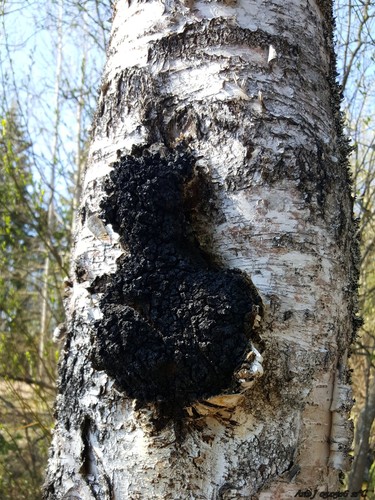
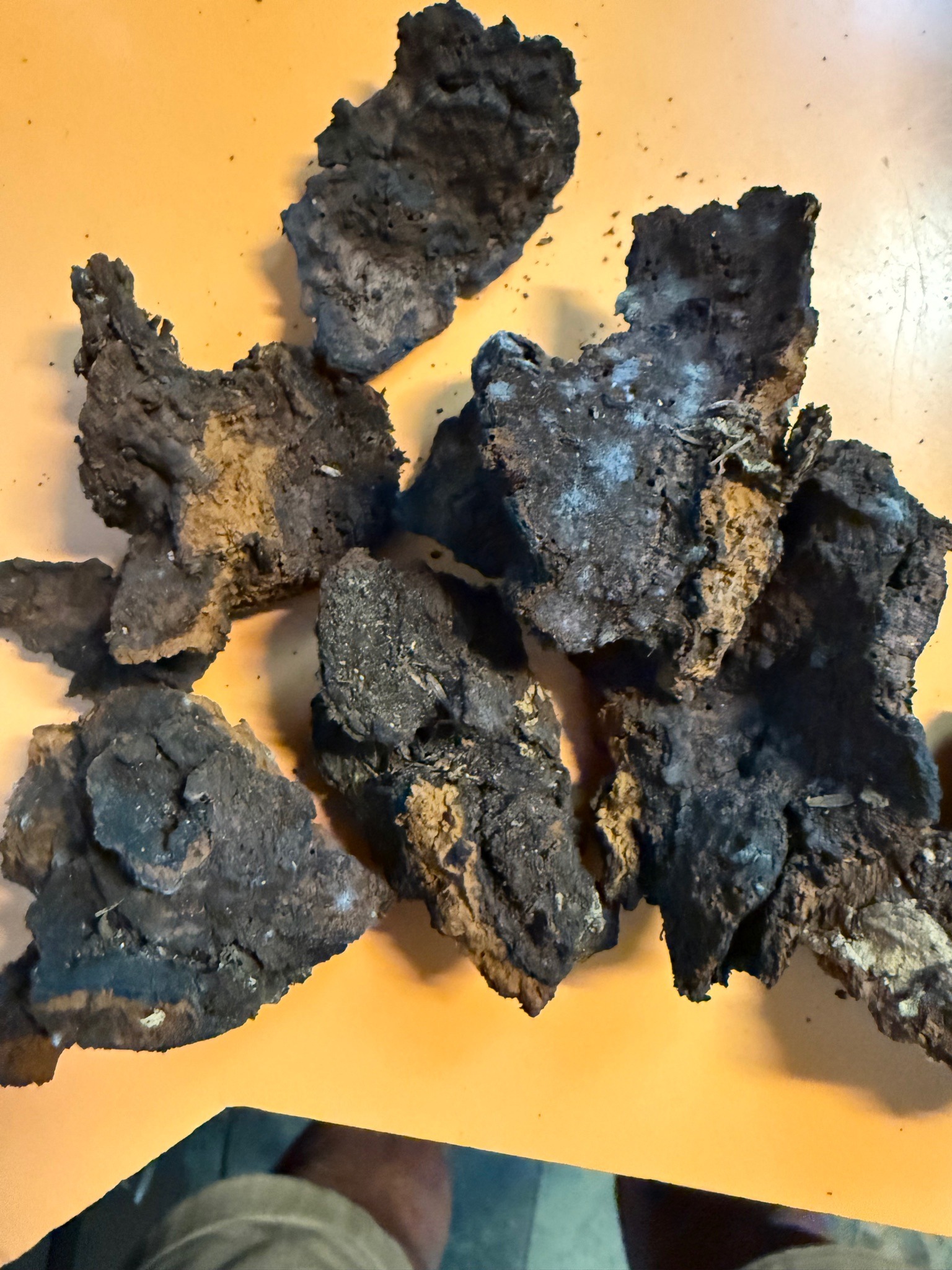
- Rough, blackened, coal-like sclerotium with a bright golden-brown or orange interior. The exterior surface is cracked and resembles burnt charcoal. It is hard and woody in texture.
- Fruiting body
- The visible part is a sterile sclerotium (a mass of mycelium), not the actual fruiting body. It lacks a cap, stem, or gills. The true fertile fruiting body develops under the bark of dead trees and is rarely seen.
- How to recognise it
- Look for a charcoal-black, deeply cracked growth on birch. Break a small piece to confirm the distinct cinnamon or golden-orange interior which contrasts sharply with the black exterior.
- Look-alikes
- Black cherry burl (tree growth), Birch canker, or Phellinus igniarius (False tinder fungus) which has a more distinct shelf-like bracket shape.
- Ecological role
- Parasitic on living trees, eventually causing white rot in the heartwood. It can continue to act as a saprotroph after the host tree dies.
- Notes
- The 'black' exterior is actually an exceptionally high concentration of melanin. It takes many years (typically 10-20) for the sterile conk to reach a large size. In some cultures, it has been used as a natural dye or as tinder for starting fires.