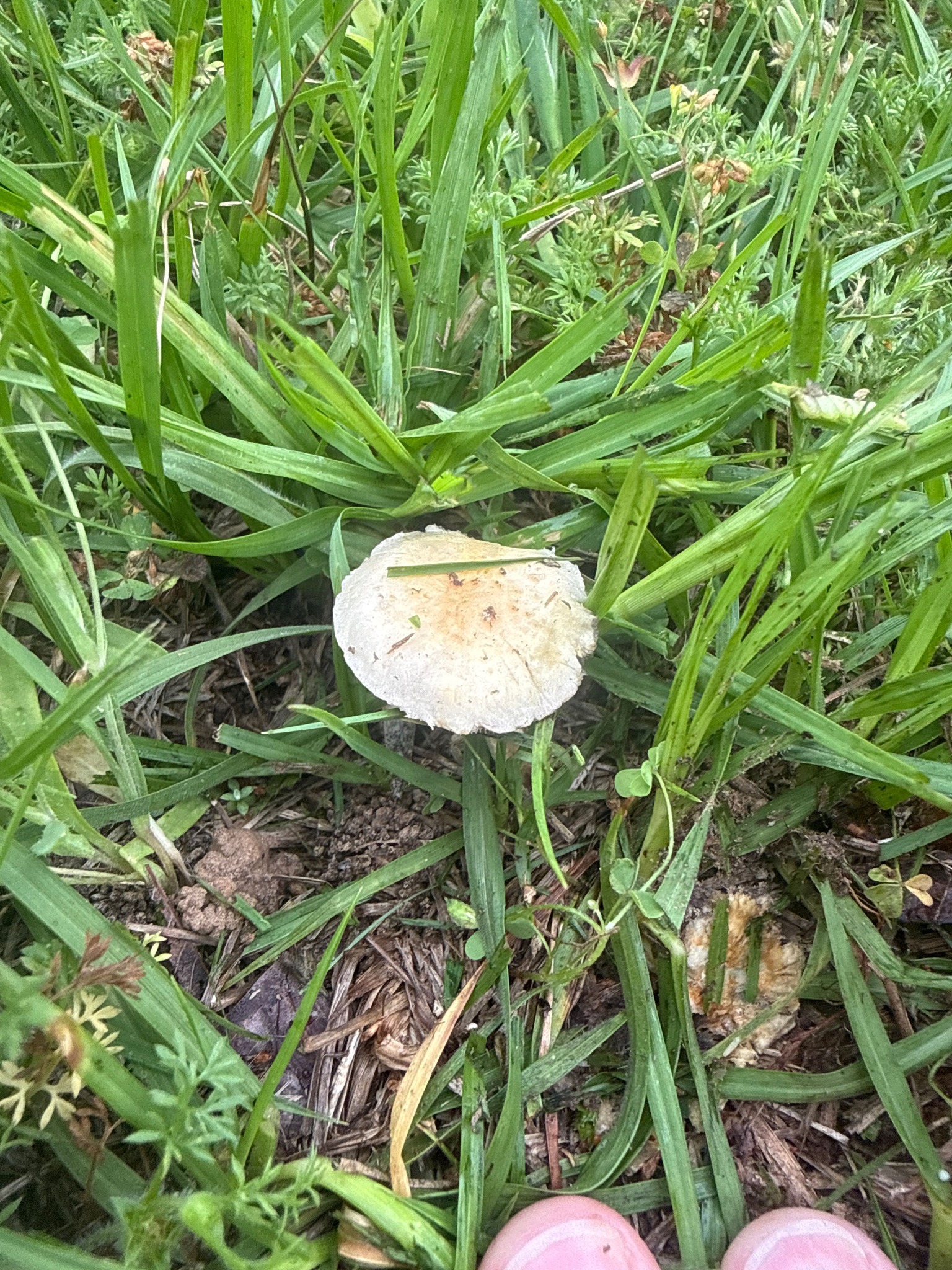
Community find
Death Cap
Amanita phalloides
- Group
- gilled mushroom
- Spore print
- White
- Size
- Cap diameter: 5–15 cm; Stipe length: 8–15 cm, thickness 1–2 cm.
- Season
- Typically appears from late summer to late autumn, especially following periods of heavy rain.
- Habitat
- Found on the ground in association with broadleaf trees, especially oak and beech, though it can occur with some conifers. It prefers woodland edges and landscaped areas.
- Distribution
- Native to Europe, but widely introduced and established in North America, North Africa, and parts of the Southern Hemisphere including Australia and New Zealand.
- Key characteristics
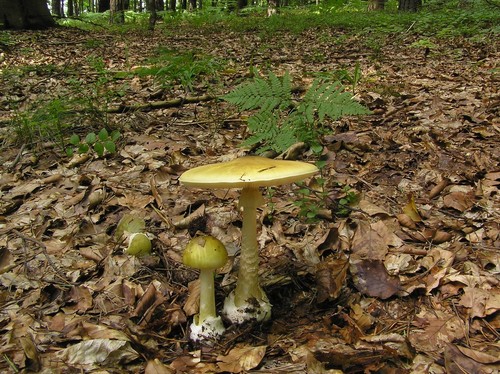
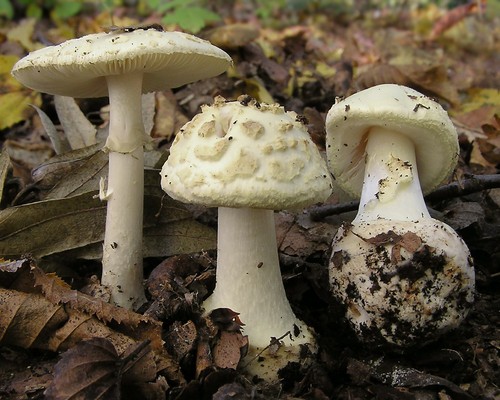
- Convex to flat cap, often with a slight greenish or yellowish tint, becoming paler toward the edge. It features white gills that are free from the stem, a prominent ring (annulus), and a large sack-like base (volva).
- Fruiting body
- Cap is 5–15 cm wide, smooth, sticky when wet, metallic-olive to greenish-yellow. Hymenophore consists of crowded white gills. Stipe is 8–15 cm long, white to pale olive, often with a skirt-like ring and a bulbous base encased in a white membranous volva.
- How to recognise it
- Check for white gills, a ring on the stem, and the presence of a cup-like volva at the very base of the stem (often buried). The cap often has a characteristic feathery, radial fiber texture under a lens.
- Look-alikes
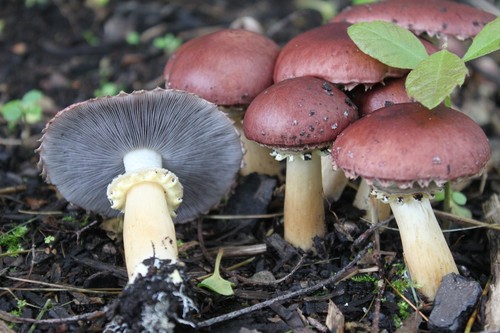
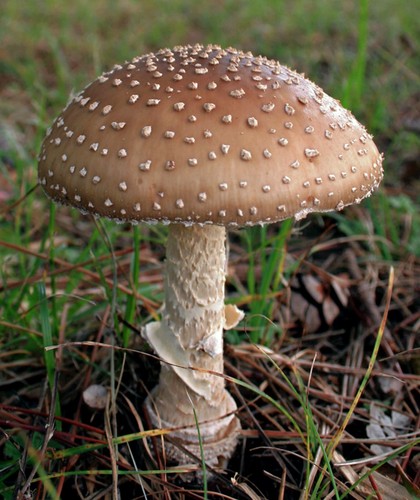
- Amanita bisporigera (Destroying Angel), Amanita citrina (False Death Cap), and some species of Agaricus (which lack a volva and have dark spores) or Volvariella (which lack a ring and have pink spores).
- Ecological role
- Mycorrhizal, forming a symbiotic relationship with the roots of certain trees to exchange nutrients and water.
- Notes
- This species was first described by French botanist Sébastien Vaillant in 1727. It is one of the most studied fungi in the world because of its potent biochemistries, including alpha-amanitin, which inhibits RNA polymerase II.