Community find
Deer Mushroom
Pluteus cervinus
- Group
- gilled mushroom
- Spore print
- Pink to salmon-pink
- Size
- Cap diameter: 5-15 cm; Stipe: 5-12 cm long and 0.5-2 cm thick.
- Season
- Widely found from spring through autumn, specifically after rain.
- Habitat
- Commonly found growing on well-decayed wood, logs, stumps, or sawdust of broadleaf trees, and sometimes conifers.
- Distribution
- Widely distributed throughout North America and Europe.
- Key characteristics
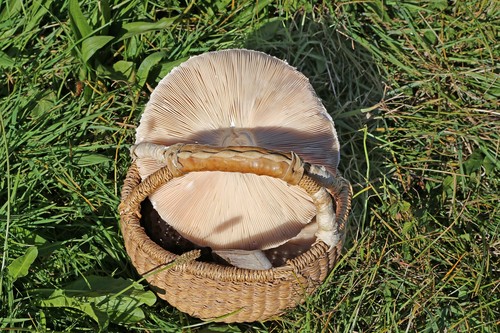
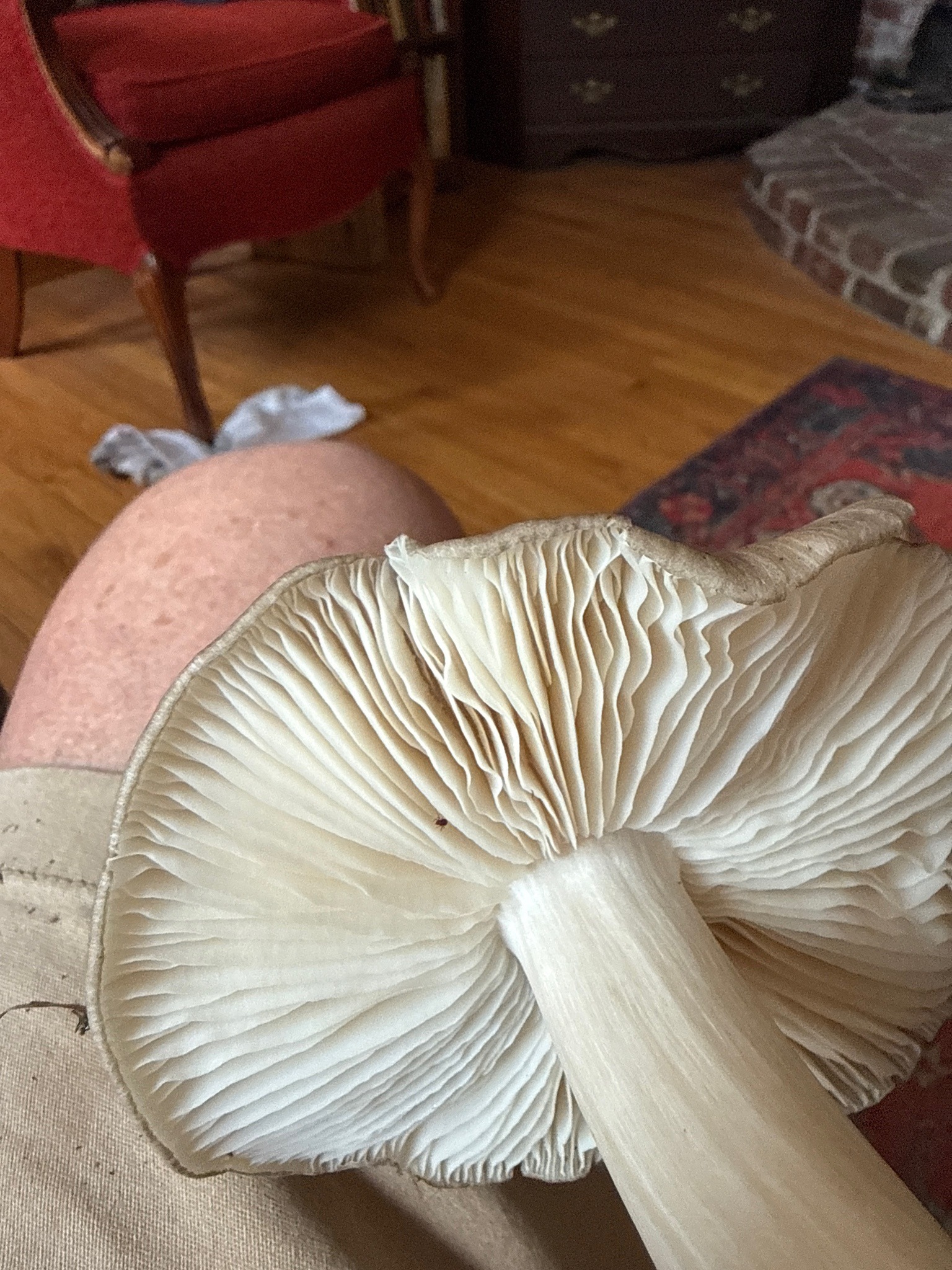
- The cap is usually gray to brown, smooth, and may be slightly wrinkled at the center. The gills are broad, crowded, and free from the stipe. The stipe is white with brownish fibers.
- Fruiting body
- Cap is 5–15 cm wide, convex to flat, sometimes with a slight central bump (umbo); hymenophore consists of white gills that turn pinkish with maturity; stipe is 5–12 cm long, solid, and lacks both a ring and a volva.
- How to recognise it
- Key field features include growing directly on wood, gills that are completely free from the stem, and a pinkish spore print at maturity.
- Look-alikes
- Pluteus petasatus (found on wood chips, paler cap), Pluteus atromarginatus (dark edges on gills), and Megacollybia rodmanii (which has attached gills and a stringy stipe).
- Ecological role
- Saprophytic, playing a key role in breaking down dead wood and recycling nutrients into the soil.
- Notes
- The species name 'cervinus' is Latin for deer-colored, referring to the cap's typical brown hue. Under a microscope, it is famous for possessing 'horn-like' cystidia (sterile cells) on the gill edges.