Community find
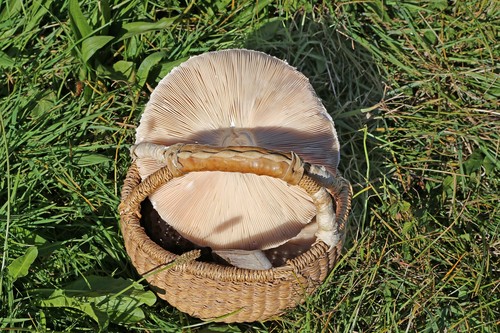
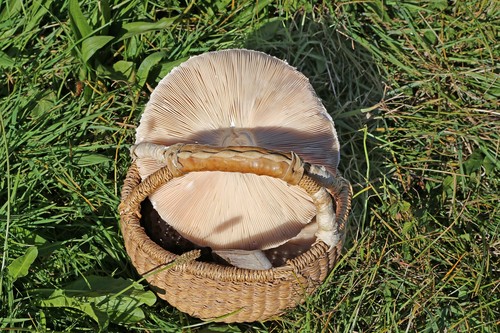
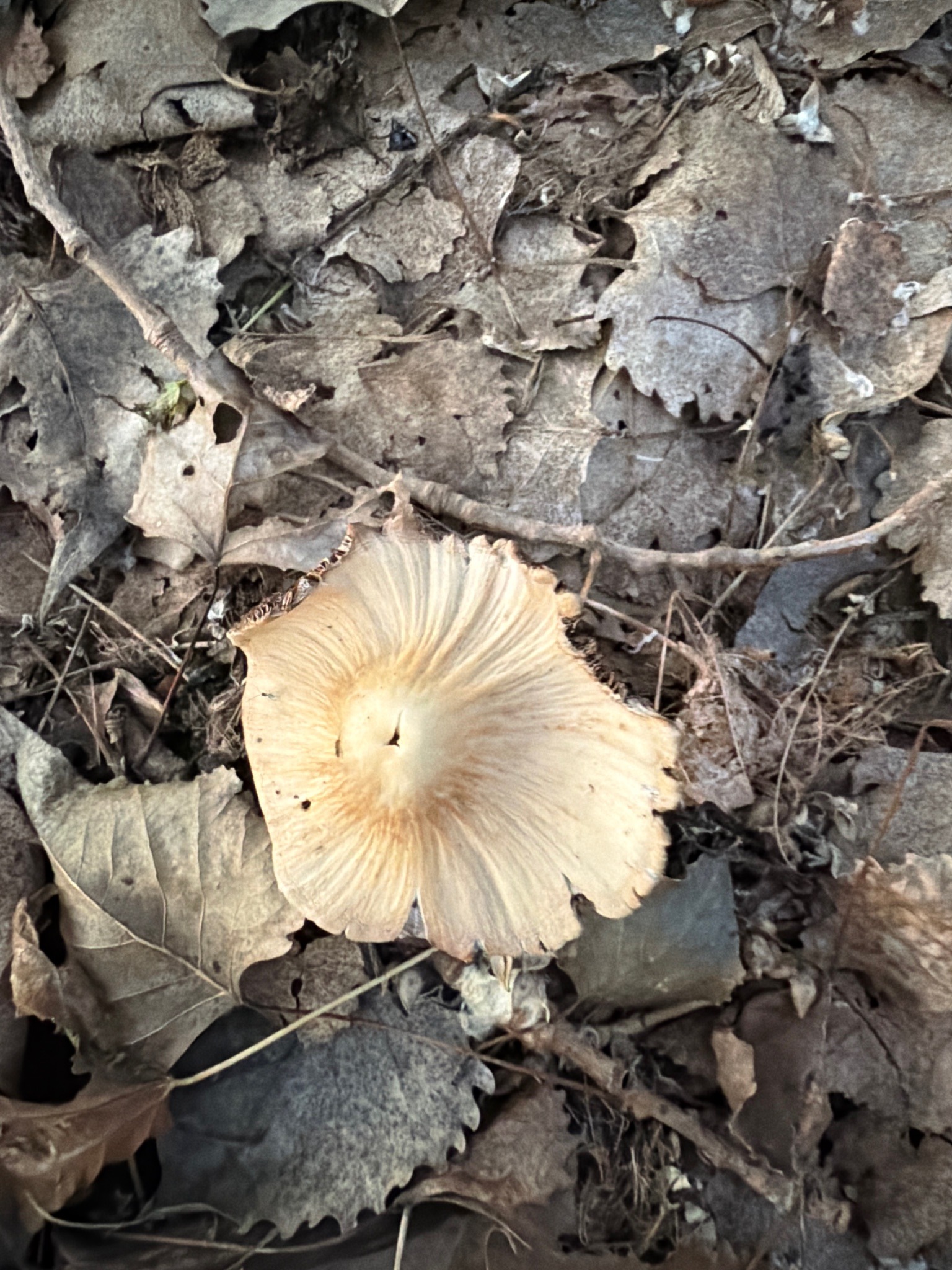
Deer Mushroom
Pluteus cervinus
- Group
- gilled mushroom
- Spore print
- Pink to salmon-pink.
- Size
- Cap 5-12cm wide; stem 5-10cm long and 0.5-1.5cm thick.
- Season
- Widely found from spring through autumn, especially after rain.
- Habitat
- Solitary or scattered on decaying logs, stumps, or buried wood of deciduous trees.
- Distribution
- Cosmopolitan distribution; very common in North America and Europe.
- Key characteristics
- Tan to grayish-brown cap with darker radiating fibrils; gills are crowded and free from the stem; stem is solid, white to dingy, with dark longitudinal fibers near the base.
- Fruiting body
- Cap is convex becoming flat, often with a central bump (umbo), surface is smooth to finely fibrous. Gills are white initially, turning pink as spores mature. The stipe is pale, fibrous, and lacks a ring or volva.
- How to recognise it
- Look for free gills (not touching the stem), a pinkish spore print, and growth occurring directly on wood or wood chips.
- Look-alikes
- Megacollybia rodmanii (broad-gilled mushroom) has attached gills and different spore print; Pluteus petasatus is paler and lacks cap fibrils.
- Ecological role
- Saprophytic; primarily decomposes dead hardwood logs.
- Notes
- The species name 'cervinus' is Latin for 'deer-like,' referring to the cap color. Microscopically, it is known for having distinctive 'horned' cystidia on the gill edges and faces.