Community find
Deer Mushroom
Pluteus cervinus
- Group
- gilled mushroom
- Spore print
- Salmon-pink to brownish-pink.
- Size
- Cap diameter: 5-15 cm; Stipe: 5-13 cm long and 0.5-2 cm thick.
- Season
- Spring through autumn; occasionally in winter during mild climates.
- Habitat
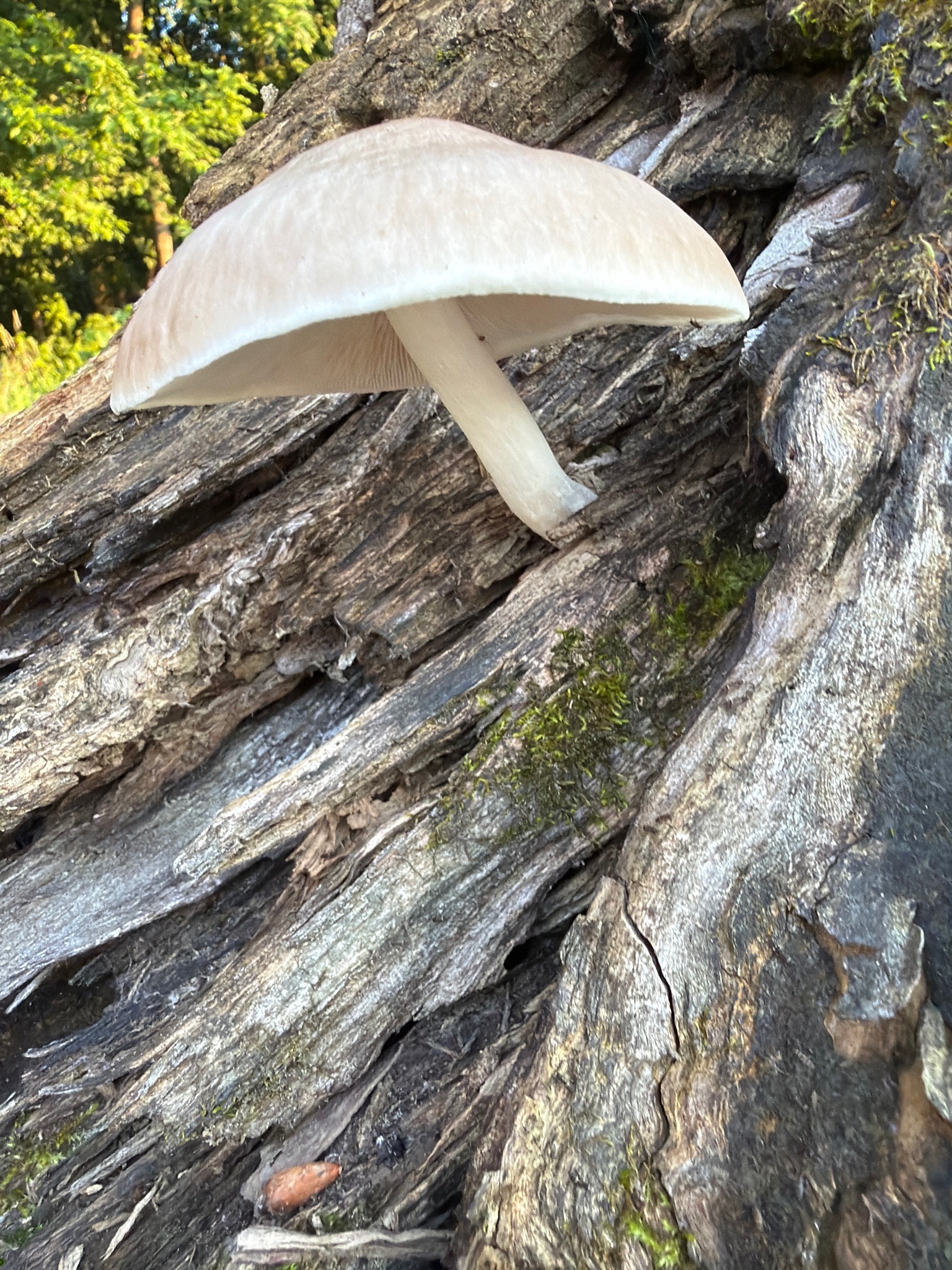
- Found growing directly on well-decayed logs, stumps, and wood chips of both deciduous and coniferous trees.
- Distribution
- Widespread and common throughout North America, Europe, and parts of Asia.
- Key characteristics
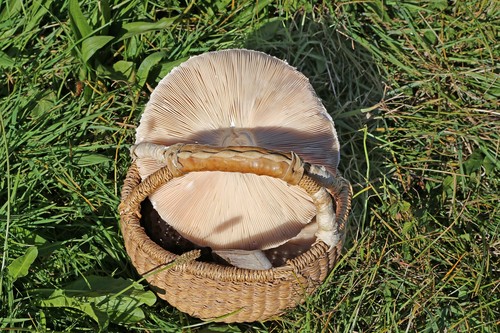
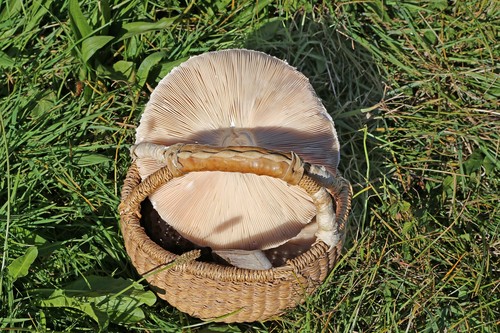
- Fawn-colored to grayish-brown cap that is smooth and often radiating fibers; free gills that start white and turn pink with age; grows on rotting wood; lacks a ring and a volva.
- Fruiting body
- Cap is convex to flat, often with a slight central bump (umbo); surface is moist and smooth. Hymenophore consists of crowded, free gills (not attached to the stem). Stipe is white to grayish, solid, and often has dark longitudinal fibers.
- How to recognise it
- Check for free gills (gills that do not touch the stem) and a pink spore print on a mushroom growing directly on wood.
- Look-alikes
- Entoloma species (grow on soil, not wood), Megacollybia rodmanii (white gills, different spore print), other Pluteus species which may require microscopy to distinguish.
- Ecological role
- Saprophytic, acting as a primary decomposer of dead wood in forest ecosystems.
- Notes
- The genus name 'Pluteus' is Latin for 'penthouse' or 'shed', referring to the cap's shape, while 'cervinus' means 'deer-colored'. This species is often used in scientific studies regarding wood decay and fungal genetics.