Community find
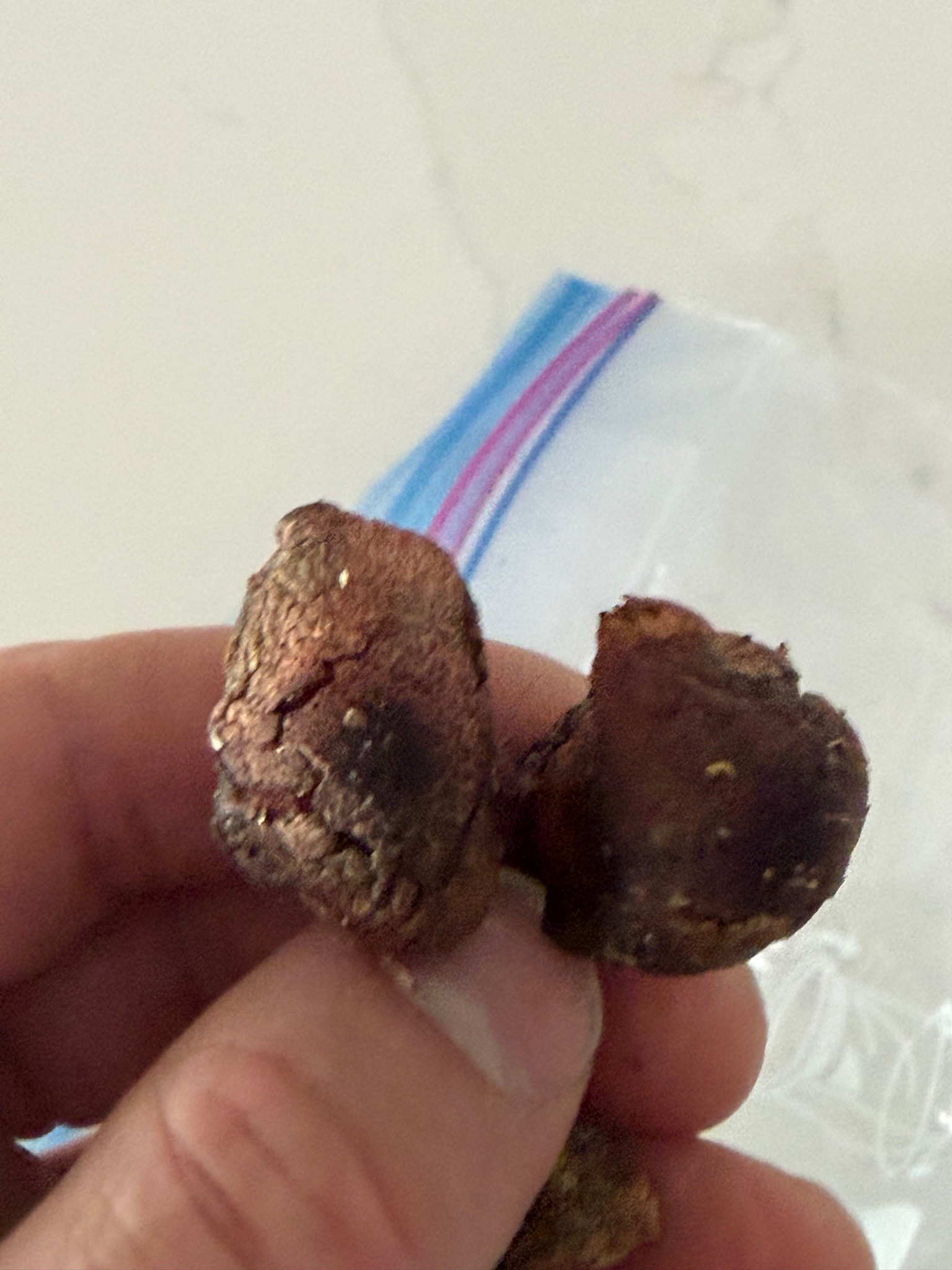
Dried Gilled Mushroom (Genus Psilocybe)
Psilocybe sp.
- Group
- gilled mushroom
- Spore print
- Dark purple-brown to blackish.
- Size
- Cap diameter typically 1-5 cm; stipe length 4-10 cm (fresh).
- Season
- Typically fruits in autumn and early winter, though can appear year-round in subtropical climates depending on moisture.
- Habitat
- Varies by species; many in this genus grow in manured soil, wood chips, or decaying organic mulch in damp environments.
- Distribution
- Cosmopolitan distribution; species are found across North America, Europe, South America, and Australasia.
- Key characteristics
- Small, dried mushroom caps with a dark brown to reddish-brown coloration. Surface appears wrinkled or shriveled due to dehydration. Some areas show dark, almost black bruising or staining. Stems are mostly missing or truncated in the view.
- Fruiting body
- The mushroom is in a dried state; originally would have featured a hygrophanous cap (changing color when drying), attached gills that are closely spaced, and a central stipe. The gills typically turn dark brown to purple-black as spores mature.
- How to recognise it
- Look for a hygrophanous cap and darkening gills. A key diagnostic feature of many species in this genus is the blue/dark bruising reaction on the stem or cap when handled or damaged.
- Look-alikes
- Galerina marginata (which has a rusty-brown spore print and different habitat) and various small brown mushrooms in the genera Panaeolus and Conocybe.
- Ecological role
- Saprophytic, breaking down organic matter such as wood chips, grass, or dung.
- Notes
- Members of the Psilocybe genus are significant in the study of fungal chemotaxonomy. They are known for their ability to produce specific secondary metabolites that react with oxygen to create blue-toned pigments.