Community find
Dryad's Saddle
Cerioporus squamosus
- Group
- polypore
- Spore print
- White
- Size
- Cap 5-30 cm in diameter; stipe 3-10 cm long and 1-4 cm thick.
- Season
- Primarily spring (April to June), but can occasionally be found in late summer and autumn depending on climate.
- Habitat
- Grows on dead or living deciduous logs, stumps, or trunks. Often associated with elms, maples, and oaks.
- Distribution
- Widely distributed across North America, Europe, Australia, and Asia.
- Key characteristics
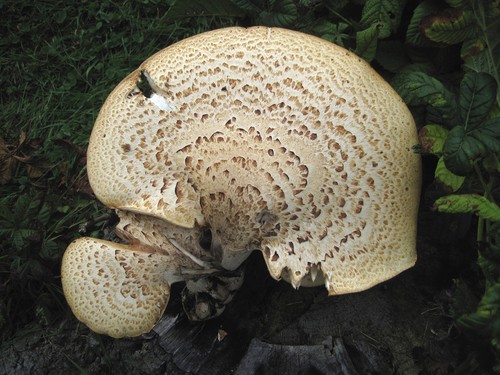
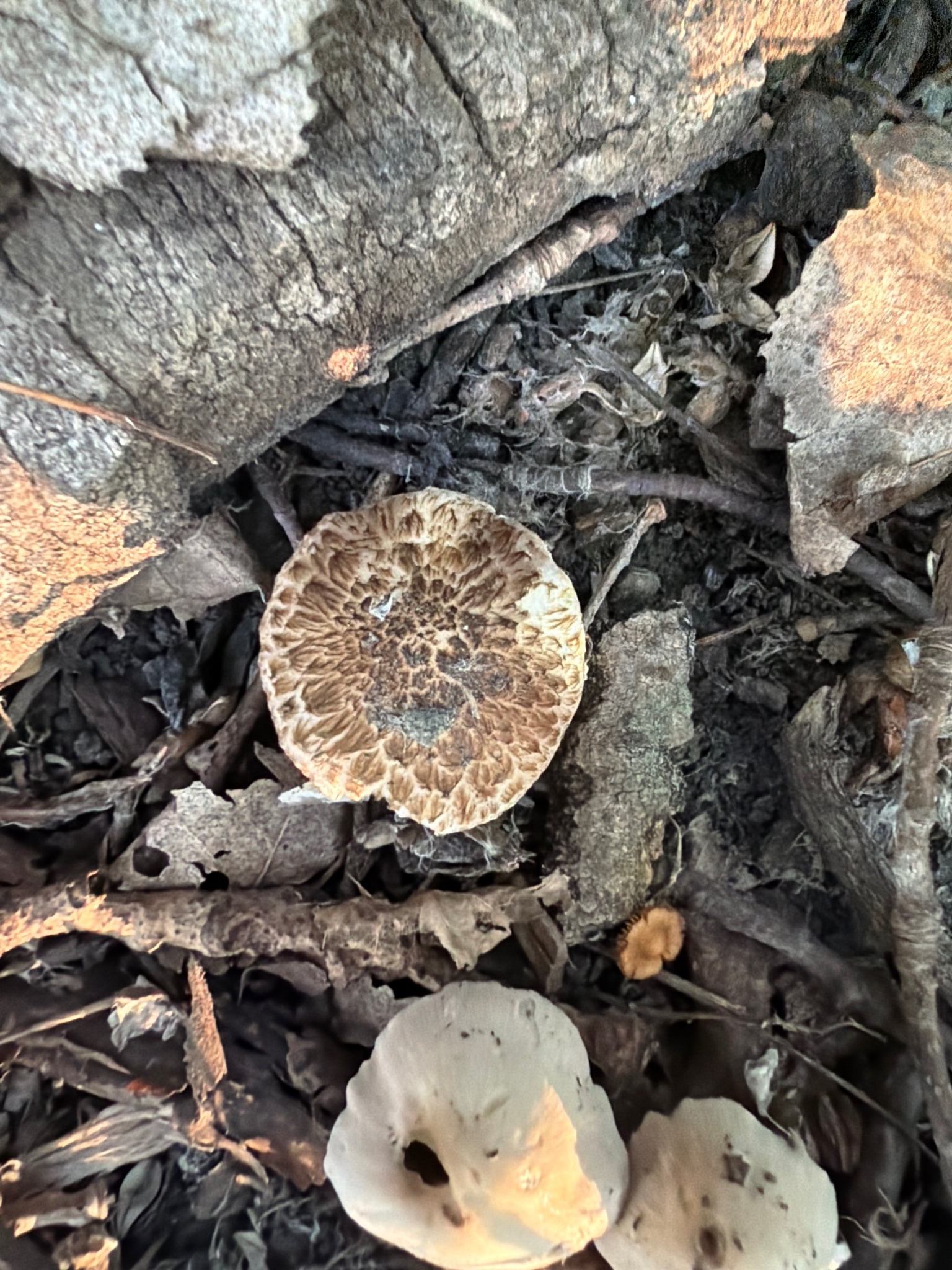
- Funnel-shaped to fan-shaped cap with distinct brownish scales arranged in concentric rings on a cream to pale yellow background. Wide angular pores on the underside.
- Fruiting body
- Cap is 5-30 cm broad, thick, fan or kidney-shaped. Surface has dark brown, pressed-down scales. Hymenophore consists of large, angular or hexagonal pores (1-3 mm wide) that are white to creamy yellow. The stipe is short, thick, and typically lateral or eccentric, turning black at the base with age.
- How to recognise it
- Look for the characteristic 'pheasant-back' pattern of scales on the cap and the large angular pores. Fresh specimens often have a distinct scent reminiscent of watermelon rind or cucumber.
- Look-alikes
- Neofavolus alveolaris (Hexagonal-pored polypore) which is much smaller and lacks the prominent dark scales.
- Ecological role
- A white-rot fungus that is both parasitic on living trees and saprophytic on dead wood.
- Notes
- This species is also known as the Pheasant's Back mushroom due to the scale pattern resembling bird feathers. It plays an important role in forest ecosystems by breaking down lignin in hardwoods.