Community find
Fly Agaric
Amanita muscaria
- Group
- gilled mushroom
- Season
- Typically fruits from late summer through autumn, often appearing after periods of rain.
- Habitat
- Found on soil in both coniferous and deciduous woodlands. It forms mycorrhizal associations with various trees, most notably birch, pine, and spruce.
- Key characteristics
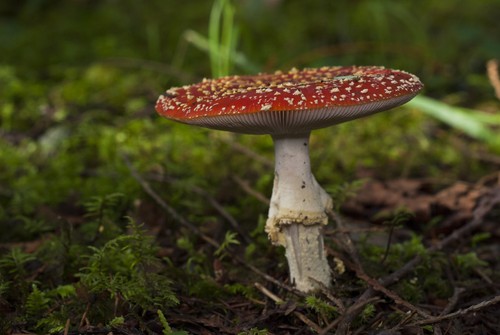
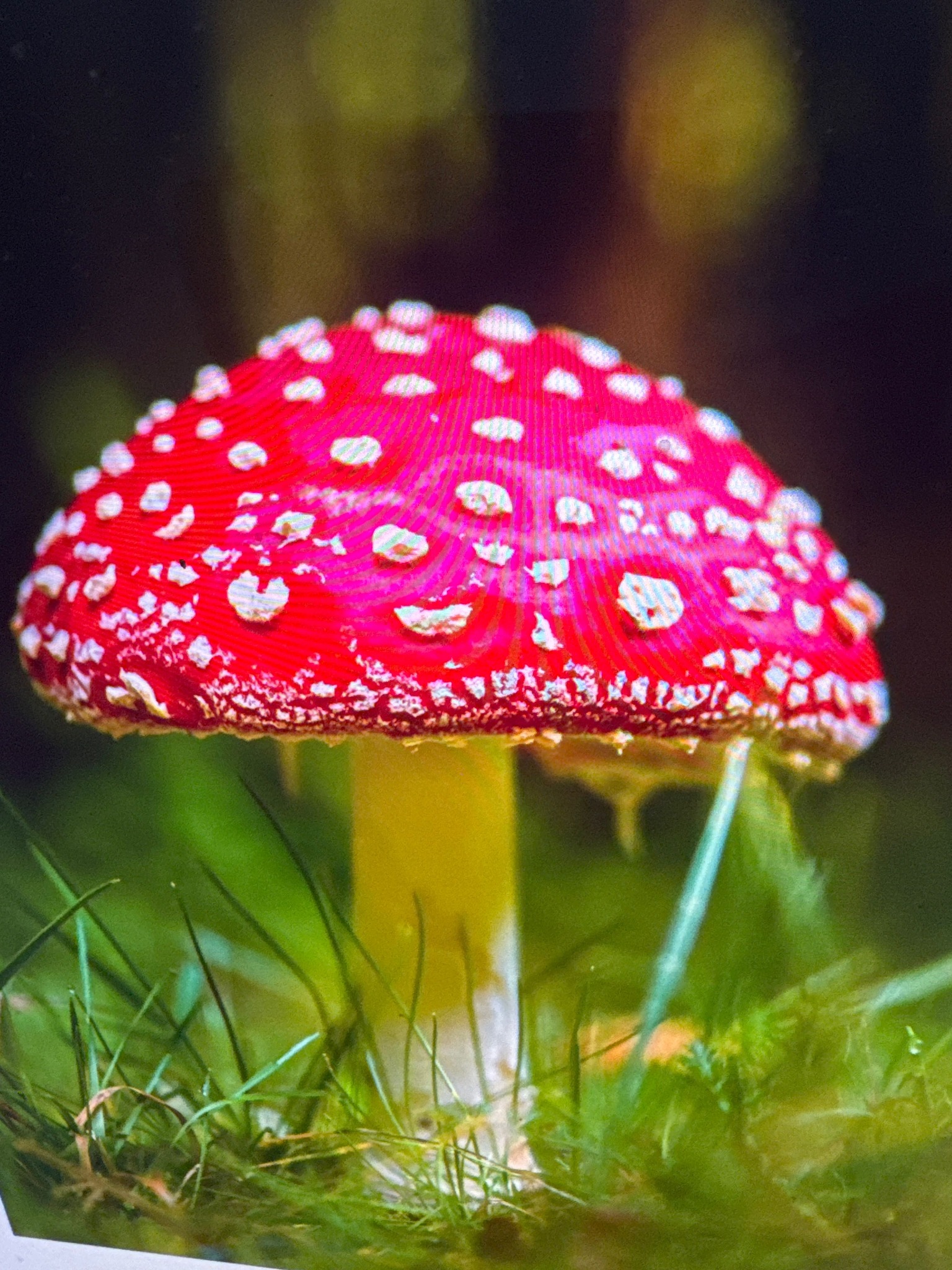
- Bright red to orange-red cap with distinct white pyramidal warts (remnants of the universal veil). Cap is globose when young, becoming convex to flat. Gills are white, free from the stem, and crowded. Stem is white, featuring a ring (annulus) and a bulbous base with concentric rings of veil remnants. Spore print is white.
- Look-alikes
- Amanita caesarea (which has an orange cap and yellow gills/stem), Amanita flavoconia (yellow-orange cap with yellow warts), and Amanita parcivolvata (lacks a ring on the stem).
- Ecological role
- Mycorrhizal fungus that forms a symbiotic relationship with trees, aiding in nutrient and water absorption for the host tree in exchange for carbohydrates. It contributes significantly to forest health and soil structure.