Community find
Fringed Polypore
Polyporus arcularius
- Group
- Polypore
- Spore print
- White
- Size
- Cap diameter 1-5 cm; Stipe 2-5 cm long, 2-4 mm thick.
- Season
- Found primarily in spring and early summer, though it can persist into autumn.
- Habitat
- Grows on decaying hardwood sticks, twigs, and logs in deciduous forests.
- Distribution
- Widely distributed throughout North America, Europe, and parts of Asia.
- Key characteristics
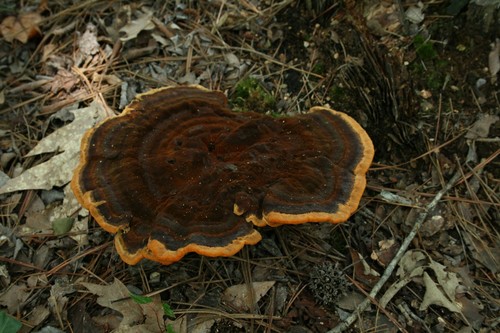
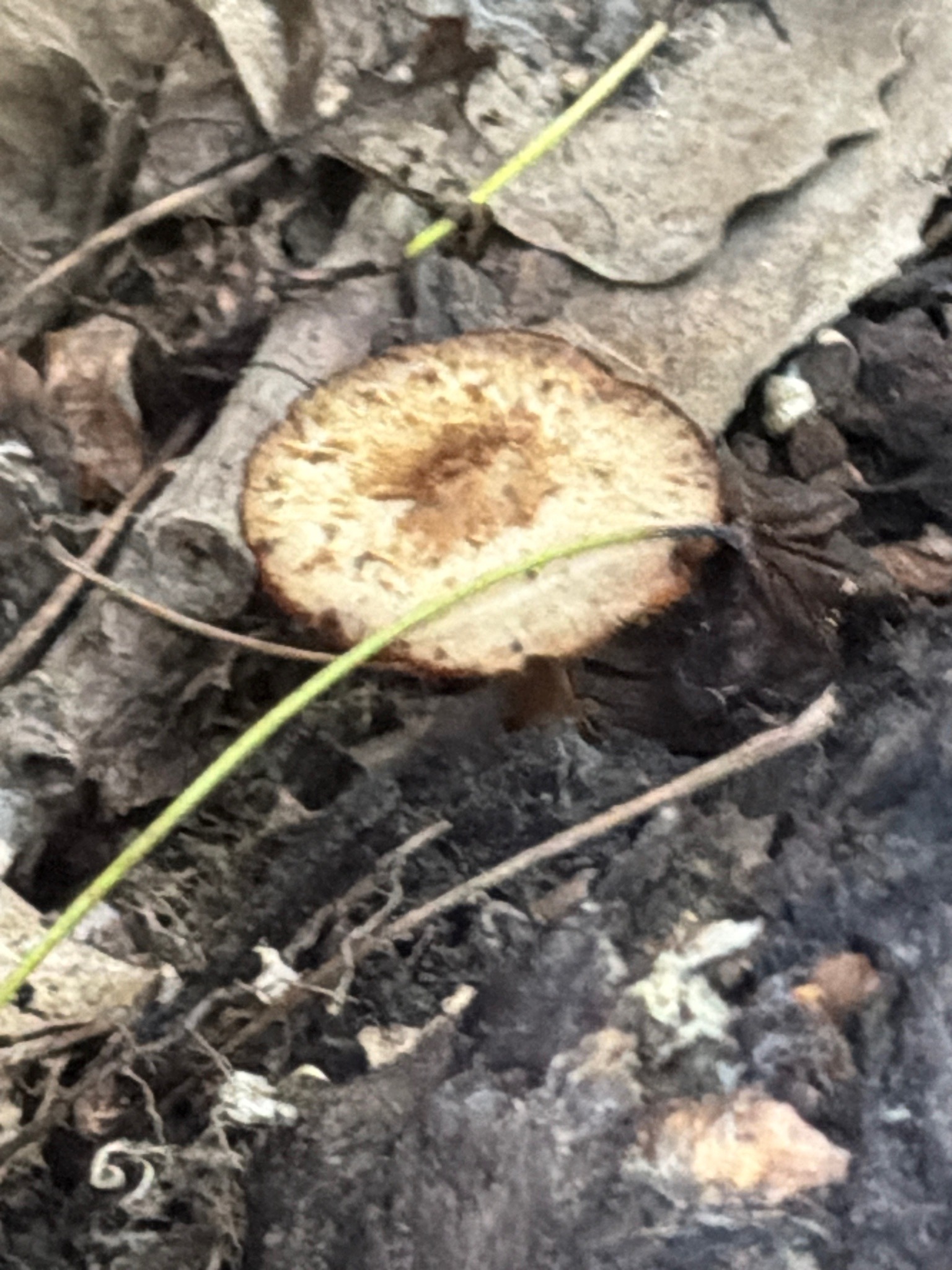
- Small, circular cap with a central depression and tiny hairs or scales. The most distinctive feature is the ciliate (fringed) margin. The underside features relatively large, angular, or hexagonal pores.
- Fruiting body
- Cap 1-4 cm, convex to flat or depressed, yellowish-brown to dark brown, surface dry and scaly. Margin distinctly fringed with fine hairs. Hymenophore consists of white to cream-colored large hexagonal pores. Stipe is central, tough, and brownish.
- How to recognise it
- Look for the tiny 'eyelashes' or fringe along the edge of the cap and the distinctively large, honeycomb-like pores underneath.
- Look-alikes
- Polyporus brumalis (Winter Polypore) lacks the heavily fringed margin and generally fruits in cooler months; Lentinus arcularius is a common synonym.
- Ecological role
- Saprophytic, acting as a primary decomposer of hardwood debris.
- Notes
- This species belongs to the 'stipitate polypores,' which are shelf-like fungi that have developed a central stem. It is often one of the first polypores to appear after spring rains.