Community find
Horse Mushroom
Agaricus arvensis
- Group
- gilled mushroom
- Spore print
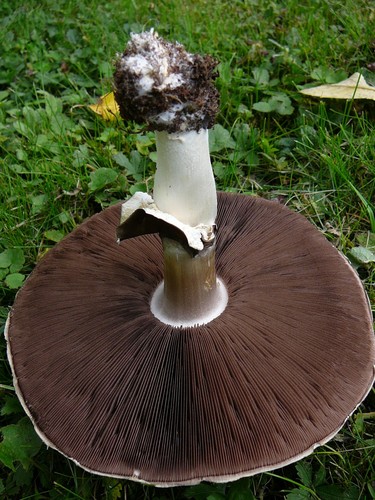
- Chocolate-brown.
- Size
- Cap 8-20 cm diameter; Stipe 8-15 cm length, 2-3 cm width.
- Season
- Summer to autumn, typically following periods of rain.
- Habitat
- Grassy areas, pastures, meadows, and occasionally at the edges of woodlands.
- Distribution
- Widespread across the Northern Hemisphere, including Europe, North America, and parts of Asia.
- Key characteristics
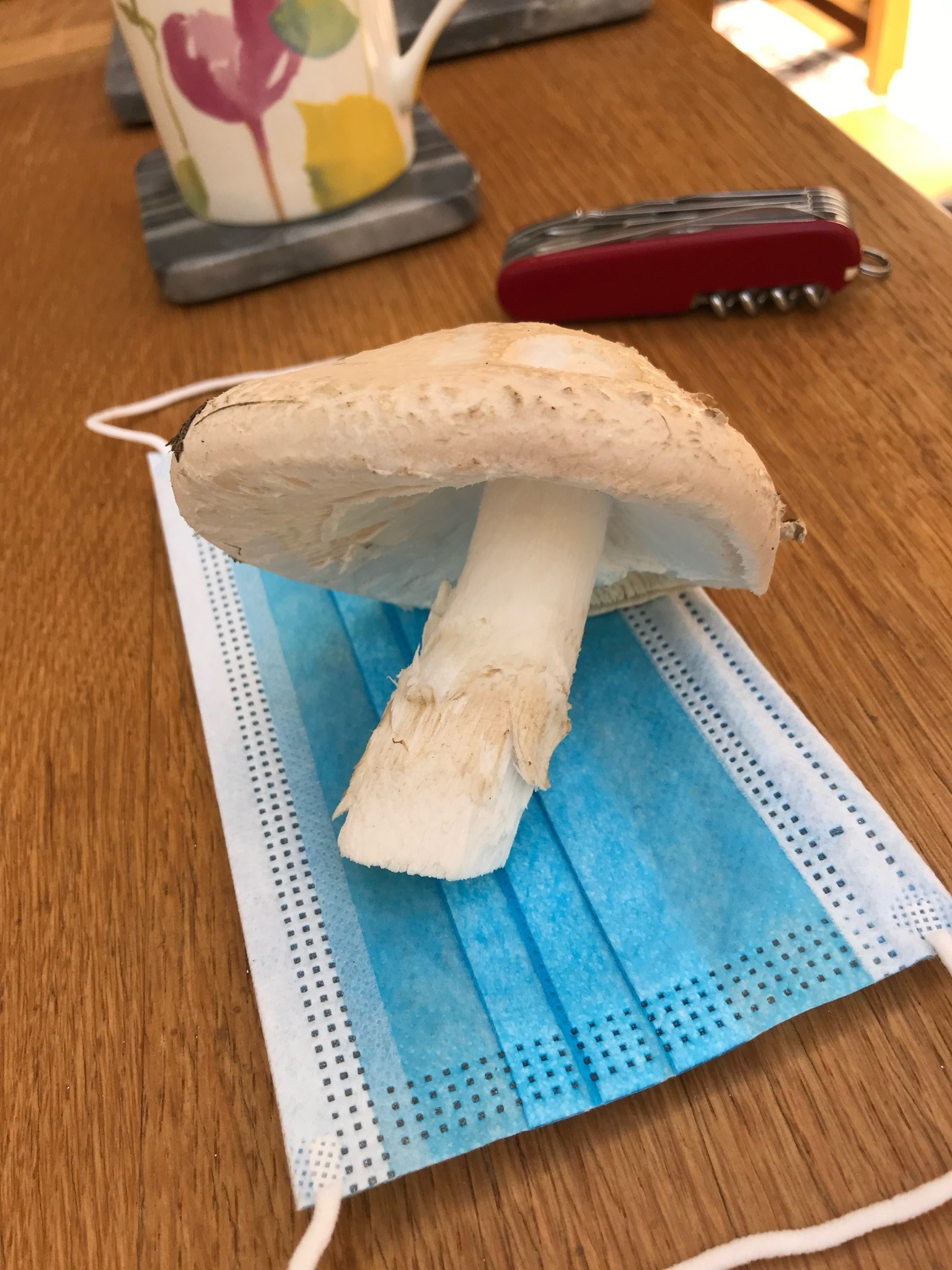
- Large white to cream cap that stains yellow when bruised, smells like anise or almonds, white gills when young turning pink and then dark brown.
- Fruiting body
- Cap: 8–20 cm, convex to flat, white/cream, bruising yellow. Gills: Free, white at first, then pink, and finally chocolate-brown. Stipe: 8–15 cm long, white, with a pendulous ring that has a 'cog-wheel' pattern on the underside.
- How to recognise it
- Look for the distinctive 'cog-wheel' appearance on the underside of the ring and a characteristic aniseed or almond scent. The yellow staining should be slow and faint, not instant and bright.
- Look-alikes
- Agaricus campestris (Field Mushroom, smaller, no anise smell), Agaricus xanthodermus (Yellow Stainer, unpleasant ink-like smell/bright yellow staining), and Amanita virosa (Destroying Angel, white gills and a volva).
- Ecological role
- Saprophytic (decomposes organic matter in the soil).
- Notes
- The scientific name 'arvensis' means 'of the field.' This species is known for forming large fairy rings in grasslands and is one of the larger members of the Agaricus genus.