
Community find
Lobster Mushroom
Hypomyces lactifluorum
- Group
- Hypomyces (parasitic fungus)
- Spore print
- White
- Size
- Cap can range from 5 to 20 cm wide; highly variable depending on the host mushroom's size.
- Season
- Typically found from mid-summer through early autumn.
- Habitat
- Found in forests, specifically where Russula or Lactarius mushrooms are present; it grows as a parasite on these specific host mushrooms.
- Distribution
- Widely distributed across North America, particularly in the Pacific Northwest and New England regions.
- Key characteristics
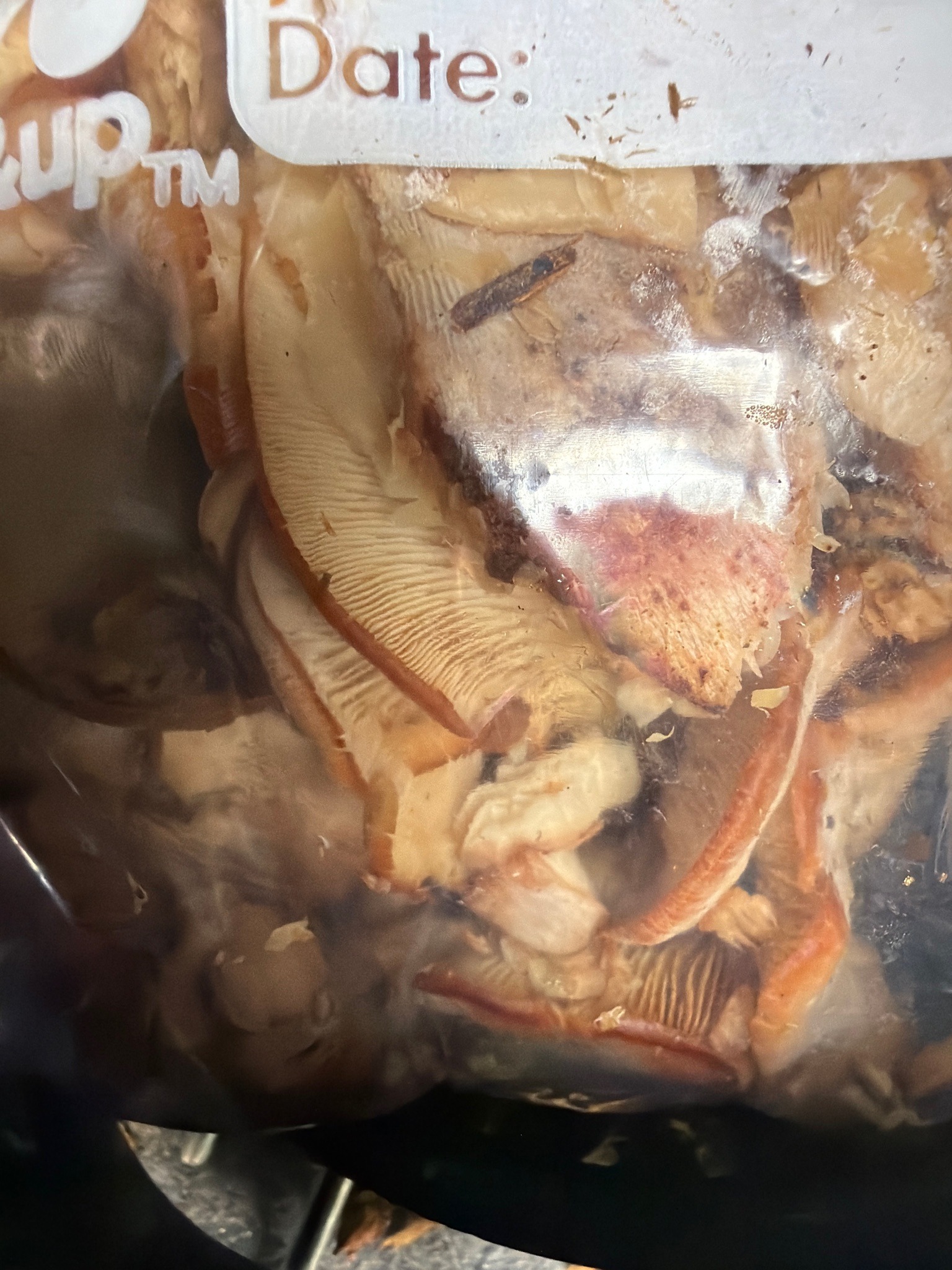
- Bright orange to reddish-orange exterior, hard and bumpy surface, white interior flesh. It lacks standard gills, instead displaying a rough, pimpled texture from perithecia.
- Fruiting body
- The fungus creates a hard, mold-like orange crust that completely covers the host mushroom, distorting its shape into irregular, often twisted forms. The gills of the host are typically reduced to blunt ridges or eliminated entirely.
- How to recognise it
- Look for a vibrant orange, rough-textured skin over a dense, white, brittle interior. The absence of true gills and a 'pimpled' surface under a magnifying glass are diagnostic.
- Look-alikes
- While the orange color is distinct, it could be confused with Jack-o'-Lantern mushrooms (Omphalotus illudens) which have true gills and grow on wood. Its host mushrooms, like Russula brevipes, are large white agarics.
- Ecological role
- Parasitic; it specifically attacks and transforms the fruiting bodies of certain species in the Russulaceae family.
- Notes
- The Lobster Mushroom is not technically a mushroom itself, but an ascomycete fungus that parasitizes other mushrooms. It gets its name from its color, which resembles a cooked lobster shell.