Community find
Mica Cap
Coprinellus micaceus
- Group
- gilled mushroom
- Spore print
- Black or very dark brown.
- Size
- Cap 2-5 cm diameter; stipe 4-10 cm long and 2-5 mm thick.
- Season
- Widely found from spring through autumn, often appearing quickly after rain.
- Habitat
- Grows in clusters on or near decaying hardwood logs, stumps, or buried wood in lawns and woodlands.
- Distribution
- Cosmopolitan, found throughout North America, Europe, and many other parts of the world.
- Key characteristics
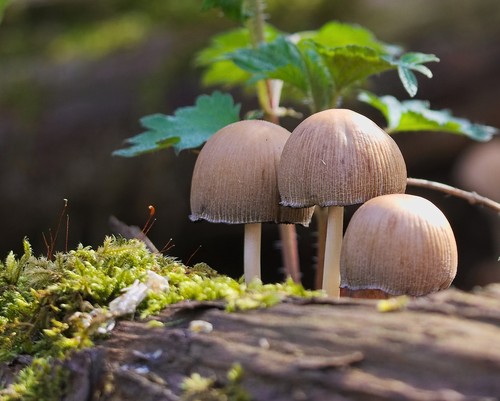
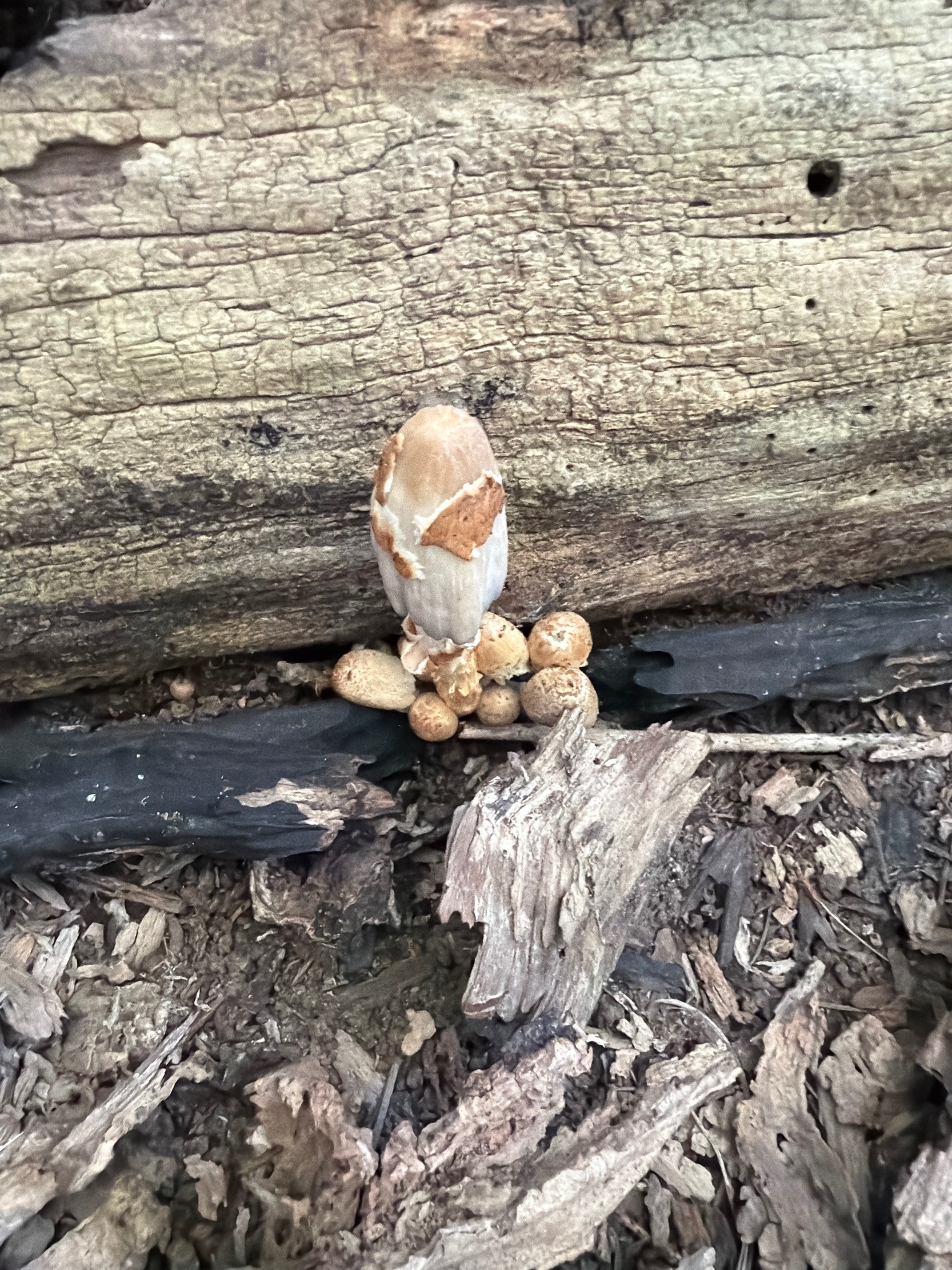
- Small, bell-shaped cap that is initially covered in fine, glistening granules (micaceous particles); cap becomes grooved and turns black and inky with age.
- Fruiting body
- Cap is 2-5 cm wide, oval then bell-shaped, ochre to reddish-brown, with radial striations. Gills are crowded, white at first, then brown, finally black and liquefying. Stipe is 4-10 cm long, hollow, white, and fragile.
- How to recognise it
- Look for the glistening, salt-like granules on the cap surface of young specimens and its habit of growing in dense clusters around rotting wood.
- Look-alikes
- Coprinellus truncorum is virtually identical without microscopy; Coprinellus flocculosus has larger, silkier veil fragments.
- Ecological role
- Saprophytic, breaking down dead hardwood and recycling nutrients into the soil.
- Notes
- The species name 'micaceus' refers to the mica-like scales on the cap. It is one of many fungi that undergo deliquescence, a process where the gills autodigest into an inky fluid to aid spore dispersal.