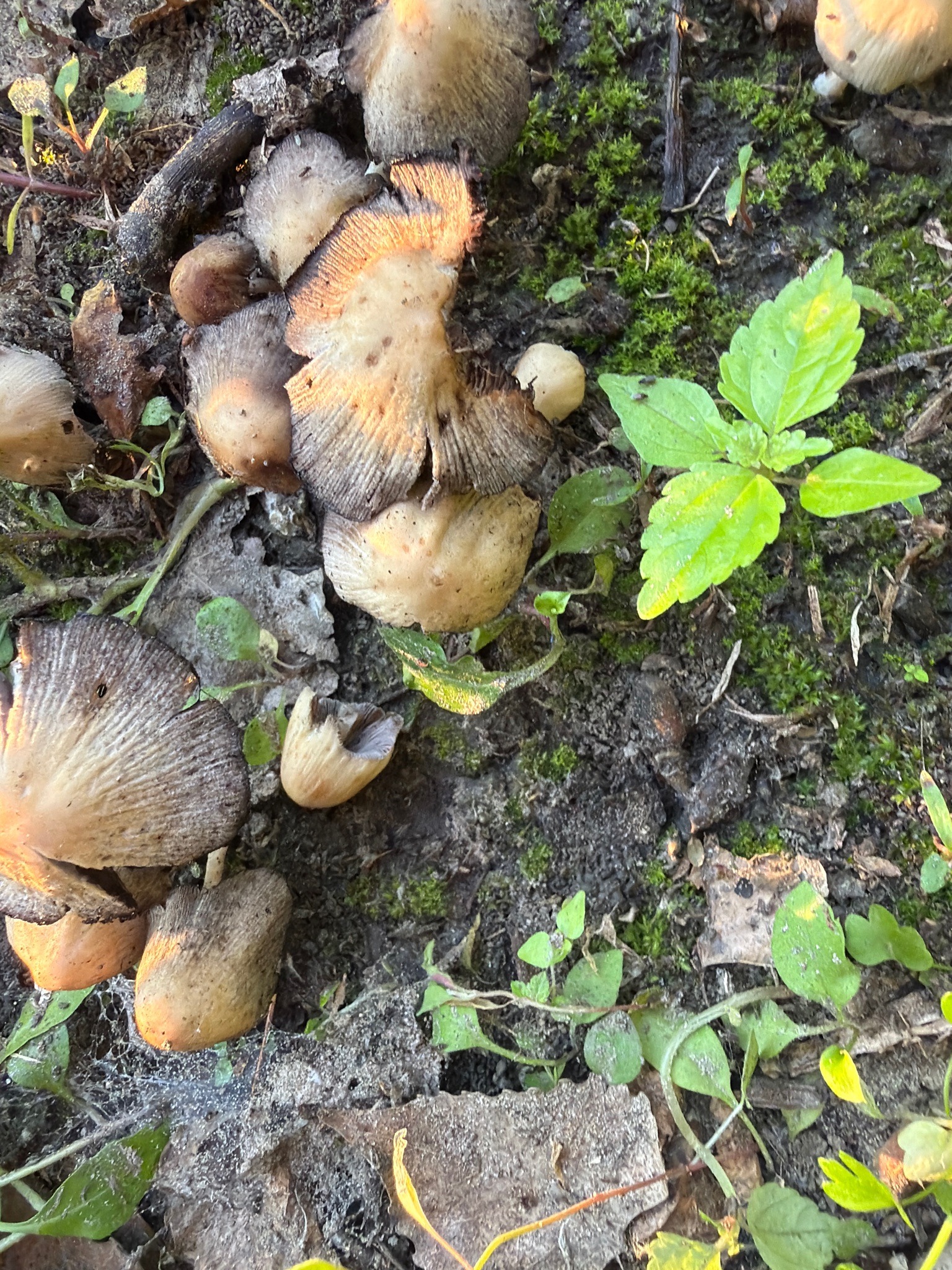
Community find
Mica Cap
Coprinellus micaceus
- Group
- gilled mushroom
- Spore print
- Black or very dark brown.
- Size
- Cap 2-5 cm diameter; Stipe 4-10 cm long, 2-5 mm thick.
- Season
- Spring through autumn, often appearing shortly after rain.
- Habitat
- Grows in dense clusters on or near decaying wood, hardwood stumps, or buried roots. Common in urban environments, lawns, and woodlands.
- Distribution
- Cosmopolitan; widely distributed throughout North America, Europe, and many other continents.
- Key characteristics
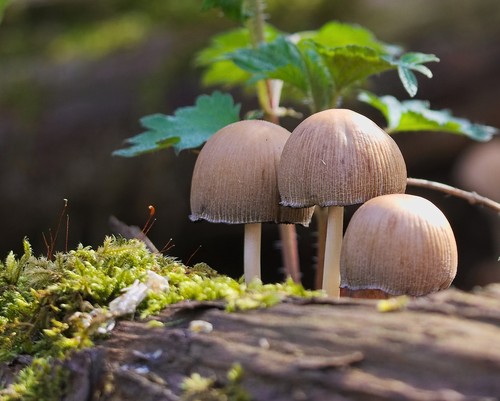
- Bell-shaped to convex cap, yellowish-brown to tan, often covered in tiny glistening mica-like granules when young. Gills turn from white to brown then black and eventually liquefy (deliquesce) into an inky substance. Striate (grooved) cap margins.
- Fruiting body
- Cap initially oval or glandiform, expanding to bell-shaped, 2-5 cm wide, ochre-brown to tawny, featuring radial striations. Hymenophore consists of crowded gills. Stipe is 4-10 cm long, 2-5 mm thick, white, hollow, and fragile.
- How to recognise it
- Look for the glistening salt-like granules on the cap surface (though these may wash off in rain). Check for the tendency of the gills to turn to black ink and the clustering growth habit around wood.
- Look-alikes
- Coprinellus truncorum (smooth cap and lacks glistening granules), Coprinellus flocculosus (larger and more fragile with different veil remnants).
- Ecological role
- Saprophytic, breaking down dead hardwood/woody debris.
- Notes
- The glistening particles on the cap are actually remnants of a universal veil made of cells called sphaerocysts. The process of the gills turning to ink is known as deliquescence, which helps in the dispersal of spores by allowing them to be carried away by wind or water as the cap structure dissolves.