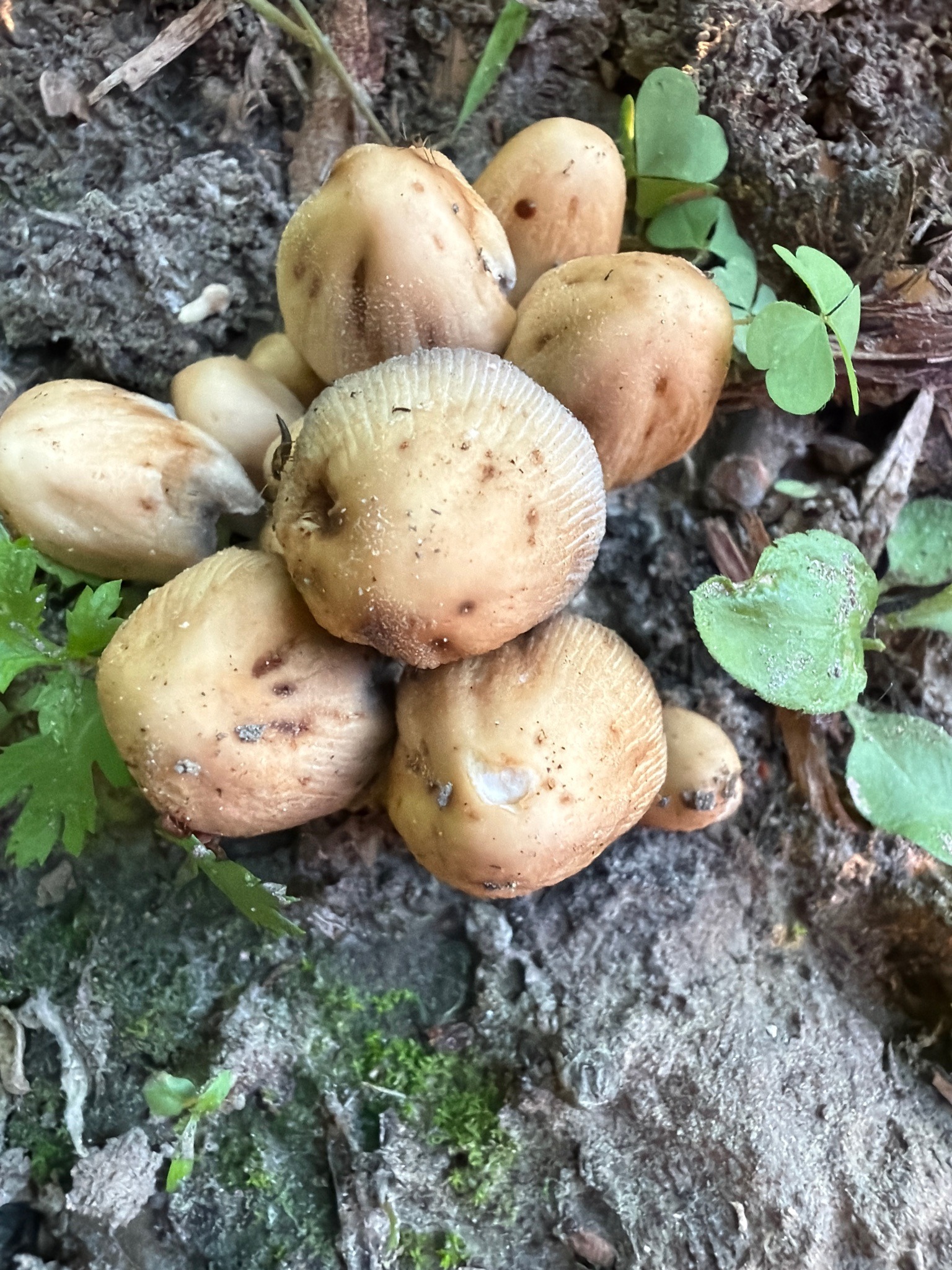
Community find
Mica Cap
Coprinellus micaceus
- Group
- gilled mushroom
- Spore print
- Black or very dark brown.
- Size
- Cap diameter 2-5cm; Stipe 4-10cm height x 0.2-0.5cm width.
- Season
- Spring through autumn, often appearing shortly after rain showers.
- Habitat
- Grows in dense clusters on or near decaying wood, often at the base of broadleaf trees, stumps, or from buried roots in lawns and gardens.
- Distribution
- Cosmopolitan; widely distributed throughout North America, Europe, and parts of Asia and South America.
- Key characteristics
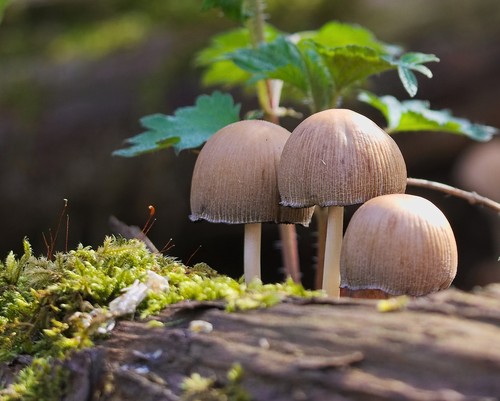
- Bell-shaped cap that is tawny-brown, often covered in tiny glistening salt-like granules (mica) when young. The cap has distinctive radial grooves or striations extending from the margin toward the center.
- Fruiting body
- Cap is 2-5cm wide, initially oval then bell-shaped, honey-brown to ochraceous. Gills are free or narrowly attached, crowded, white then turning brown and finally black as they deliquesce (autodigest). Stipe is 4-10cm long, 2-5mm thick, white, hollow, and fragile.
- How to recognise it
- Look for the dense clustering habit, the fine glistening particles on the cap of young specimens, and the deeply striate (grooved) cap margins.
- Look-alikes
- Coprinellus truncorum (nearly identical without microscopy), Coprinellus radiates, and Coprinopsis atramentaria (which is larger and lacks the glistening granules).
- Ecological role
- Saprophytic, acting as a primary decomposer of hardwood organic matter.
- Notes
- This species is part of the 'inky cap' group, named for their unique process of deliquescence where the gills digest themselves into a black liquid to help disperse spores in humid conditions.