Community find
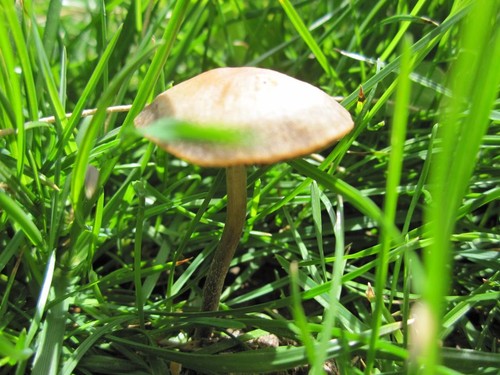
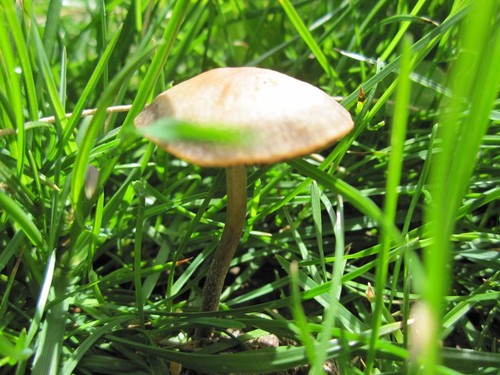
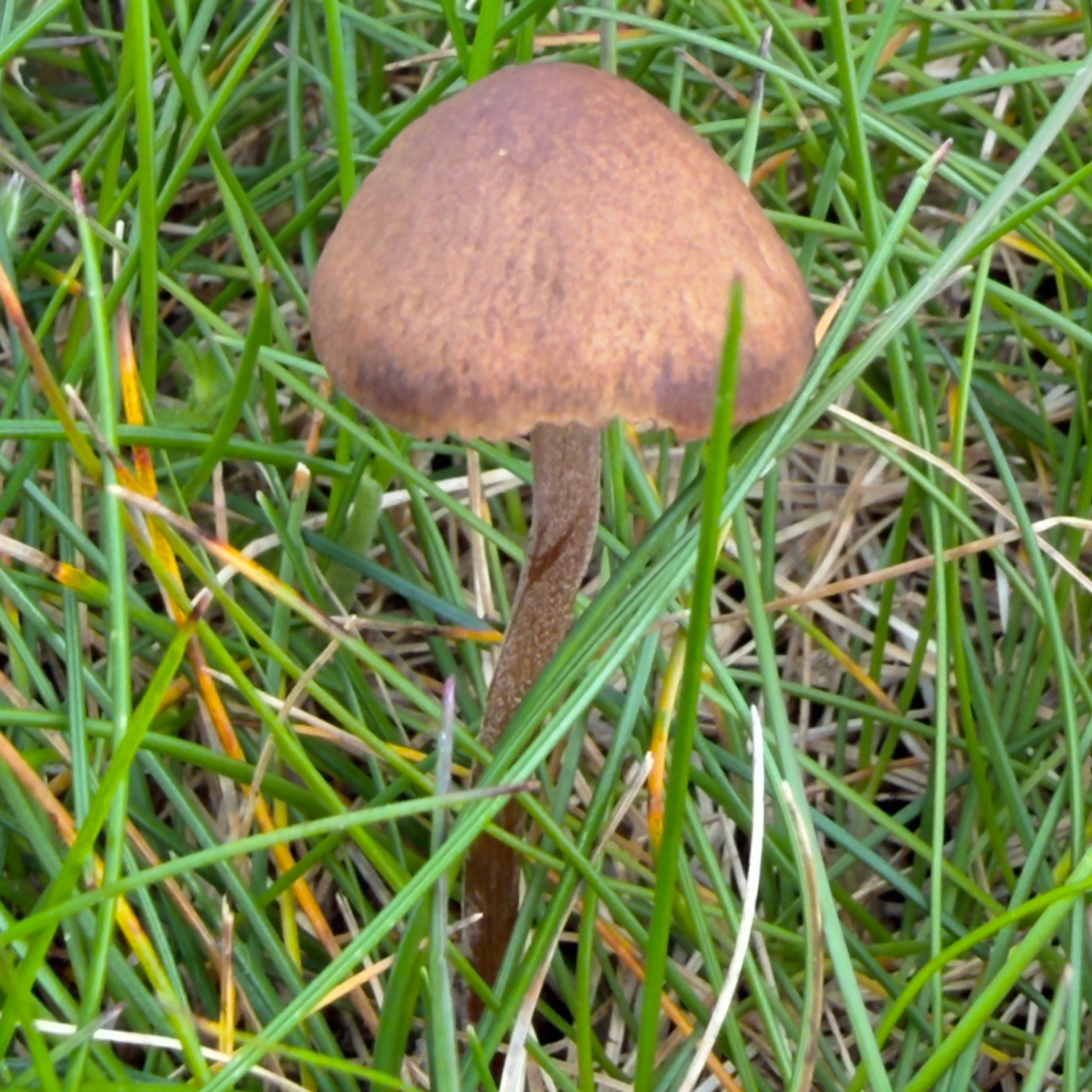
Mower's Mushroom
Panaeolus foenisecii
- Group
- gilled mushroom
- Spore print
- Dark brown to walnut brown (not black).
- Size
- Cap diameter: 1-3 cm; Stipe: 40-80 mm long x 2-3 mm thick.
- Season
- Late spring through autumn, appearing frequently after rain.
- Habitat
- Found in lawns, meadows, and grassy areas; particularly common in well-maintained urban lawns.
- Distribution
- Cosmopolitan distribution; extremely common in North America and Europe.
- Key characteristics
- Small brown mushroom with a conical to bell-shaped cap that changes color as it dries. Features mottled gills and a slender, fragile stem.
- Fruiting body
- Cap: 1-3 cm wide, hygrophanous, varying from dark brown when wet to light tan when dry. Hymenophore: Adnate gills, initially brown, becoming mottled as spores mature. Stipe: 4-8 cm long, thin, fragile, brownish.
- How to recognise it
- Look for the mottled gills and the hygrophanous cap (often showing two distinct bands of color while drying). Check the spore print color to rule out similar black-spored Panaeolus species.
- Look-alikes
- Panaeolopsis species and various Panaeolus species. It is specifically similar to Cinctulus/Furfurellus but distinguished by its dark brown spore print rather than jet black.
- Ecological role
- Saprophytic, breaking down organic matter in the soil and grass thatch.
- Notes
- This species is remarkably common and often the most frequent mushroom found in suburban backyards. Its species name 'foenisecii' is derived from the Latin for 'haymakers' because it is often found in hayfields.