Community find
Mower's Mushroom
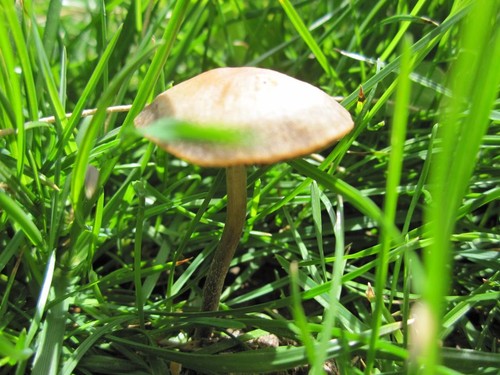
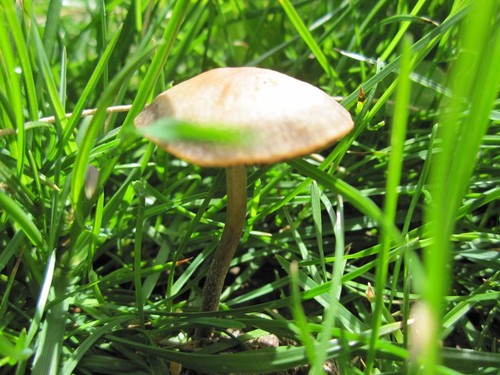
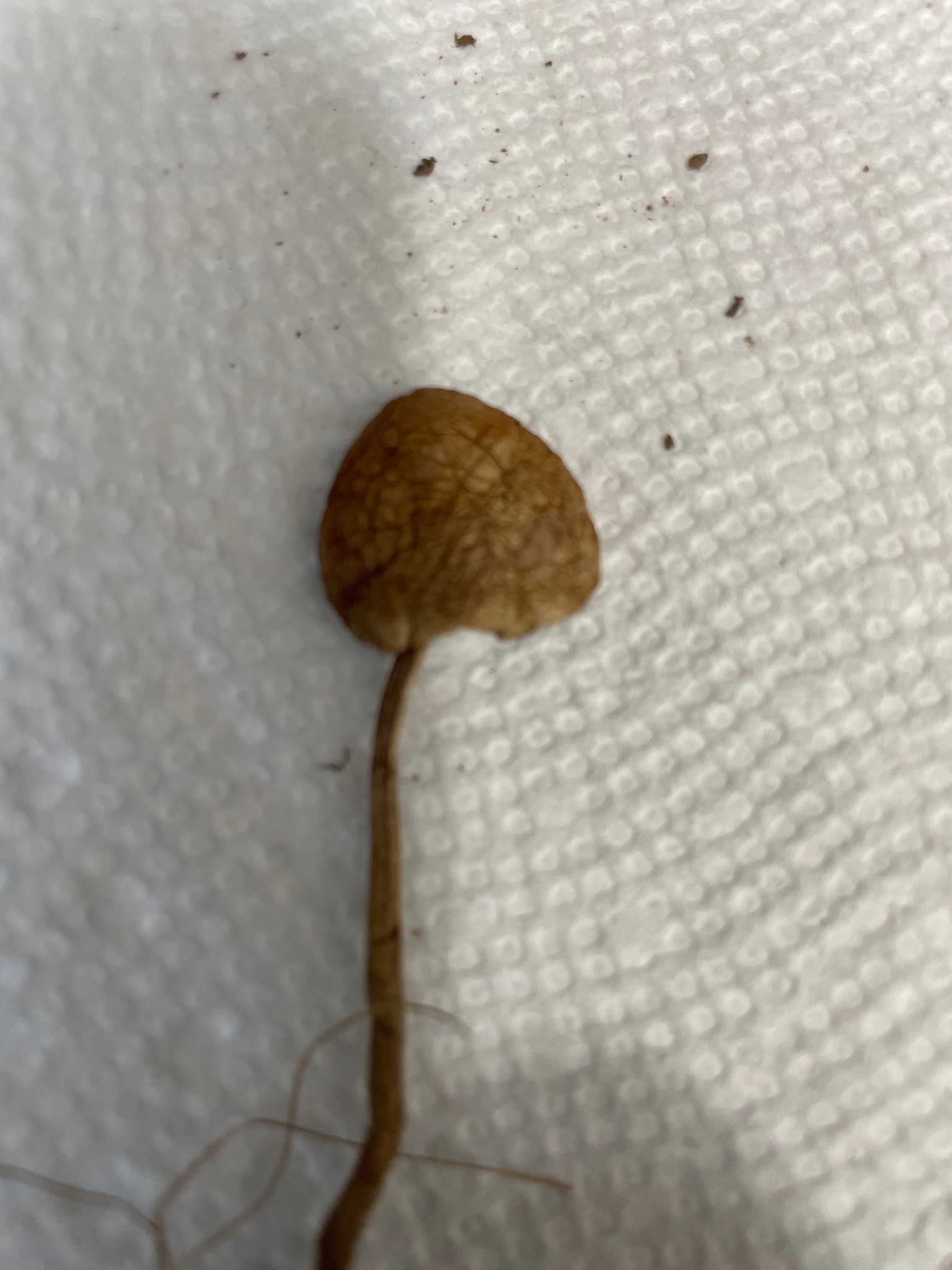
Panaeolus foenisecii
- Group
- gilled mushroom
- Spore print
- Dark brown (often described as chocolate brown or smoky brown).
- Size
- Cap diameter: 1-3 cm; Stipe: 40-80 mm long by 1.5-3 mm thick.
- Season
- Typically fruits from late spring through autumn when moisture and temperature conditions are favorable.
- Habitat
- Commonly found in lawns, grassy areas, parks, and meadows, especially after periods of rain. It grows directly on soil among grass blades.
- Distribution
- Cosmopolitan distribution; found widely throughout North America, Europe, and many other temperate regions worldwide.
- Key characteristics
- Small, brown, hygrophanous cap that changes color as it dries. Slender, brittle stem (stipe) and dark brown, mottled gills. Its cap is typically convex to bell-shaped.
- Fruiting body
- Cap is 1-3cm, convex, becoming broadly convex or bell-shaped; surface is smooth but may crack in dry weather. Gills are attached to the stem, close, and mottled as spores mature. The stipe is 4-8cm long, thin, fragile, and brownish.
- How to recognise it
- Look for its occurrence in well-manicured lawns, its hygrophanous cap (which turns tan as it dries from the center outward), and its dark brown (not black) spore print to distinguish it from other Panaeolus species.
- Look-alikes
- Panaeolus cinctulus (Band-fist Panaeolus), which has a darker spore print and more distinct cap banding; and various small Galerina or Psathyrella species.
- Ecological role
- Saprophytic, breaking down organic matter and decaying grass roots in soil.
- Notes
- This is one of the most common 'LBMs' (Little Brown Mushrooms) found in urban environments. It plays a significant role in nutrient cycling within turfgrass ecosystems.