Community find
Pluteus cervinus
Pluteus cervinus
- Group
- Gilled mushroom
- Season
- It is typically found from spring through autumn, and sometimes in winter in milder climates, often fruiting after periods of rain.
- Habitat
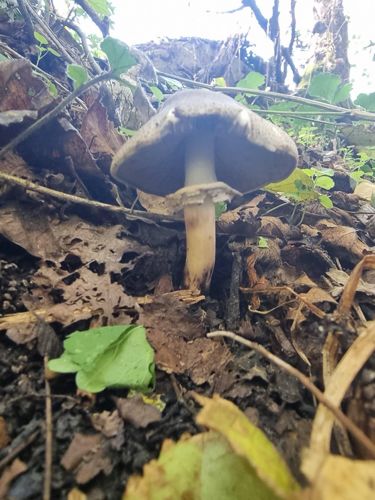
- Pluteus cervinus is a saprobic fungus, meaning it obtains nutrients from decaying organic matter. It commonly grows on dead hardwood (logs, stumps, wood chips, and sawdust), less frequently on conifer wood, and sometimes appears to grow terrestrially in woody debris or leaf litter.
- Key characteristics
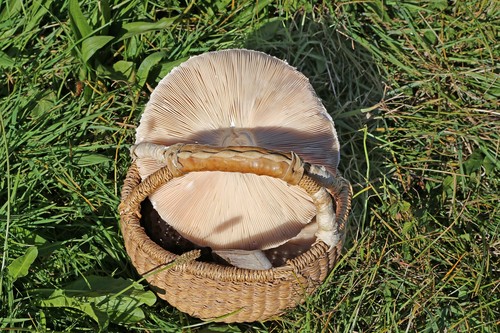
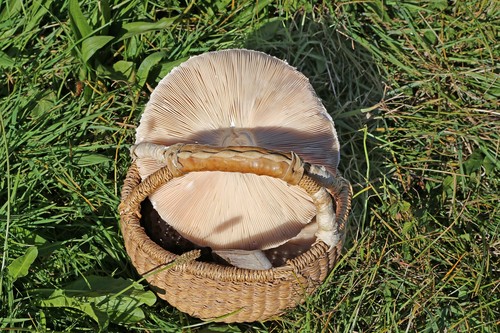
- The cap is typically 5-15 cm in diameter, initially bell-shaped or convex, expanding to broadly convex or flat with a slight central bump (umbo). Its color varies from grayish-brown to dark brown, often streaked with darker radiating fibers, and can be greasy or moist when fresh. The gills are free from the stem, broad, close, and change from white to pinkish with age due to the developing spores. The stem is 5-15 cm long and 1-2 cm thick, typically whitish to grayish-brown, often with darker fibrous striations, and may have a slightly swollen base. A ring (annulus) is absent. The spore print is pinkish.
- Look-alikes
- Several species can be confused with Pluteus cervinus. Volvariella species also have pink spores and free gills but possess a volva (a sac-like structure at the base of the stem), which Pluteus cervinus lacks. Entoloma species also have pink spores but typically have gills that are attached to the stem (adnexed or sinuate) and often have a squarish cap margin. Care should also be taken not to confuse it with some brown-spored Agarics (e.g., from the genera Psathyrella or Cortinarius), but these will have different spore print colors (dark brown to purplish-brown for Psathyrella, rusty brown for Cortinarius).
- Ecological role
- Pluteus cervinus plays a crucial role as a decomposer in forest ecosystems. By breaking down dead wood, it cycles nutrients back into the soil, making them available for other organisms and plants. This contributes to soil health and forest regeneration. As a saprophyte, it is an important component of the detritus food web.