Community find
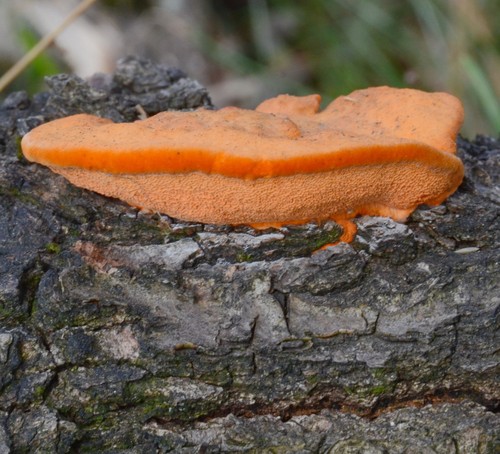
Red-belted Polypore (Aged/Weathered)
Fomitopsis mounceae (formerly Fomitopsis pinicola complex)
- Group
- polypore
- Spore print
- White to light yellow.
- Size
- 5-40 cm wide, 3-20 cm thick at the base.
- Season
- Perennial (fruiting bodies are present year-round)
- Habitat
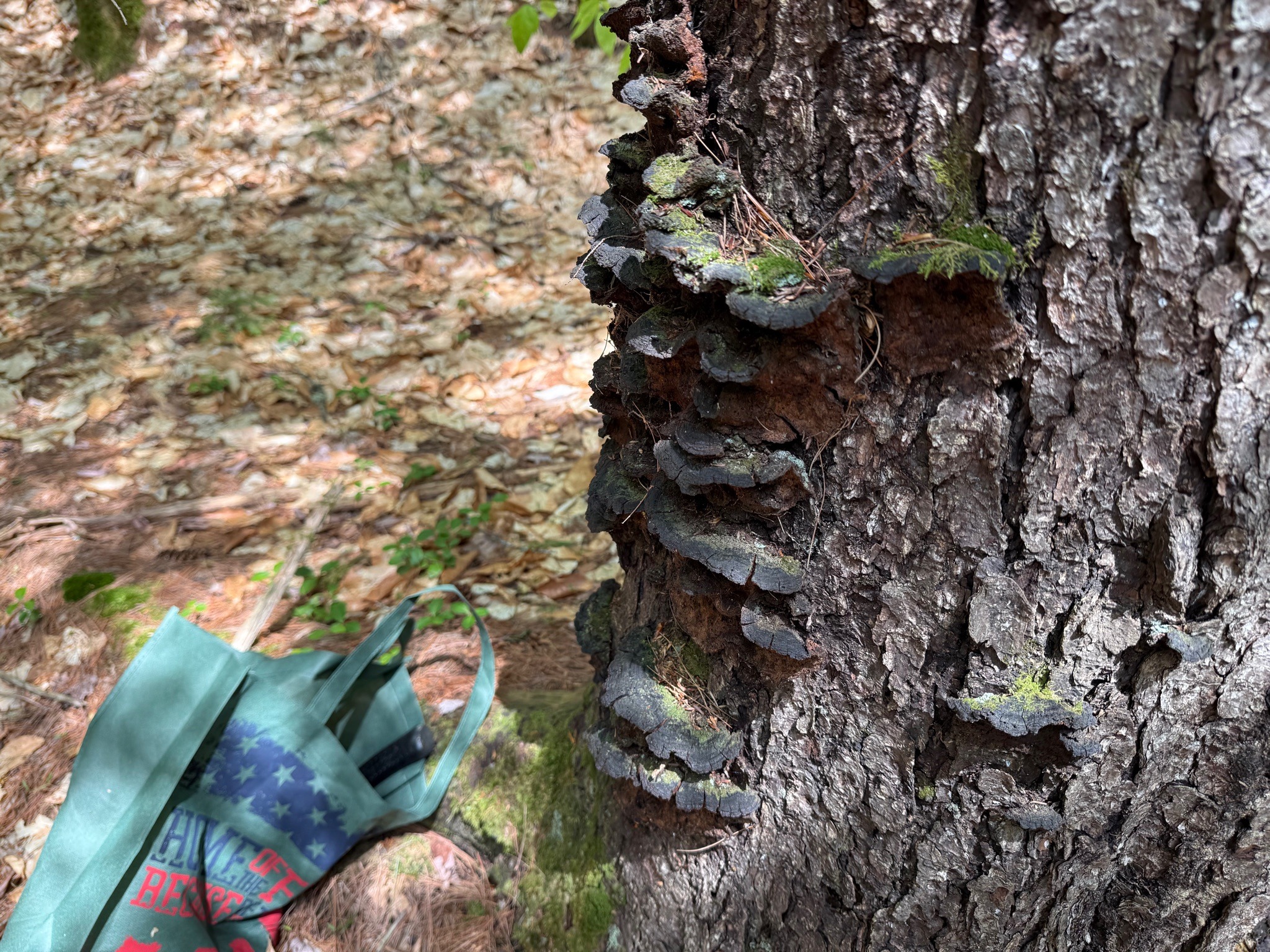
- Grows on living or dead coniferous trees, occasionally on hardwoods. Found on the trunk of the tree as seen in the image.
- Distribution
- Widespread across North America, Europe, and Asia.
- Key characteristics
- Hard, woody, perennial bracket fungus. These specimens appear old and weathered, showing a dark, blackened upper surface that is cracked (rimose) with some moss growth. They lack the characteristic vibrant red-orange margins seen in fresh specimens.
- Fruiting body
- Conical to shelf-like brackets. The upper surface in these older specimens is charcoal-grey to black and deeply fissured. The hymenophore (underside) consists of minute pores, typically creamy white when fresh but browning with age. No stipe (sessile).
- How to recognise it
- Look for the thick, woody shelf-like structure on conifers. Even when blackened by age, the internal context usually remains a corky, wood-color and the pore layer stays relatively distinct from the upper crust.
- Look-alikes
- Phellinus igniarius (Tinder Conk) which is generally more hoof-shaped and darker throughout, or Ganoderma species which usually have a shinier, laccate surface.
- Ecological role
- Saprophytic (decomposer) causing brown crumbly rot, and occasionally parasitic on weakened trees.
- Notes
- These fungi are important for forest ecosystems as they break down cellulose, recycling nutrients back into the soil. They are exceptionally long-lived for a fungus, adding a new layer of pores each year. They have been studied for their ability to produce various volatile organic compounds.