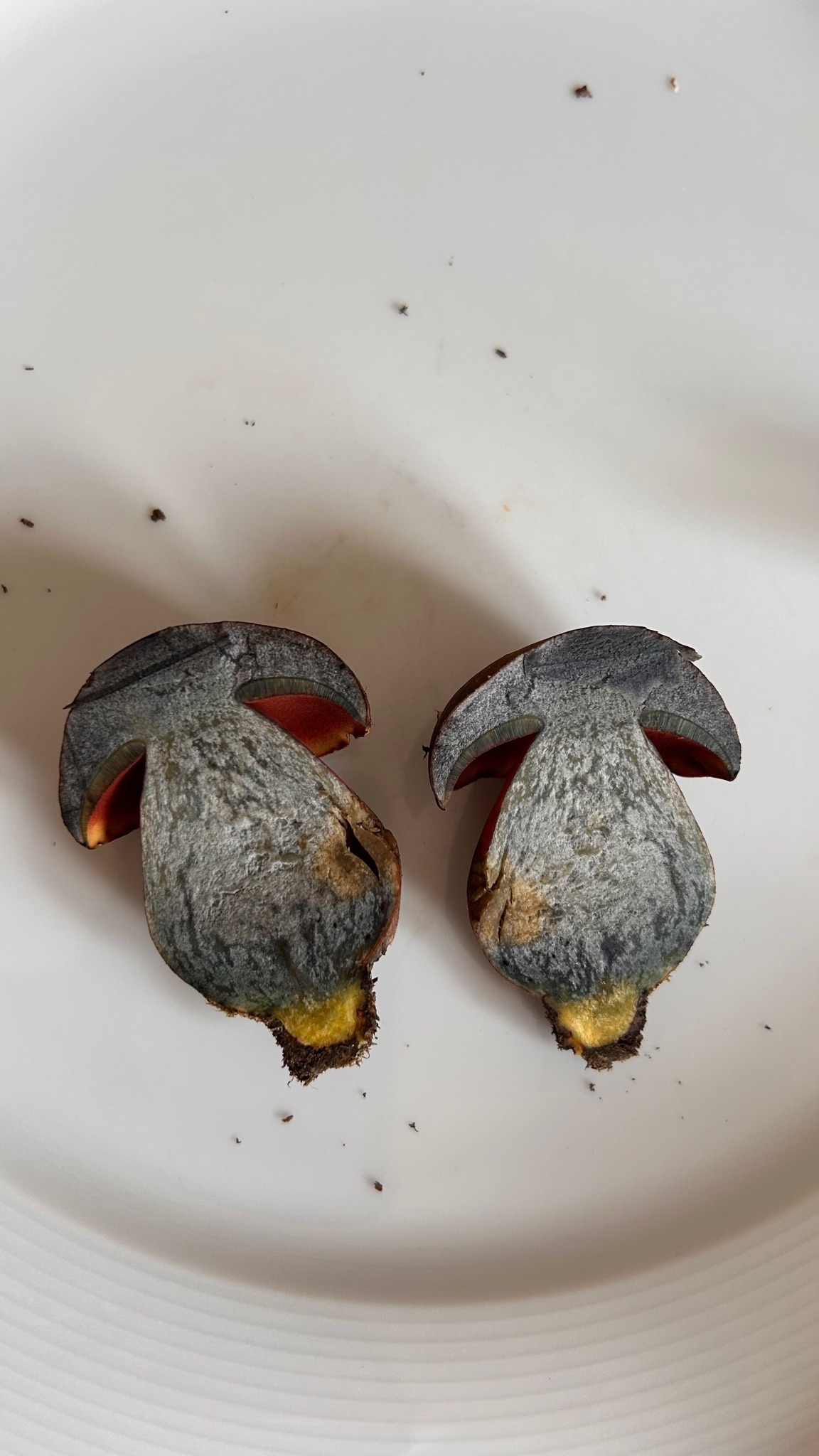
Community find
Scarletina bolete
Neoboletus luridiformis
- Group
- bolete
- Spore print
- Olive-brown
- Size
- Cap 5-20 cm diameter, stipe 4-15 cm long and 2-5 cm thick.
- Season
- Summer to late autumn (June to November in Northern Hemisphere).
- Habitat
- Grows on soil in acidic grounds, typically associated with deciduous trees like oak and beech, as well as coniferous trees like spruce and fir.
- Distribution
- Widespread across Europe and parts of North America and Asia.
- Key characteristics
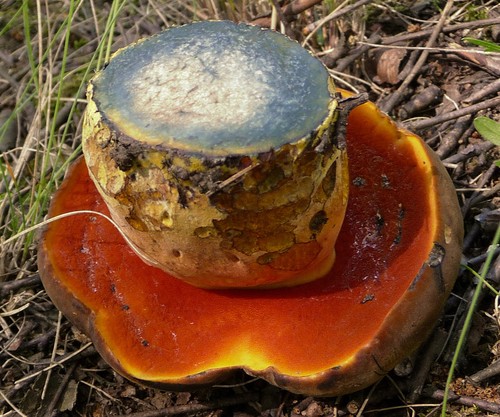
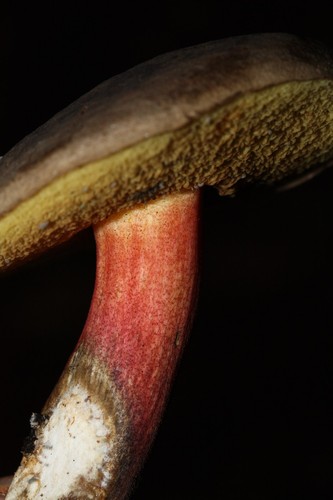
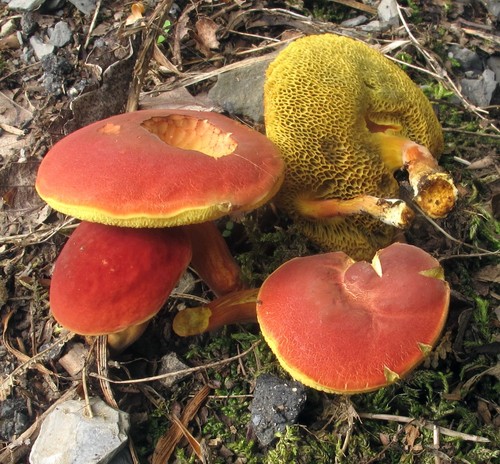
- Dark velvety brown cap, red pores, thick yellowish-red stipe with red dotting, and flesh that intensely and rapidly turns dark blue-black when cut or bruised.
- Fruiting body
- Cap is convex to cushion-shaped, dry, velvety, and dark bay brown to chestnut. Hymenophore consists of fine pores that are bright red to orange-red, yellow near the margin. Stipe is stout, bulbous, yellow covered with fine red dots (punctate, lacking a reticulated network). Flesh is yellow, instantly staining dark blue upon exposure to air.
- How to recognise it
- Look for the instant, deep blue color change when cut, red pore mouth surface, red fine dots (punctation) on the stem without a raised mesh net pattern, and a dark brown cap.
- Look-alikes
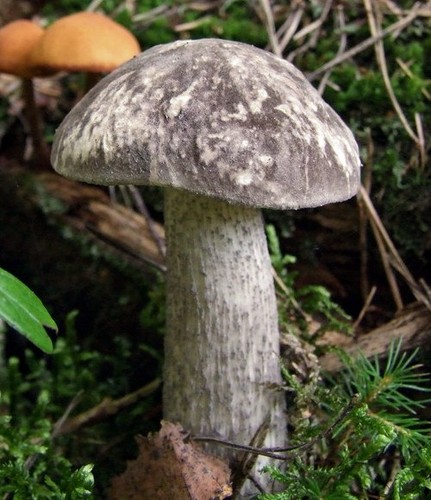
- Suillellus luridus (Lurid bolete, has a distinct reticulation grid on the stem) and Rubroboletus satanas (Devil's bolete, has a much paler white-grey cap and red-patterend stem).
- Ecological role
- Mycorrhizal, forming beneficial symbiotic relationships with host tree roots.
- Notes
- The rapid oxidation turning the yellow flesh to dark blue is caused by the enzymatically driven reaction of phenolic compounds (like variegatic acid and xerocomic acid) with oxygen in the air.