Community find
Sulfur Tuft
Hypholoma fasciculare
- Group
- gilled mushroom
- Spore print
- Purple-brown to dark brown.
- Size
- Cap: 2–6 cm diameter; Stipe: 3–10 cm length, 0.4–1 cm width.
- Season
- Common from late spring through late autumn, and sometimes into winter in milder climates.
- Habitat
- Grows primarily on decaying wood of both broadleaf and coniferous trees. It is often found on stumps, buried roots, or logs.
- Distribution
- Widespread across Europe and North America, and found in many other temperate regions globally.
- Key characteristics
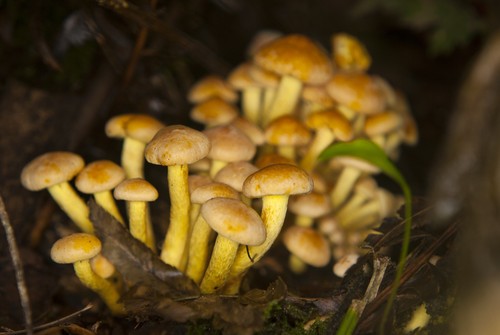
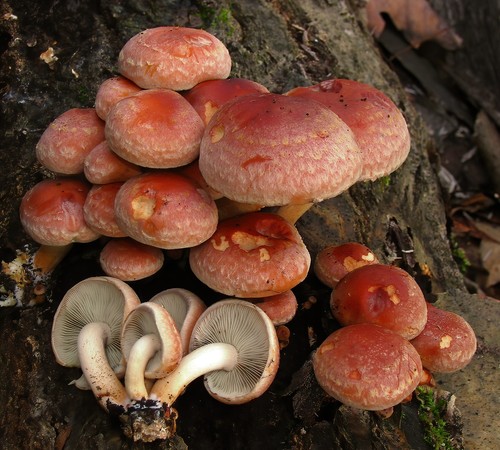
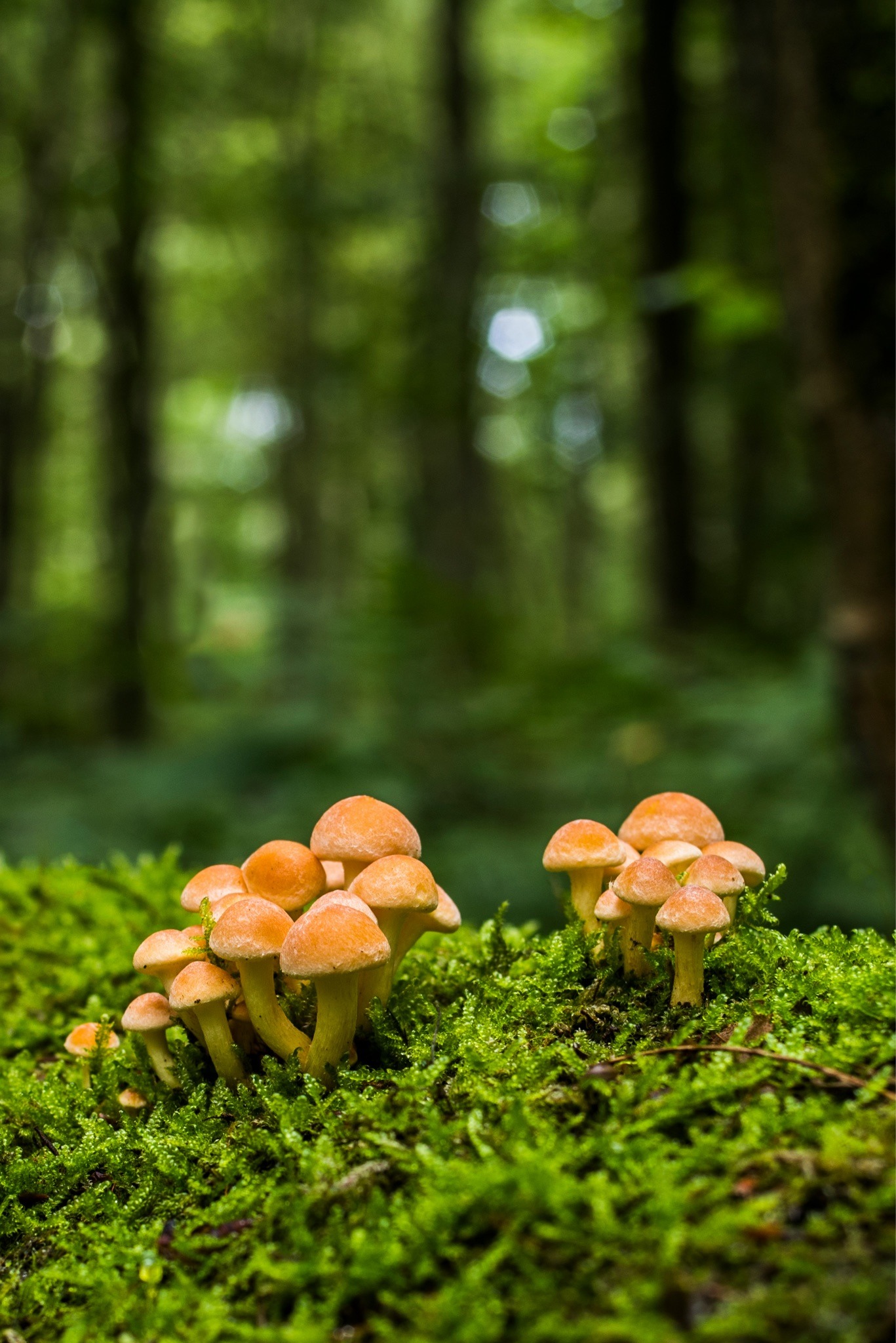
- Gregarious and caespitose growth habit (found in dense clusters). The caps are typically bright sulfur-yellow, often with orange or reddish centers. Gills are initially yellow, turning a characteristic greenish-yellow and eventually olive-brown or dark brown as spores mature.
- Fruiting body
- Cap is convex to flat, 2–6 cm wide, smooth, sulfur-yellow with an orange-brown center. Gills are crowded and adnate, starting yellow and darkening to olive-green. Stipe is 5-10 cm long, slender, often curved, yellow, and may have a faint, dark ring zone from falling spores.
- How to recognise it
- Look for the dense clustering on wood and the distinct greenish tint of the gills, which is rare in other gilled mushrooms. The very bitter taste of the flesh is a diagnostic feature used by mycologists.
- Look-alikes
- Hypholoma capnoides (lacks greenish tints in gills), Hypholoma lateritium (Brick Cap), and Galerina marginata (Funeral Bell).
- Ecological role
- Saprophytic; it plays a vital role in decomposing dead wood and recycling nutrients back into the forest soil.
- Notes
- Hypholoma fasciculare is one of the most common and widely distributed wood-rotting fungi in temperate forests. Its name 'fasciculare' refers to the way the mushrooms grow in bundles or 'fascicles'.