Community find
Chicken of the Woods
Laetiporus sulphureus (complex)
- Group
- polypore
- Spore print
- White
- Size
- Individual caps 5 to 30 cm wide; entire clusters can reach over 60 cm across and weigh several kilograms.
- Season
- Summer to autumn, especially after heavy rainfall in warm weather.
- Habitat
- Dead or dying hardwood trees, particularly oak, cherry, and beech; occasionally found on logs or stumps.
- Distribution
- Widespread throughout North America and Europe, with related species in the complex found globally in temperate regions.
- Key characteristics
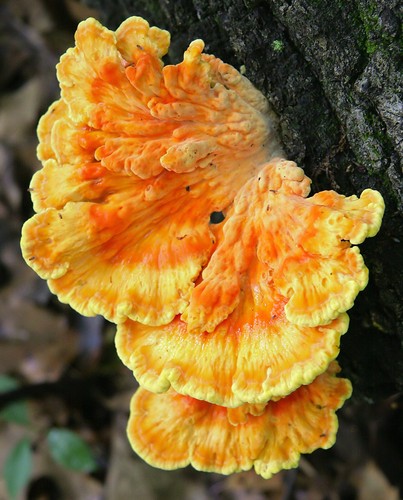
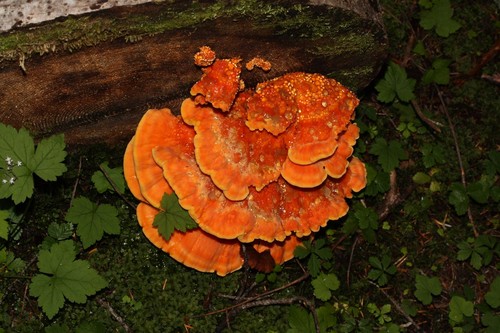
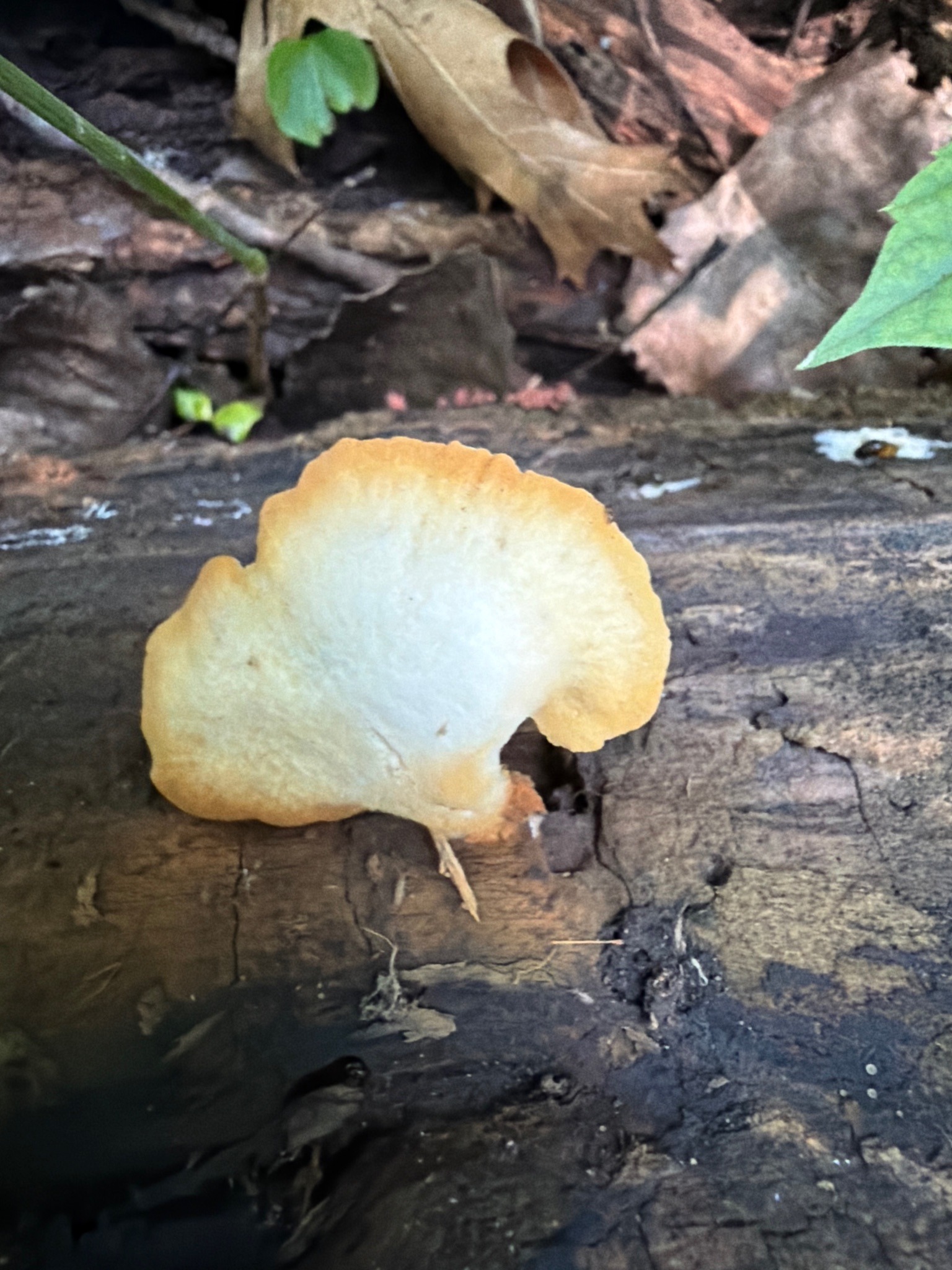
- Fan-shaped or hoof-shaped fruiting bodies, bright orange to yellow upper surface, sulfur-yellow pore surface underneath, undulating margins, soft and fleshy when young, becoming chalky with age.
- Fruiting body
- Individual caps are fan-shaped, 5-30 cm across, often growing in overlapping shelves. The surface is smooth to slightly wrinkled, bright orange-yellow often with lighter margins. The hymenophore consists of tiny sulfur-yellow pores, not gills. The flesh is thick, watery-fibrous, and white to pale yellow.
- How to recognise it
- Look for a shelf-like growth pattern on wood, bright orange/yellow colors, and a yellow pore surface rather than gills. The texture should be somewhat moist and fleshy when fresh.
- Look-alikes
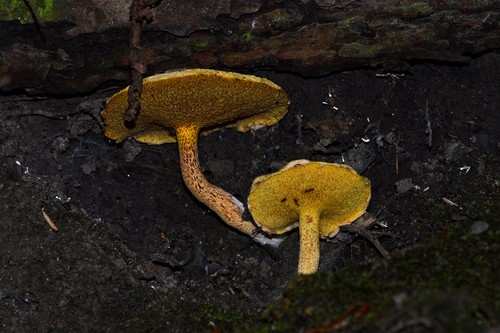
- Laetiporus cincinnatus (which has a white pore surface and often grows at the base of trees), Hapalopilus nidulans (which is smaller, duller, and turns purple with KOH), and Bondarzewia berkeleyi (which is much tougher and brownish).
- Ecological role
- Saprophytic and parasitic; causes a brown cubical heart rot in living trees and continues to decompose the wood after the tree has died.
- Notes
- This fungus is an 'annual' polypore, meaning the fruiting bodies form and decay within a single season. It is a notable cause of heart rot in many species of hardwood trees, significantly impacting forest succession.