Community find
Common Mazegill
Datronia mollis
- Group
- polypore
- Spore print
- White
- Size
- Cap width 2-8 cm across, 1-5 cm deep; thickness ranges from 0.2 to 0.8 cm.
- Season
- Annual but can be found year-round; fruits most actively in autumn and winter.
- Habitat
- Found on the dead wood of deciduous trees, particularly beech and maple; grows on fallen logs and branches.
- Distribution
- Widely distributed across Europe and North America.
- Key characteristics
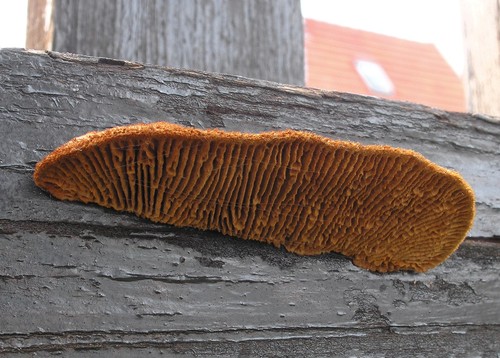
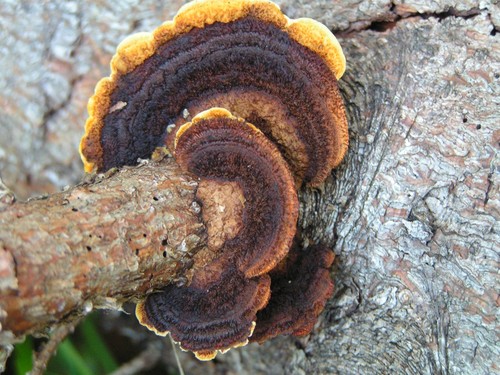
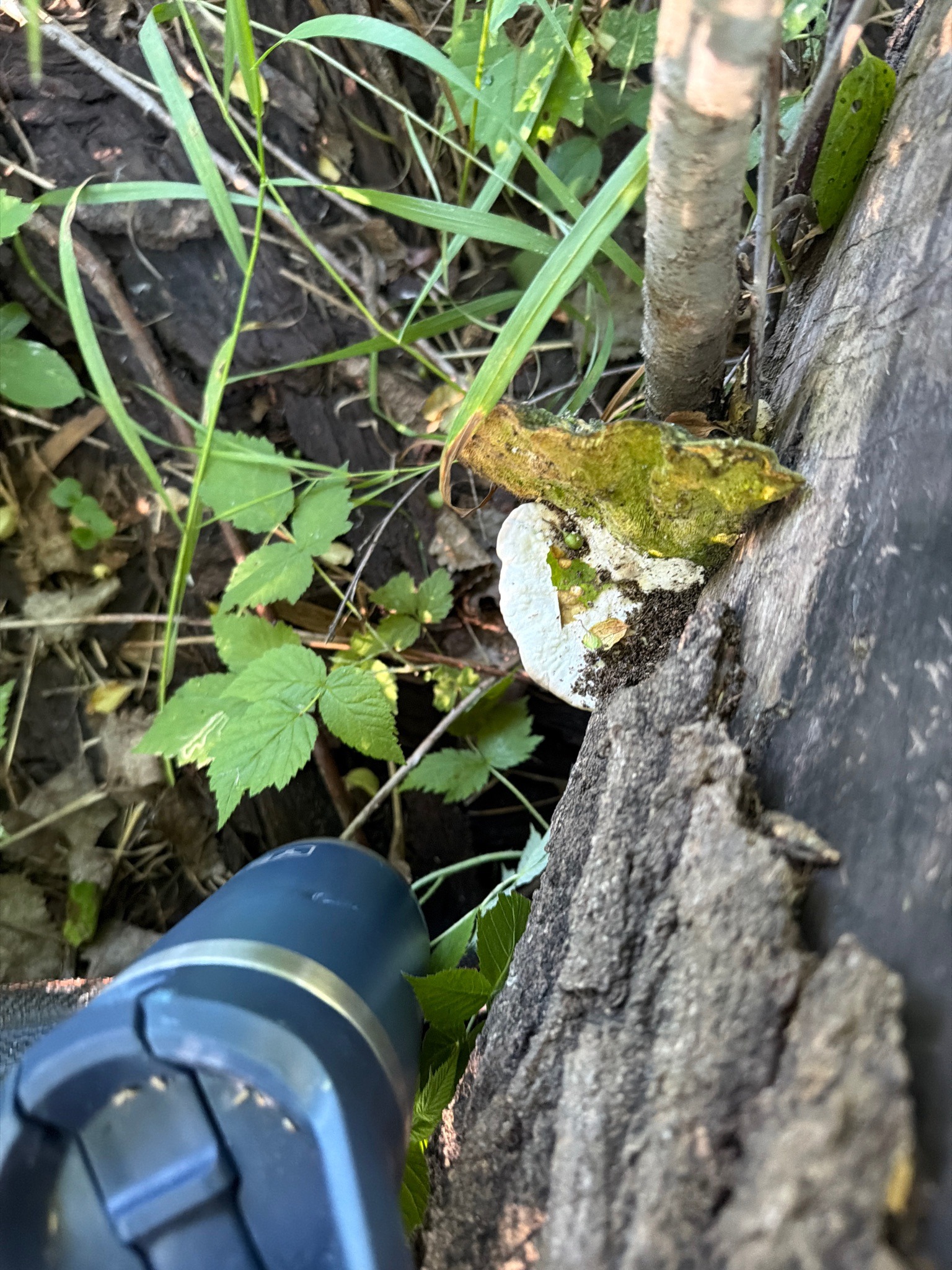
- Thin, bracket-like to resupinate (flat against wood) fungus with a roughly velvety, zoned upper surface that often turns olive-green from algal growth; the underside features elongated pores that look like a maze or irregular slots.
- Fruiting body
- Small, tough, leathery bracket without a stem (sessile). The upper surface is brownish-ochre to gray, frequently covered in moss or algae. The hymenophore (underside) is pale ochre to gray-brown with labyrinthine/daedaleoid (maze-like) pores, 1-2 per mm.
- How to recognise it
- Look for the distinctive maze-like pore pattern on the underside and the overall thin, leathery texture of the bracket growing on hardwood.
- Look-alikes
- Trametes gibbosa (usually thicker/whiter), Daedalea quercina (much larger and tougher), Cerioporus varius (has a distinct black base on the stem).
- Ecological role
- Saprophytic; a white-rot fungus that breaks down lignin and cellulose in hardwood.
- Notes
- The genus name Datronia is derived from a Greek word referring to a screen or sieve, alluding to the pore structure. It is a significant decomposer in forest ecosystems.