Community find
Conecap or Conical Brittlestem
Conocybe apala (also known as Conocybe lactea)
- Group
- gilled mushroom
- Season
- This species typically fruits from late spring through autumn, especially after periods of rain. It can be found singly or in scattered groups.
- Habitat
- Based on the appearance, this mushroom is likely found in grassy areas, lawns, meadows, or disturbed ground. It often grows in rich soil, sometimes associated with wood debris or decaying roots.
- Key characteristics
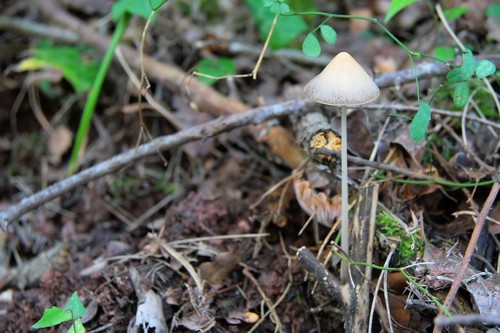
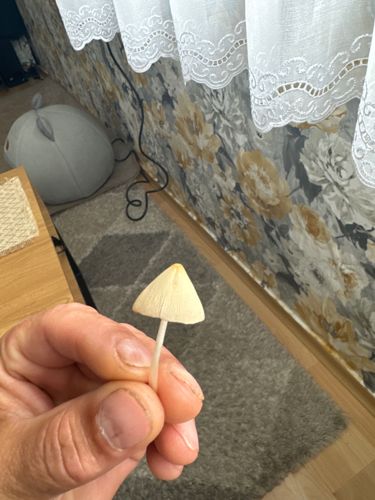
- The mushroom in the image appears to be a small gilled mushroom with a distinctly conical or bell-shaped cap that tapers to a point, yellowish at the apex and cream to pale white elsewhere. The cap surface seems smooth. The gills are likely visible on the underside of the cap, radiating out from the stem. The stem is thin, white, and appears to be delicate. Due to the small size and the lack of a clear view of the gills or base, a spore print color cannot be determined from the image.
- Look-alikes
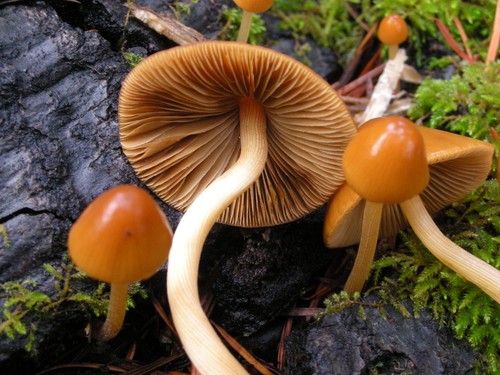
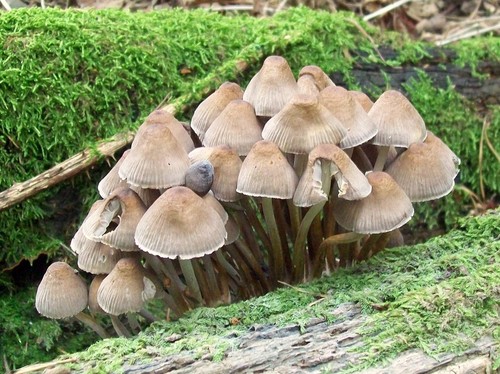
- Several other small, pale Conocybe species can look similar, making specific identification challenging without microscopic examination. Conocybe tenera and other 'common lawn Conocybe' species share a similar growth habit and general appearance but often have more brownish caps. Conocybe albipes is another similar species, also known for its white stem and cap, but its cap tends to be more obtuse or rounded at the top. Distinguishing features often involve spore size and shape, features of the cheilocystidia (cells on gill edges), and pilocystidia (cells on cap surface).
- Ecological role
- As with most Psathyrellaceae species, this mushroom is saprophytic, meaning it obtains nutrients by decomposing dead organic matter. It plays a role in nutrient cycling by breaking down decaying plant material, such as wood, leaf litter, or grass roots, returning nutrients to the soil.