Community find
False Parasol
Chlorophyllum molybdites
- Group
- gilled mushroom
- Spore print
- Green to olive-green
- Size
- Cap diameter 5-40 cm; stipe height 5-25 cm and 1-4 cm thick.
- Season
- Summer and autumn, especially after heavy rains in warm climates.
- Habitat
- Commonly grows in grassy areas like lawns, parks, and golf courses; often forms fairy rings.
- Distribution
- Widespread in tropical and subtropical regions, becoming increasingly common in temperate areas of North America.
- Key characteristics
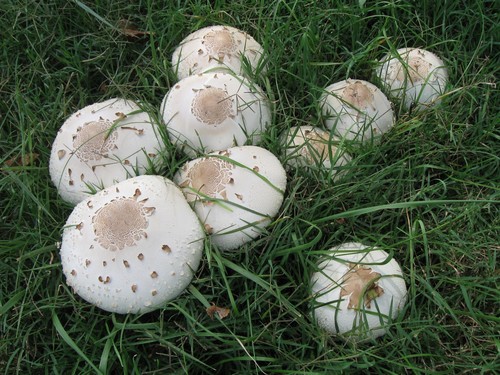
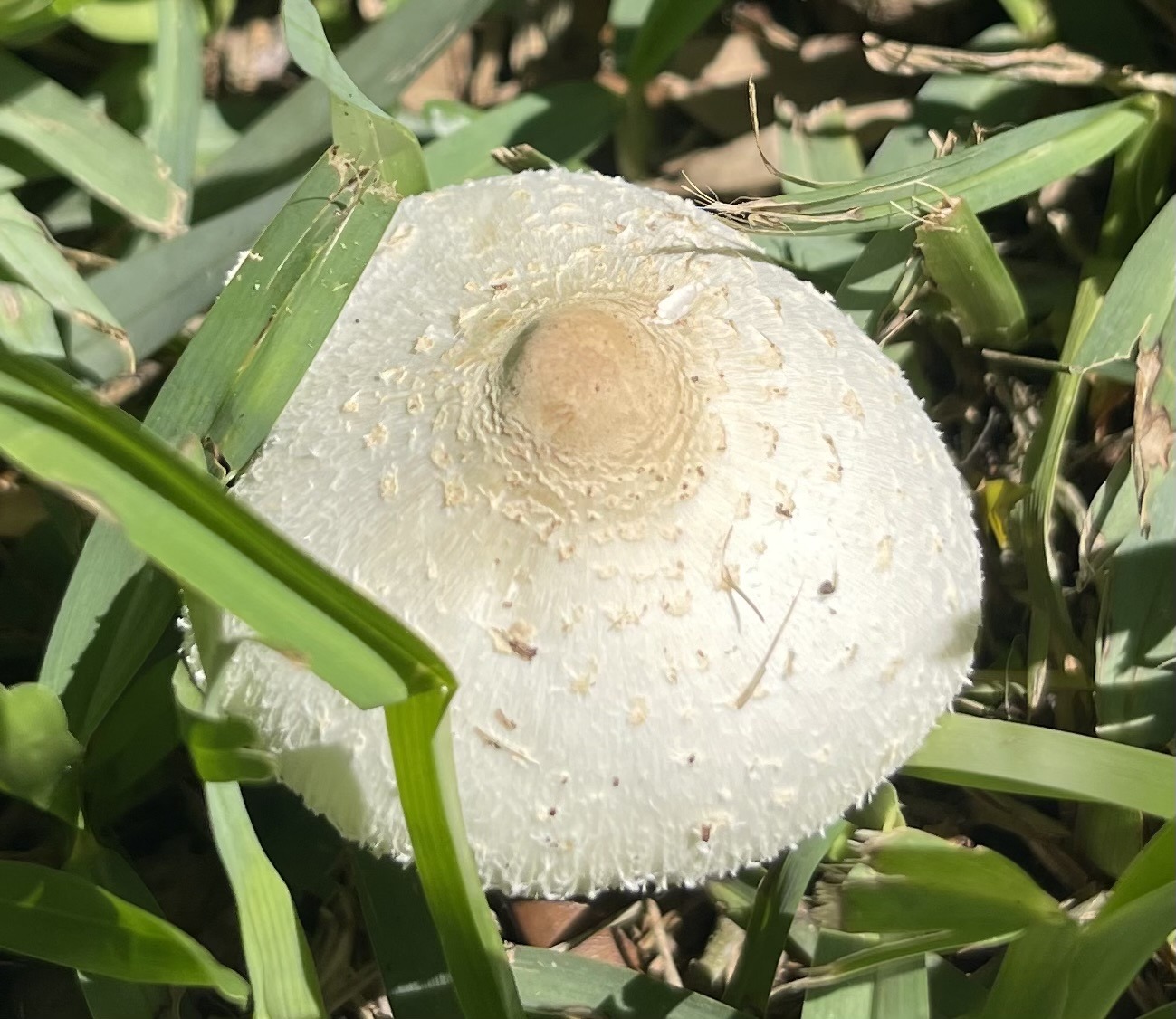
- Large white cap with brownish scales; greenish gills when mature; a prominent double-edged ring on the stem.
- Fruiting body
- Cap starts ball-shaped and expands to a broad convex or flat shape with a brownish central bump (umbo); surface is white with scattered brownish scales. Hymenophore consists of free, crowded gills that turn from white to a distinctive dingy green as spores mature. The stipe is long, smooth, and features a thick, movable ring.
- How to recognise it
- The most diagnostic feature is the green spore print in mature specimens. Check for free gills that have a greenish tint and the presence of a double-edged ring on its smooth stem.
- Look-alikes
- Chlorophyllum rhacodes (Shaggy Parasol) which has a white spore print, and Macrolepiota procera (Parasol Mushroom) which also has a white spore print and a snakeskin-like pattern on the stem.
- Ecological role
- Saprophytic, breaking down organic matter in the soil and grass thatch.
- Notes
- This species is famous for forming large 'fairy rings' in suburban lawns. It is one of the most frequently encountered mushrooms in urban landscapes during the summer months.