Community find
False Parasol
Chlorophyllum molybdites
- Group
- gilled mushroom
- Spore print
- Dull green to olive-green.
- Size
- Cap diameter 5-40 cm; stipe 5-25 cm long and 1-4 cm thick.
- Season
- Summer to autumn, especially after heavy rains and in warm temperature conditions.
- Habitat
- Commonly found in lawns, grassy areas, meadows, and parks, often forming 'fairy rings'.
- Distribution
- Widespread in tropical and subtropical regions worldwide, and common in the southern United States.
- Key characteristics
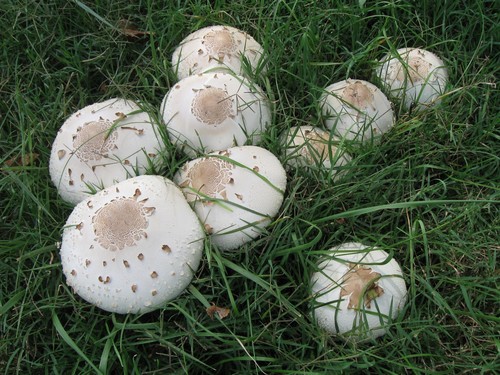
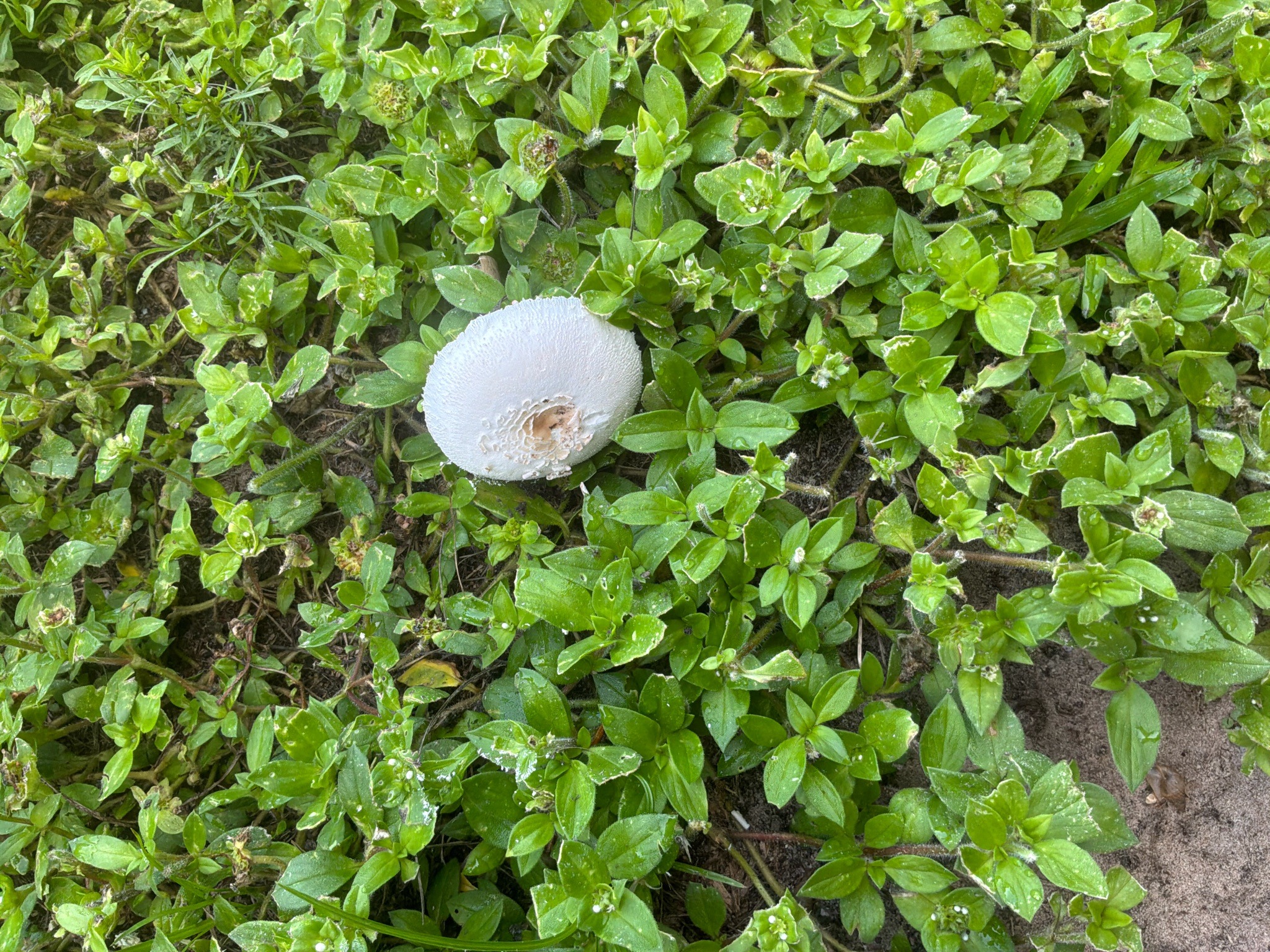
- Large, fleshy mushroom with a white cap covered in brownish scales, green spore print, and a ring on the stem.
- Fruiting body
- Cap is initially hemispherical and becomes convex to flat; surface is white with darker brownish scales that break apart. Gills are free from the stem, white when young, turning dingy green with age. Stipe is smooth, white or brownish, with a double-edged thick ring.
- How to recognise it
- The distinctive green spore print is the most reliable field characteristic to distinguish it from other large white mushrooms.
- Look-alikes
- Macrolepiota procera (Parasol Mushroom) which has a white spore print and a snakeskin-like pattern on the stem.
- Ecological role
- Saprophytic, breaking down organic matter in soil and grass.
- Notes
- It is one of the most frequently encountered mushrooms in urban environments and is famous for its ability to create large, conspicuous fairy rings in golf courses and residential yards.