Community find
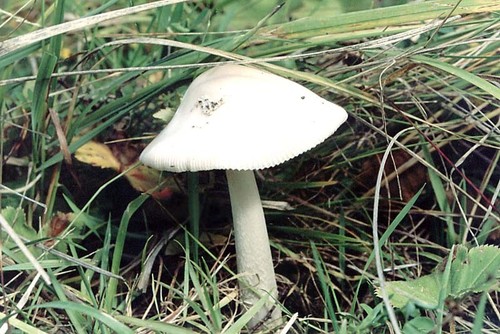
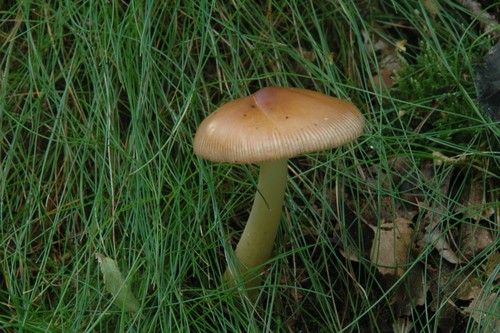
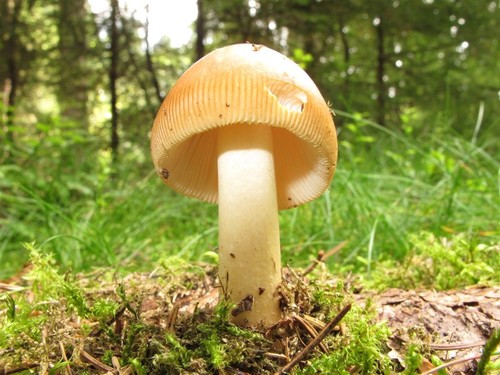
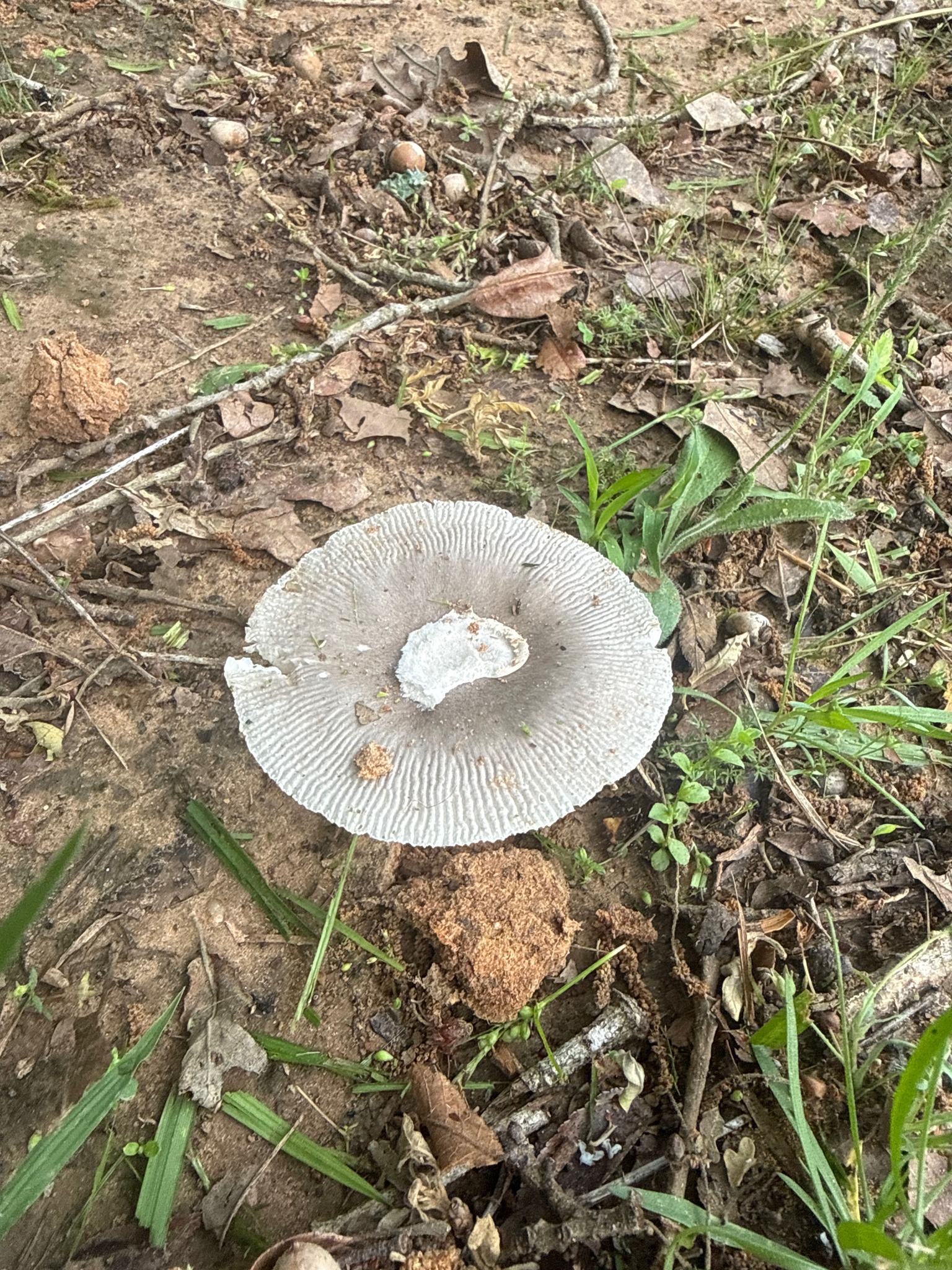
Grisette (likely Amanita vaginata group)
Amanita vaginata
- Group
- gilled mushroom
- Spore print
- White
- Size
- Cap diameter: 3-10 cm; Stipe: 8-15 cm long, 0.5-1.5 cm thick.
- Season
- Summer to early autumn, typically after significant rainfall.
- Habitat
- Found on the ground in both deciduous and coniferous forests; common in woodland clearings or trail edges.
- Distribution
- Widespread across the Northern Hemisphere, including North America, Europe, and Asia.
- Key characteristics
- Greyish cap with deeply striate (grooved) margins, lacking a ring (annulus) on the stem, and emerging from a bag-like volva at the base.
- Fruiting body
- Cap is initially ovoid then expands to convex or flat, often with a central bump (umbo), silvery-grey to brownish-grey. Hymenophore consists of free, white, crowded gills. Stipe is slender, white to pale grey, fragile, and lacks a ring. Base is encased in a white, sack-like volva.
- How to recognise it
- Look for the very prominent radial grooves (striations) on the cap edge, the total absence of a ring on the stem, and the sack-like volva at the very base of the stem (often buried).
- Look-alikes
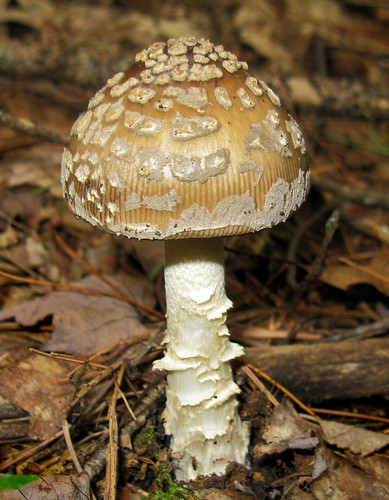
- Amanita ceciliae (snakeskin grisette), which is larger with warts; Amanita pachycolea (western grisette), which is larger and darker.
- Ecological role
- Mycorrhizal, forming symbiotic relationships with the root systems of various trees.
- Notes
- Members of the Amanita section Vaginatae are unique within the genus because they strictly lack a partial veil, meaning they never develop a ring on the stalk. The 'Amanita vaginata' name likely represents a complex of many closely related, similar-looking species rather than a single global species.