Community find
Parasol Mushroom
Macrolepiota procera
- Group
- gilled mushroom
- Spore print
- White to pale cream
- Size
- Cap diameter 10-25 cm; Stipe length 15-40 cm, diameter 1-2 cm.
- Season
- Generally fruits from late summer to late autumn, following periods of warm and wet weather.
- Habitat
- Grows in grassy areas, meadows, open woodlands, pastures, and along forest edges. Often found on well-drained soil.
- Distribution
- Widely distributed throughout Europe, North America, North Africa, and parts of Asia.
- Key characteristics
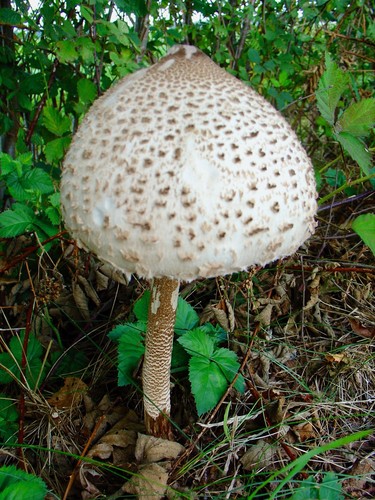
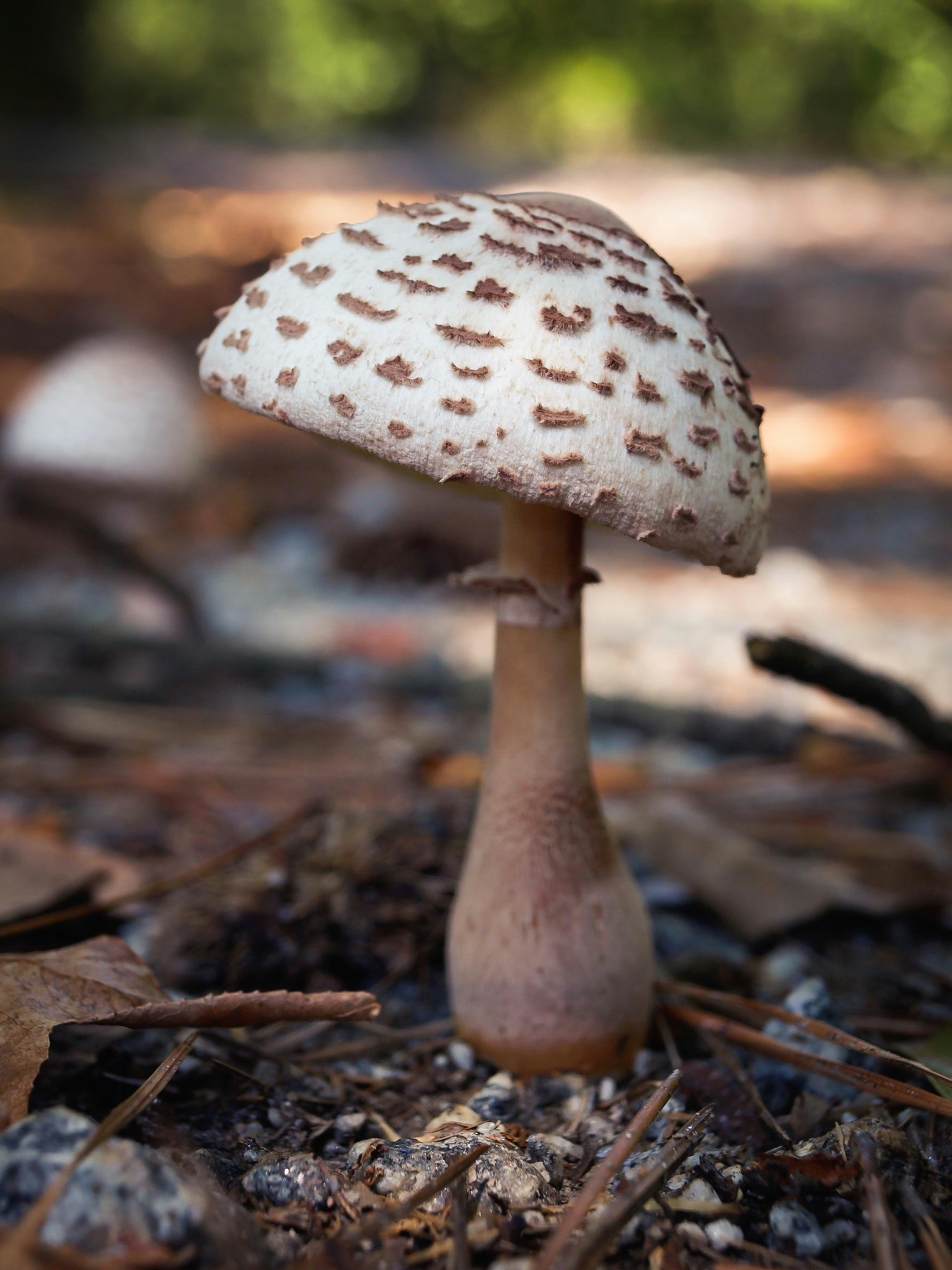
- Large white to cream cap covered in coarse, brown, concentric scales with a dark central bump (umbo). The gills are crowded and free from the stem. The stipe is tall, slender, and possesses a double-edged, movable ring.
- Fruiting body
- Cap starts ovate, expanding to a flat or slightly umbonate shape. Surface is dry with flaky brown scales. Gills are white, free from the stipe, and very crowded. The stipe is long, hollow, and features a snakeskin-like pattern (marmorated) with a bulbous base and a thick, sliding ring.
- How to recognise it
- Look for the large size, the dark central umbo, the movable ring on the stipe, and the characteristic brown zig-zag or snakeskin pattern on the stem surface.
- Look-alikes
- Chlorophyllum molybdites (False Parasol) which has a green spore print; Macrolepiota mastoidea which is smaller and more slender; Lepiota species which are typically much smaller and have non-movable rings.
- Ecological role
- Saprophytic, breaking down organic matter in the soil and grass thatch.
- Notes
- The genus name Macrolepiota is derived from the Greek 'makros' meaning large and 'lepis' meaning scale. These mushrooms are notable for their impressive height, sometimes reaching over a foot tall, making them some of the tallest gilled mushrooms in the world.