Community find
Yellow-Staining Mushroom
Agaricus xanthodermus
- Group
- gilled mushroom
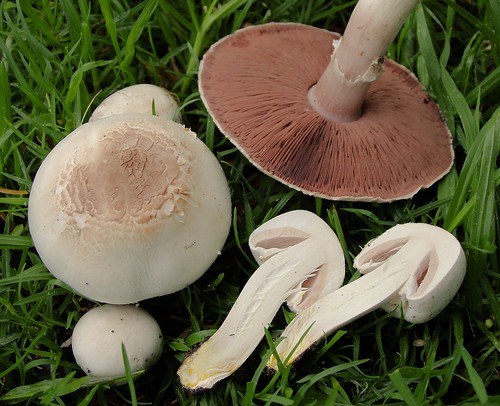
- Spore print
- Dark chocolate brown
- Size
- Cap diameter 5-15 cm; Stipe length 6-12 cm, width 1-2 cm.
- Season
- Typically appears from late summer through autumn, often after heavy rains.
- Habitat
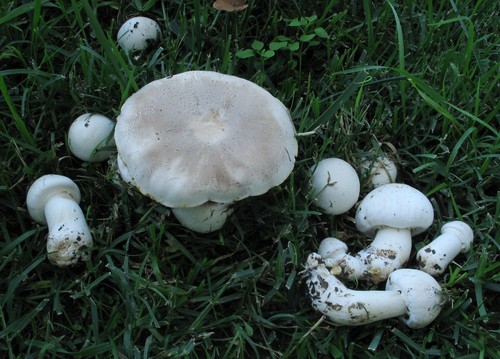
- Found in gardens, lawns, parks, and along roadsides; often grows in clusters or fairy rings in grassy areas.
- Distribution
- Widespread throughout Europe, North America, and has been introduced to Australia and parts of Africa.
- Key characteristics
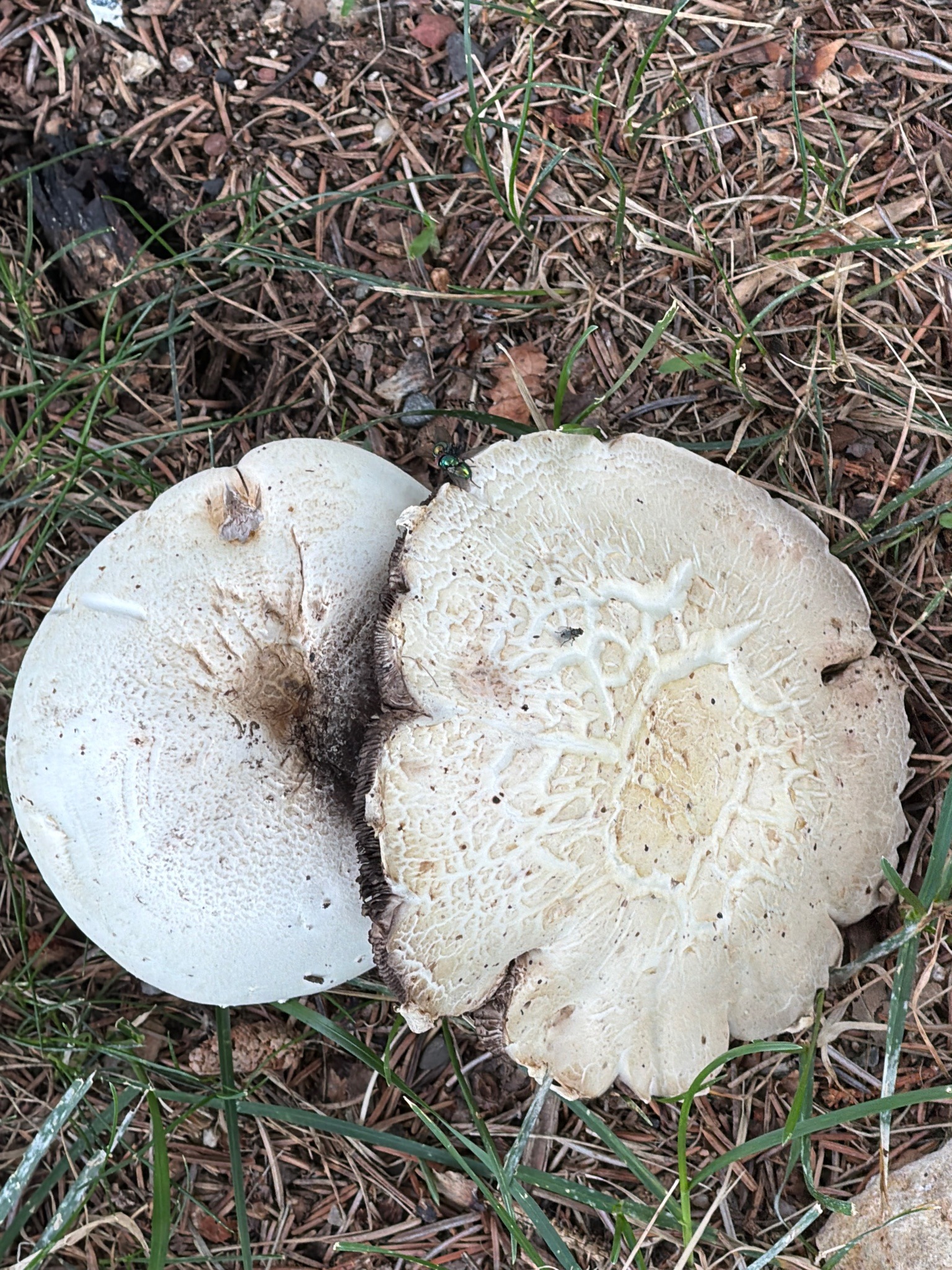
- White to off-white cap that often develops cracks or a tessellated appearance in dry conditions; turns yellow when bruised (especially at the base of the stem); dark brown gills at maturity; robust stipe with a ring.
- Fruiting body
- Cap: 5-15 cm diameter, initially hemispherical then flattening out, white surface often cracking into scales. Gills: Free, initially pink but turning dark chocolate brown as spores mature. Stipe: 5-15 cm long, cylindrical with a bulbous base, featuring a large, double-edged ring.
- How to recognise it
- Scratch the surface of the cap or the base of the stem to observe an immediate bright yellow stain; Note the distinctive 'phenol' or ink-like smell, which becomes stronger if the mushroom is crushed or heated.
- Look-alikes
- Agaricus bisporus (cultivated mushroom), Agaricus arvensis (Horse Mushroom), and Agaricus campestris (Field Mushroom). It is distinguished by its vivid yellow staining and a characteristic chemical odor.
- Ecological role
- Saprophytic, breaking down organic matter in the soil and grass.
- Notes
- The species name 'xanthodermus' is derived from Ancient Greek words meaning 'yellow skin.' It is one of the most common causes of misidentification among white mushrooms found in urban environments.