
Fungi encyclopedia
A reference for the fungi you actually find
Each entry describes one species the way you meet it in the field — the cap and its surface, what sits underneath, the stipe and its base, the spore print colour, the substrate it fruits from, and the species most often confused with it.
Showing results for “Brite Brittlegill”
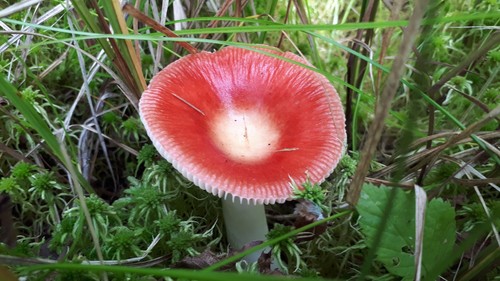
The Sickener
Gilled
A vivid scarlet brittlegill of damp conifer woodland and sphagnum, with a shiny cap whose skin peels almost to the centre, pure white gills, a white chalky stem and a white spore print.
Spore print · White
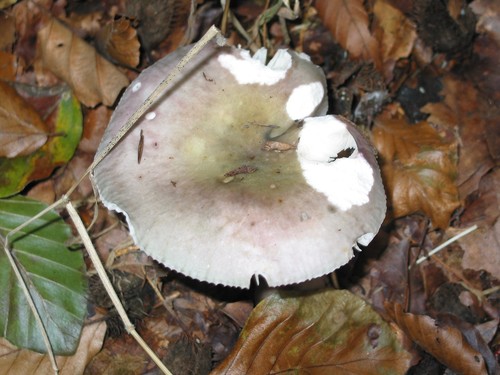
Charcoal Burner
Gilled
A common woodland brittlegill with a variably purple, green and slate-grey cap, unique in the genus for gills that are soft, greasy and flexible rather than brittle and shattering.
Spore print · White
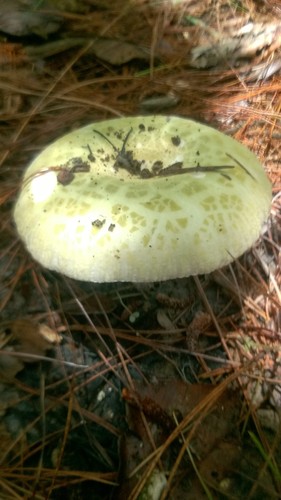
Green Cracking Russula
Gilled
A firm green brittlegill whose dry cap skin breaks into a mosaic of angular patches over paler flesh, above chalk-white brittle gills and a stout ringless stipe.
Spore print · White to pale cream
Grass-green Russula
Gilled
An evenly grass-green brittlegill of birch woods, distinguished by its smooth unpatched cap, cream-ochre spore print and rusty spotting on ageing gills.
Spore print · Cream to pale ochre
Sickener
Gilled
A vivid scarlet brittlegill of wet conifer woodland and bog moss, with pure white brittle gills, a white chalk-like stipe and a cap skin that peels away almost to the centre.
Spore print · White
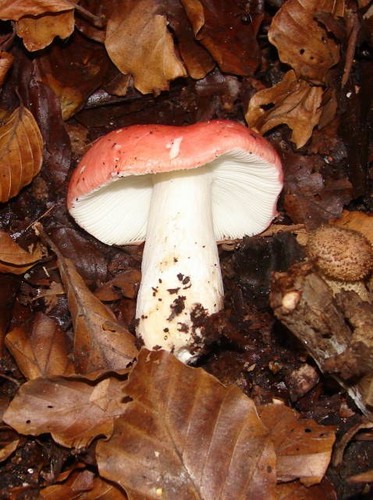
Beechwood Sickener
Gilled
A compact scarlet brittlegill restricted to beech woods, distinguished from its conifer relatives by firmer flesh, a matt cap whose skin peels only part-way, and crowded white gills.
Spore print · White
Powdery Piggyback
Gilled
A small parasitic mushroom that grows on decaying blackening brittlegills, its rounded white cap soon breaking into a brown powdery mass of asexual spores.
Spore print · White, rarely produced