
Fungi encyclopedia
A reference for the fungi you actually find
Each entry describes one species the way you meet it in the field — the cap and its surface, what sits underneath, the stipe and its base, the spore print colour, the substrate it fruits from, and the species most often confused with it.
Showing results for “Brite Brittlegill”
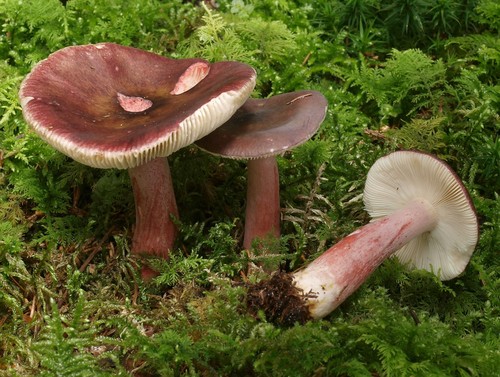
Gooseberry Brittlegill
Gilled
A slender purple-wine brittlegill of spruce plantations, recognised by its purple-flushed stipe, pale cream gills and a distinct fruity gooseberry smell.
Spore print · Pale cream
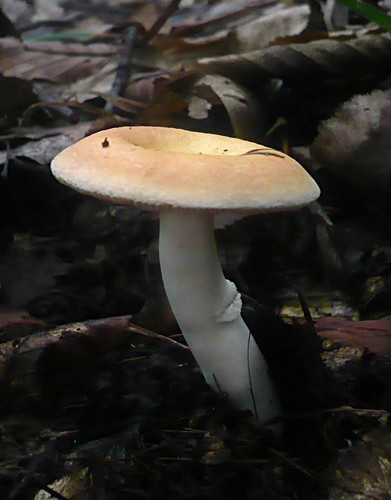
Golden Brittlegill
Gilled
A small, brightly coloured brittlegill with one of the deepest yellow spore prints in the genus. Its cap ranges through gold, apricot, orange and rose, often on a single flush.
Spore print · Deep yellow to ochre
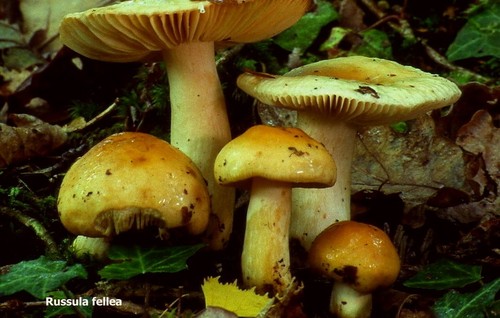
Geranium Brittlegill
Gilled
A beech-wood brittlegill in which cap, gills and stipe are all the same pale straw-honey colour, identified by that uniformity together with a strong smell of geranium leaves.
Spore print · Pale cream
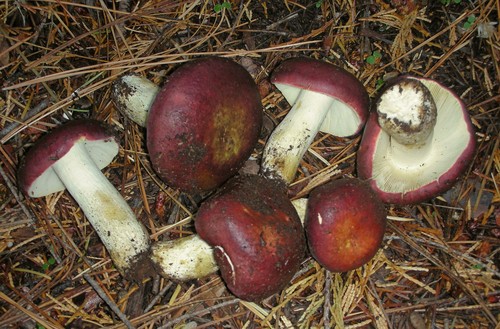
Crab Brittlegill
Gilled
A robust brittlegill with a dark wine-red cap, ochre gills and a stipe flushed pink that browns wherever it is handled, accompanied by a strong smell of shellfish.
Spore print · Ochre
Stinking Brittlegill
Gilled
A big, stout ochre-brown brittlegill with a slimy cap, a strongly grooved and warty margin and a heavy rancid oily smell, its stout stipe becoming chambered and hollow.
Spore print · Pale cream
Sepia Brittlegill
Gilled
A dull sepia-brown brittlegill of grassy parkland and path edges, recognised by its strongly ridged cap margin and strong unpleasant odour. It is typically found under oak and lime.
Spore print · Cream
Ochre Brittlegill
Gilled
One of the most abundant woodland brittlegills, with a plain dull ochre-yellow cap, pale cream gills and a white stipe that greys distinctly with age and wet weather.
Spore print · Pale cream
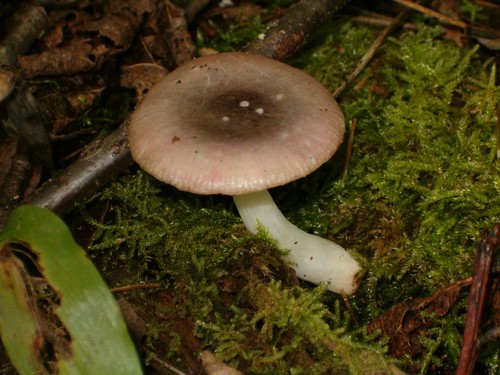
Fragile Brittlegill
Gilled
A small, extremely fragile brittlegill with a variably purple, wine or olive-centred cap. A hand lens reveals finely serrated gill edges, a rare and diagnostic feature.
Spore print · White
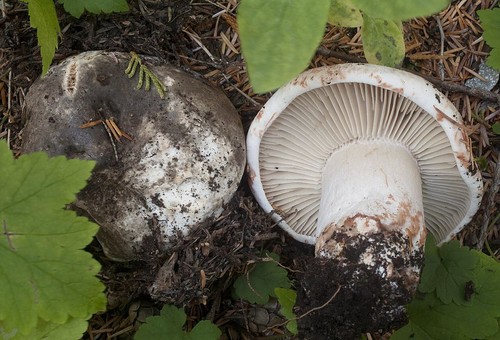
Blackening Brittlegill
Gilled
A heavy, thick-fleshed brittlegill with unusually distant, fat gills whose white flesh reddens then slowly turns grey and finally coal-black, leaving charred-looking husks that persist for months.
Spore print · White
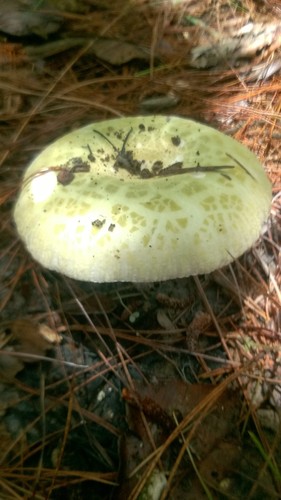
Greencracked Brittlegill
Gilled
An unmistakable brittlegill whose firm green cap breaks up into a mosaic of angular verrucose patches, paired with white brittle gills and a plain white stipe.
Spore print · White
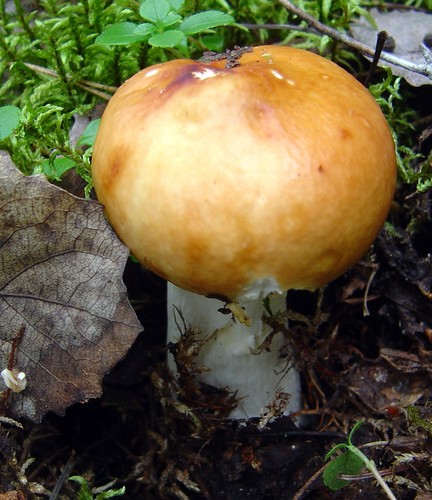
Copper Brittlegill
Gilled
A sturdy orange-brown brittlegill of northern pine woods whose white flesh and stipe turn ash-grey and finally blackish as the fruiting body ages.
Spore print · Pale ochre
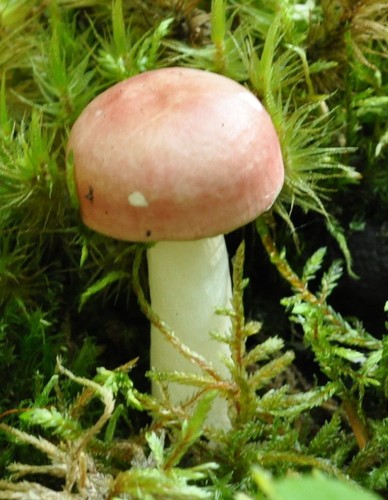
Birch Brittlegill
Gilled
A small, delicate brittlegill with a pale rosy or almost white cap, found only with birch on wet acid ground. Its thin flesh and grooved margin make it one of the frailest of the genus.
Spore print · White
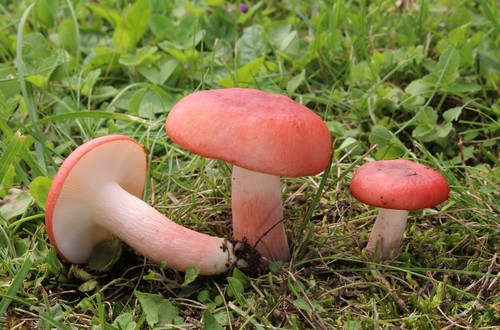
Bloody Brittlegill
Gilled
A firm pine-wood brittlegill with a matt blood-red cap and a stipe usually flushed the same colour. Its slightly decurrent cream gills and dry cap skin set it apart from other red species.
Spore print · Pale cream
Yellowing Brittlegill
Gilled
A small, fragile brittlegill whose entire fruiting body — cap, gills, stipe and flesh — discolours a deep honey-yellow with age or handling. It is common in damp mossy conifer woodland.
Spore print · Pale cream
Powdery Brittlegill
Gilled
A medium-sized brittlegill with a matt, slate-blue to grey-green cap covered in a fine frosted bloom. It is common with oak in parks, avenues and open woodland.
Spore print · Cream
Primrose Brittlegill
Gilled
A dark purple pine-wood brittlegill named for its primrose-yellow gills, which contrast sharply with the violet-flushed stipe. It is one of the most consistent brittlegills of sandy conifer plantations.
Spore print · Pale cream
Purple Brittlegill
Gilled
A common brittlegill with a deep purple cap darkening almost to black at the centre, cream gills and a firm white stipe that ages dirty grey.
Spore print · Pale cream
Rosy Brittlegill
Gilled
A hard-fleshed rose-red brittlegill of beech woods with a distinctive matt, chalky cap surface and a stipe often flushed pink at the base.
Spore print · Cream
Velvet Brittlegill
Gilled
A firm brittlegill with a dry velvety cap in olive-yellow or violet tones and a white stipe washed with lilac or rose. Both cap and stipe carry a fine powdery bloom.
Spore print · Pale cream
Milk-white Brittlegill
Gilled
A large, chalk-white funnel-shaped brittlegill that pushes up through the soil, often emerging still crusted with earth and litter. Its decurrent, widely spaced gills are unusual for the genus.
Spore print · White to pale cream
Yellow Swamp Brittlegill
Gilled
A striking pure chrome-yellow brittlegill of boggy birch woods, identified by its bright unfaded cap and by flesh that turns grey and eventually black where cut or bruised.
Spore print · Pale ochre
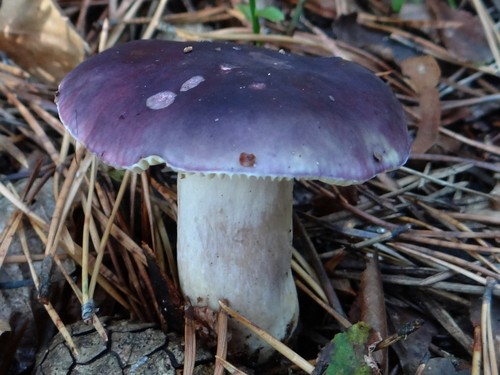
Blue Band Brittlegill
Gilled
A modestly sized conifer brittlegill with a delicately lilac to azure cap dusted with a fine bloom, often paler or ochre-tinted at the centre. Its gills and spore deposit stay close to white.
Spore print · White to palest cream
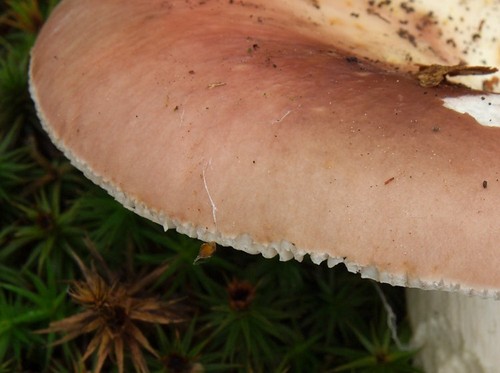
Bare-toothed Brittlegill
Gilled
A firm, muted pinkish-brown brittlegill whose cap skin shrinks back from the rim to expose a fine pale line of gill ends. It partners with oak and beech on well-drained soils.
Spore print · White to very pale cream
Short-stemmed Russula
Gilled
A large, chalk-white North American brittlegill with a deeply funnelled cap, crowded decurrent gills and a very short stout stipe, often pushing up in mounds through forest duff.
Spore print · White to pale cream