
Fungi encyclopedia
A reference for the fungi you actually find
Each entry describes one species the way you meet it in the field — the cap and its surface, what sits underneath, the stipe and its base, the spore print colour, the substrate it fruits from, and the species most often confused with it.
Showing results for “Porcini”
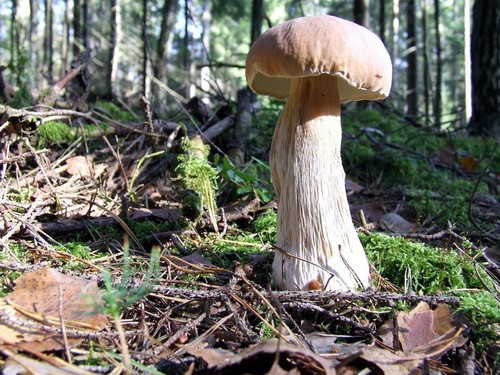
Porcini
Boletes
The archetypal stout bolete, with a smooth brown bun-shaped cap, white pores ageing yellow-olive, and a swollen pale stipe netted with fine white reticulation. Flesh stays white and unchanging when cut.
Spore print · Olive-brown
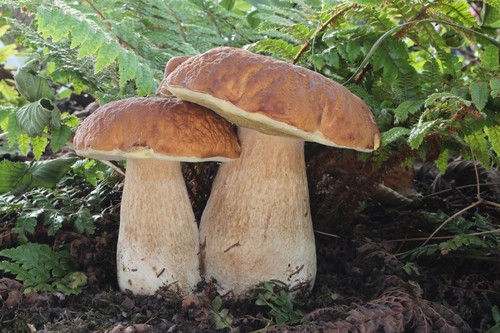
King Bolete
Boletes
A heavy, bun-shaped brown bolete with a stout swollen white stipe carrying fine pale netting, and a sponge layer that ages from white through cream to olive-yellow without bruising blue.
Spore print · Olive-brown
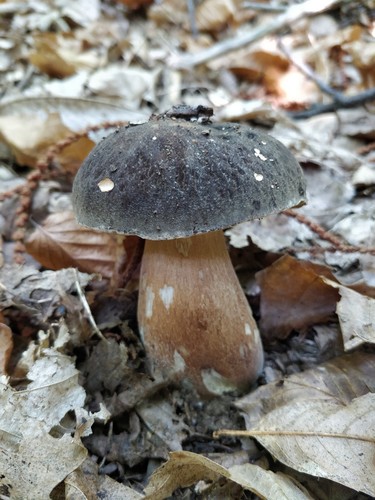
Bronze Bolete
Boletes
The darkest member of the porcini group, with a sooty bronze to almost black velvety cap over a brown stipe finely netted in pale lines. Flesh white and unchanging.
Spore print · Olive-brown
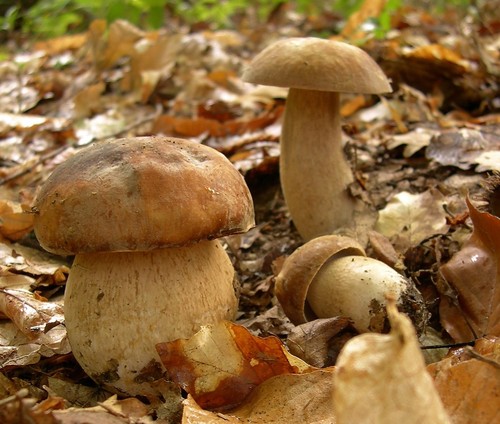
Summer Bolete
Boletes
An early-season relative of the porcini with a dry, velvety, often crazed brown cap and a pale net covering the whole length of the stipe. Flesh is white and unchanging.
Spore print · Olive-brown
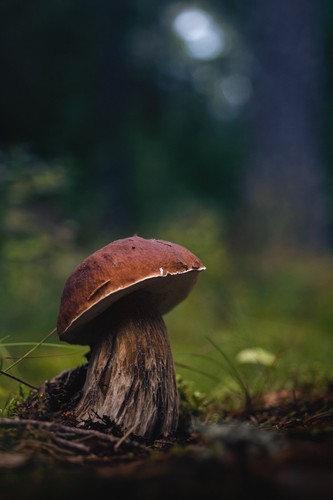
Pine Bolete
Boletes
A dark red-brown member of the porcini group tied to pine and spruce, with a bumpy matte cap and a stout stipe bearing a reddish-tinged net over a brown ground.
Spore print · Olive-brown
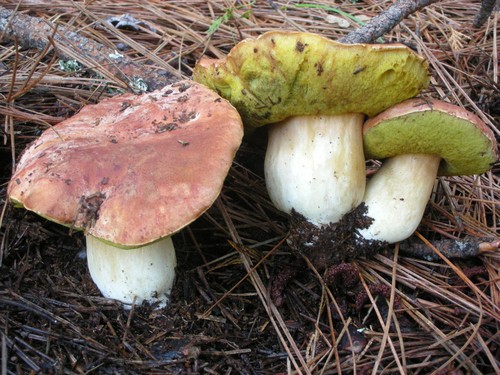
Spring King Bolete
Boletes
A western North American porcini relative that fruits in clustered groups near melting snow in mountain conifer forest, often half-buried with a soil-crusted reddish-brown cap.
Spore print · Olive-brown