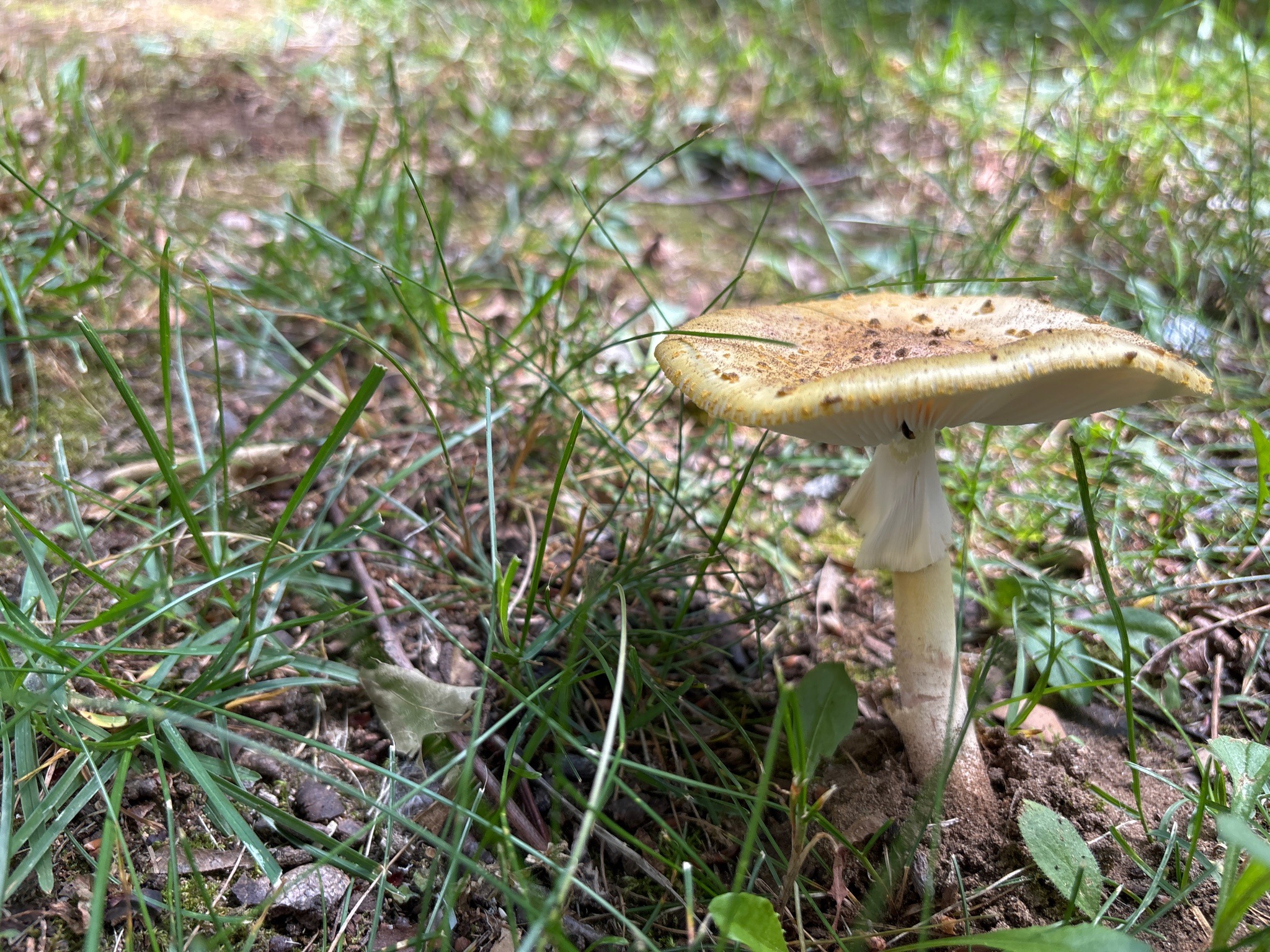
Community find
American Blusher
Amanita amerirubescens complex
- Group
- gilled mushroom
- Spore print
- White
- Size
- Cap diameter 5-15 cm; Stipe 5-20 cm long and 1-2 cm thick.
- Season
- Typically fruits from early summer through autumn (June to October in temperate regions).
- Habitat
- Primarily in mixed forests, forming associations with various deciduous and coniferous trees like oaks and pines.
- Distribution
- Widely distributed across North America, particularly in eastern regions.
- Key characteristics
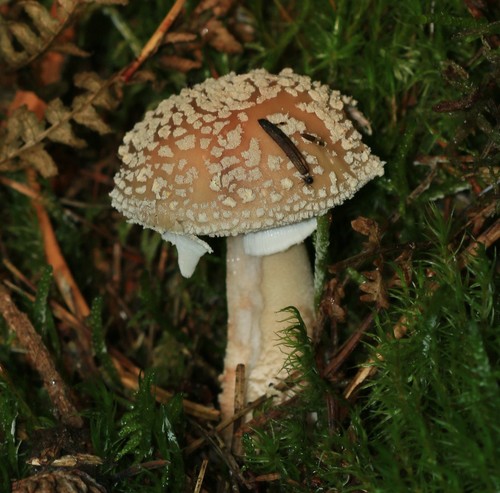
- Yellowish-brown to tan cap with small warts, white gills that bruise reddish-pink, and a prominent ring on the stem. The stem base often shows reddish staining where damaged.
- Fruiting body
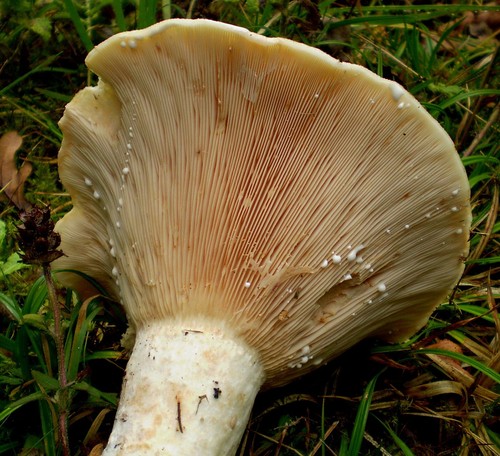
- Cap is convex to flat, 5-15cm wide, with patchy universal veil remnants (warts). Hymenophore consists of free, crowded white gills. Stipe is 5-20cm long, featuring a skirt-like annulus (ring) and a bulbous base. Flesh stains pinkish-red when bruised.
- How to recognise it
- Look for the characteristic 'blushing' effect where the flesh or exterior surfaces turn reddish or pinkish when cut, bruised, or eaten by insects. Check for a white spore print and a bulbous stem base.
- Look-alikes
- Amanita pantherina (lacks the reddish staining), Amanita flavorubens (more yellow overall), and members of the Amanita muscaria complex.
- Ecological role
- Mycorrhizal, forming a symbiotic relationship with the root systems of trees to exchange nutrients and water.
- Notes
- The 'blusher' name refers to the distinctive color change of the flesh upon exposure to air. This species is part of a complex, meaning there are several genetically distinct but visually similar species grouped under this name in North America.