Community find
Brown Birch Bolete
Leccinum scabrum
- Group
- Boletes (boletus)
- Season
- Summer to early autumn, especially after periods of rain.
- Habitat
- Typically found on the ground in woodlands, often in association with birch, aspen, or oak trees.
- Key characteristics
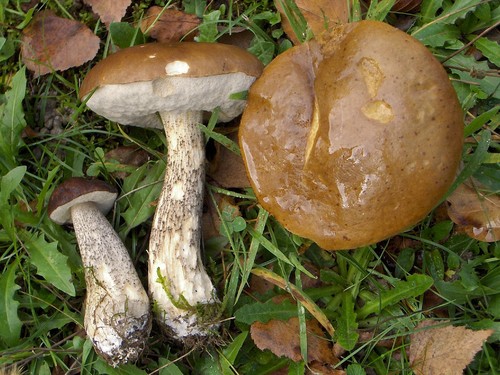
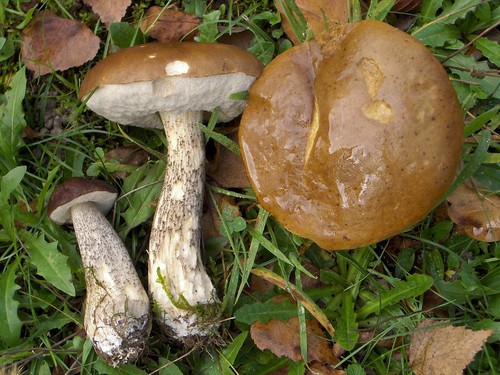
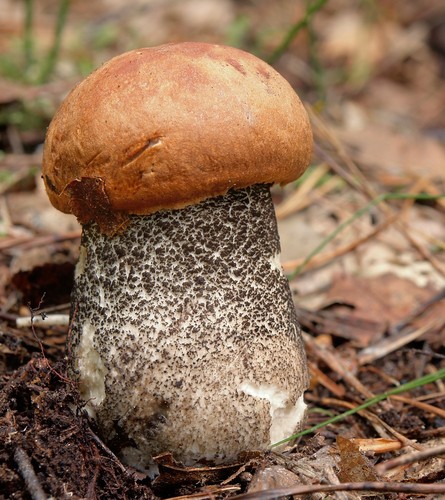
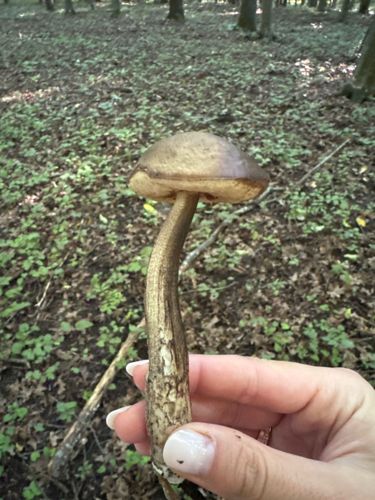
- Cap: Brownish, convex to broadly convex, dry to slightly tacky surface. Pores: Whitish to grayish, bruising brownish or yellowish. Stem: Pale to brownish, tall and slender, tapers upwards, covered with small, dark scabers (dots or scales) which may be darker brown or black.
- Look-alikes
- There are several other Leccinum species, many of which are very similar and difficult to distinguish without microscopic examination or specific host tree identification. For example, Leccinum holopus (White Birch Bolete) is paler, and Leccinum versipelle (Orange Birch Bolete) has an orange cap and usually darkens when cut.
- Ecological role
- Mycorrhizal, forming a symbiotic relationship with trees such as birch, aspen, and oak, exchanging nutrients.