Community find
Golden Oyster Mushroom
Pleurotus citrinopileatus
- Group
- gilled mushroom
- Spore print
- White to pale pinkish-grey.
- Size
- Cap diameter: 20-65mm; Stipe length: 20-50mm, width: 2-8mm.
- Season
- Typically fruits from late spring through late autumn, often appearing quickly after heavy rains.
- Habitat
- Grows primarily as a saprotrophic fungus on decaying hardwood logs and stumps, specifically elms, oaks, and beeches. It prefers warm, humid conditions.
- Distribution
- Native to subtropical regions of eastern Russia, northern China, and Japan. It has recently become widely naturalized and invasive in North America, particularly the Midwestern United States.
- Key characteristics
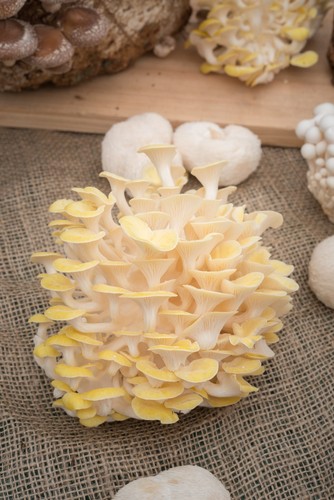
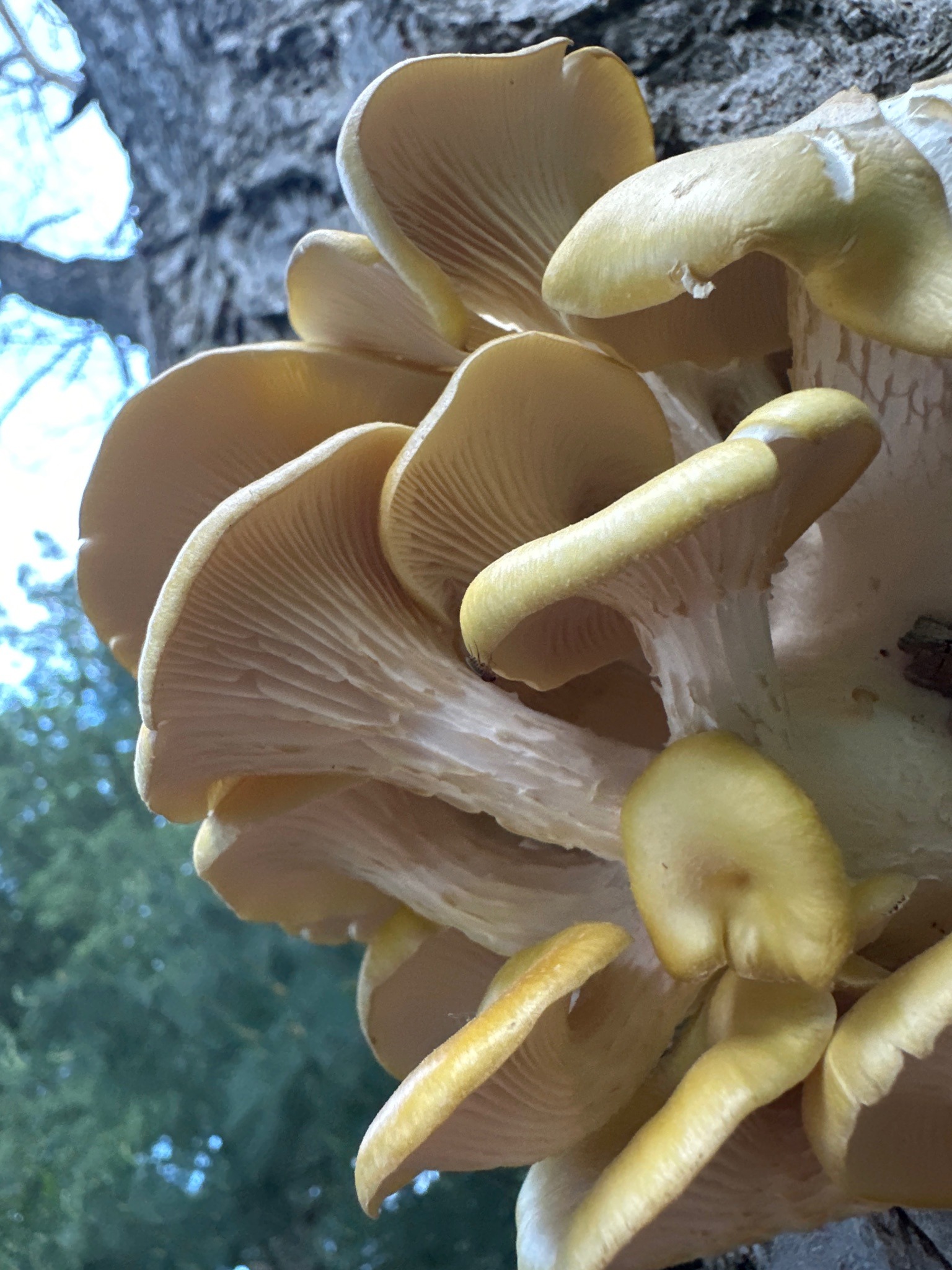
- Characterized by golden-yellow to bright yellow caps, decurrent gills, and a cluster-like growth pattern on wood. The caps are often thin-fleshed and funnel-shaped as they mature.
- Fruiting body
- Caps are 2-6 cm wide, initially convex then becoming depressed/funnel-shaped, bright yellow. Hymenophore consists of white to pale yellow gills that run down the stem (decurrent). Stipe is eccentric or central, white to cream-colored, often growing in a fused cluster from a single base.
- How to recognise it
- Look for the bright golden-yellow cap color and deeply decurrent gills growing in dense, overlapping clusters on hardwood. The smell is often described as slightly aromatic or reminiscent of watermelon rind.
- Look-alikes
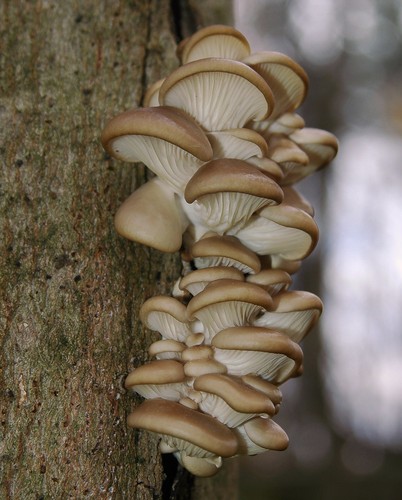
- Pleurotus ostreatus (Grey Oyster) which has grey/brown caps; Omphalotus illudens (Jack O' Lantern) which glows in the dark and has non-pliable flesh; other yellow mushrooms growing on wood.
- Ecological role
- Saprotrophic, acting as a primary decomposer that breaks down cellulose and lignin in hardwood, recycling nutrients back into the forest soil.
- Notes
- This species is a popular subject for mycological study due to its rapid growth and efficiency in breaking down organic matter. It is technically considered an invasive species in some parts of North America where it has escaped from cultivation and now competes with native fungi.