Community find
Oyster Mushroom
Pleurotus ostreatus
- Group
- Gilled mushroom
- Season
- Oyster mushrooms can be found year-round in many climates, but are most abundant during cooler weather, typically in late fall, winter, and spring. They fruit when temperatures are cool and humidity is high.
- Habitat
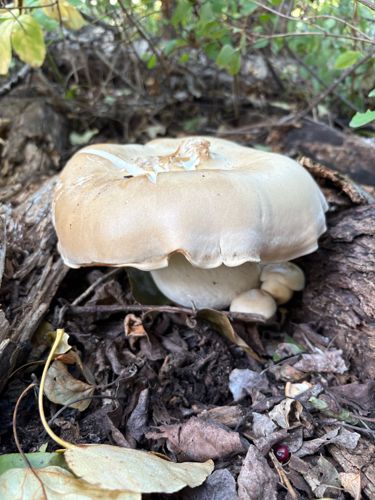
- This mushroom is saprophytic, growing on dead or dying deciduous hardwoods, such as oak, maple, beech, poplar, and aspens. It can also be found on coniferous wood, though less commonly. It grows in shelves or clusters, often overlapping, from the side of logs, stumps, or standing dead trees.
- Key characteristics
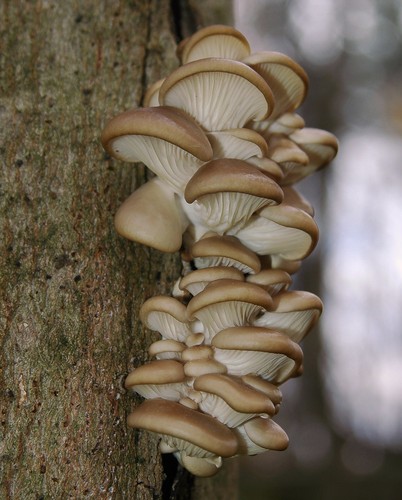
- Oyster mushrooms typically have a cap that is fan-shaped or oyster-shaped, growing from 5 to 25 cm across. The color can vary from white to gray or tan to dark brown, often lighter at the margin. The caps are smooth and have an inrolled margin when young. Gills are decorrent (running down the stem), closely spaced, and white to cream in color. If a stem is present, it is usually very short, stout, and sometimes off-center, or the mushroom may appear stemless, growing directly from the substrate. The flesh is white and firm. Spore print is white to lilac-gray.
- Look-alikes
- Similar species include other Pleurotus species like Pleurotus pulmonarius (Indian Oyster, Phoenix Oyster) which is generally lighter colored and fruits in warmer weather, and Pleurotus populinus (Aspen Oyster), which is found exclusively on aspen trees. Another similar mushroom is Crepidotus species (Sporeless Oyster), but these are typically much smaller and have a brown spore print, though they can also be found on wood. Omphalotus illudens (Jack-o'-lantern mushroom) can be mistaken for oyster mushrooms due to similar clustered growth on wood, but Jack-o'-lanterns have true stems, deeply decurrent gills, and an orange color, with gills that sometimes glow in the dark.
- Ecological role
- Pleurotus ostreatus is a significant decomposer in forest ecosystems. As a saprophyte, it plays a crucial role in breaking down dead wood, particularly lignin, returning nutrients to the soil. This process helps in the recycling of organic matter and contributes to forest health by clearing fallen trees and branches.