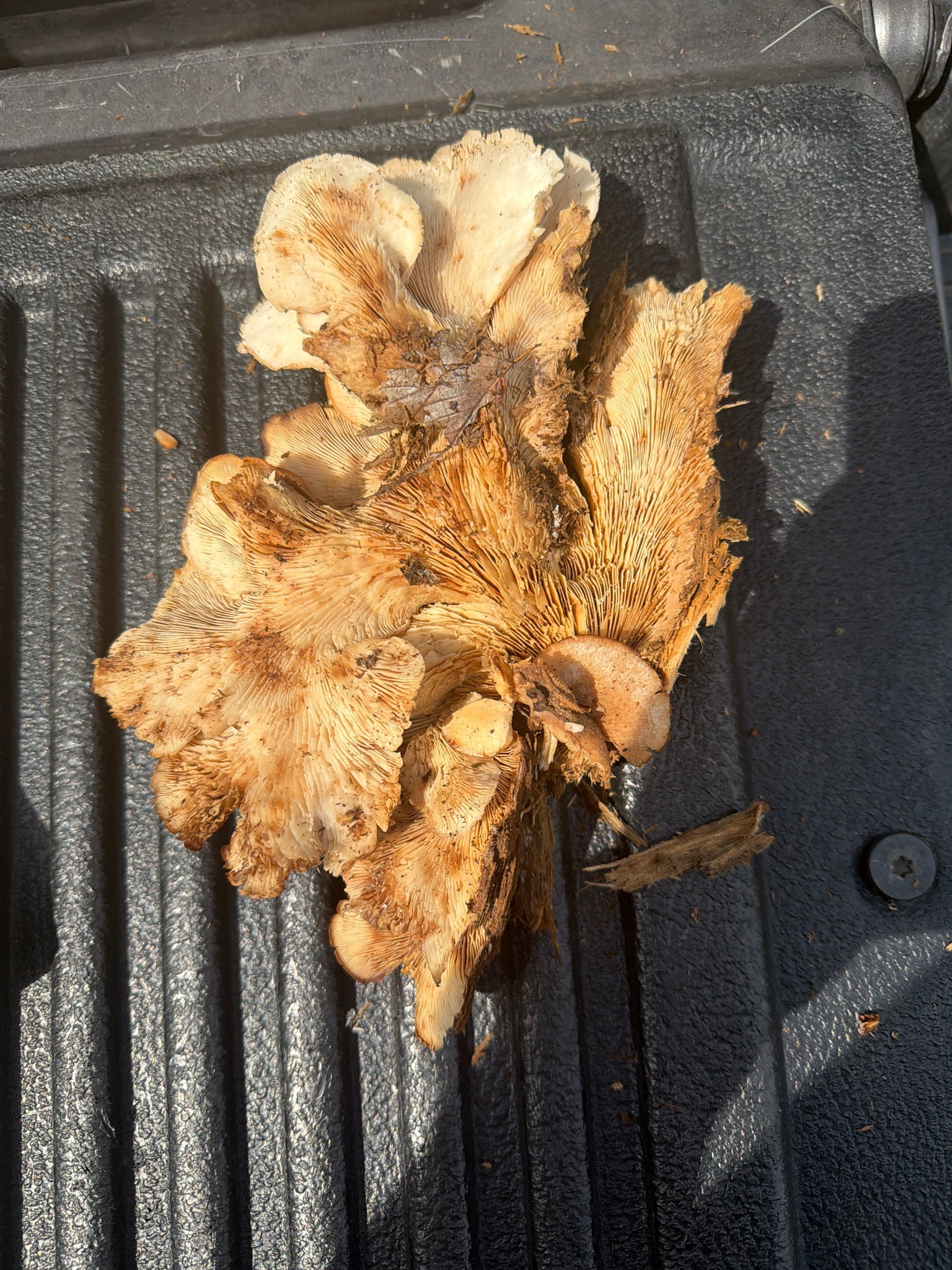
Community find
Oyster Mushroom
Pleurotus ostreatus (or similar species in the Pleurotus genus)
- Group
- gilled mushroom
- Spore print
- White to lilac-gray.
- Size
- Cap diameter 5-25 cm; stipe is typically 1-3 cm long or absent.
- Season
- Primarily spring and autumn, but can fruit during any warm spell in winter.
- Habitat
- Grows in clusters on dead or dying deciduous logs and standing trees, particularly hardwoods like oak, beech, and maple.
- Distribution
- Widespread throughout temperate and subtropical regions of the world.
- Key characteristics
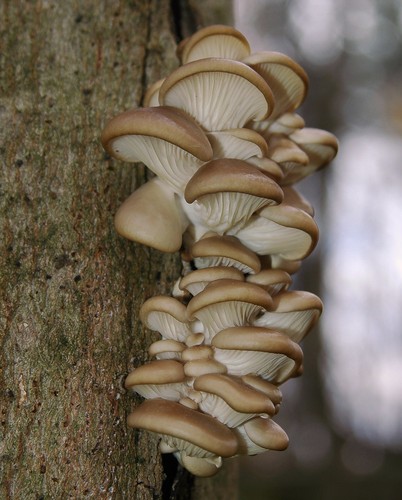
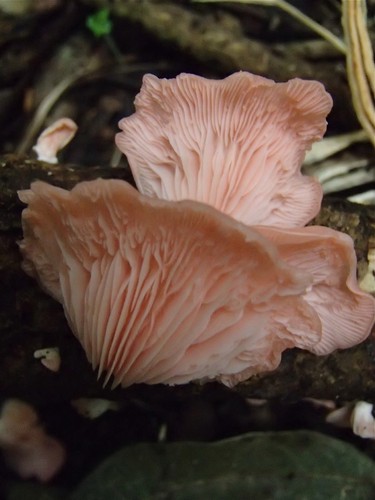
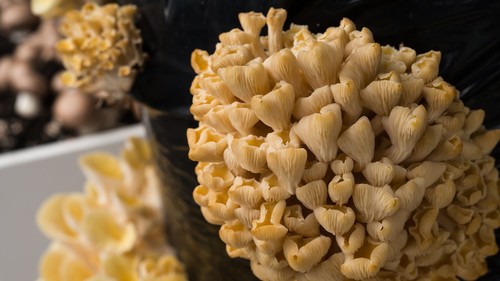
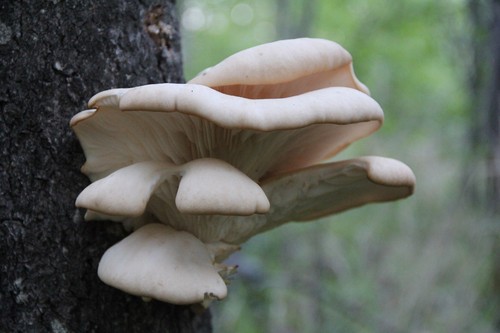
- Fruiting bodies are shelf-like, fan-shaped, or kidney-shaped with decurrent gills that run down the stem when a stem is present. The surface is smooth, often ranging from white to grayish-brown. The gills are broad and tightly packed.
- Fruiting body
- Cap is 5-25 cm broad, fan-shaped, smooth, and convex to flat; gills are white to creamy, decurrent, and closely spaced; stipe is often absent or very short, thick, and lateral to the cap.
- How to recognise it
- Look for the shelf-like growth on wood, decurrent gills, and an anise-like or mushroomy scent. The spore print will be white to slightly lilac.
- Look-alikes
- Pleurotus pulmonarius (smaller, lighter, fruits in summer), Pleurotus populinus (grows on aspen/poplar), and Lentinellus ursinus (which has serrated gill edges and a very bitter taste).
- Ecological role
- Saprophytic (decomposes dead wood) and occasionally a weak parasite on living trees; it is also nematophagous, meaning it can trap and digest microscopic nematodes.
- Notes
- This fungus is one of the few known carnivorous mushrooms; its mycelium can kill and digest nematodes to obtain nitrogen in nutrient-poor wood environments. It is also used in bioremediation due to its ability to break down complex organic pollutants.