Community find
Oyster Mushroom
Pleurotus ostreatus
- Group
- gilled mushroom
- Season
- Oyster mushrooms are typically found from late spring through fall, and sometimes even in mild winters. They often fruit after periods of rain or temperature drops.
- Habitat
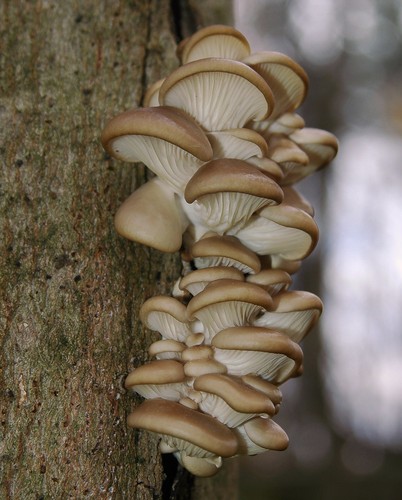
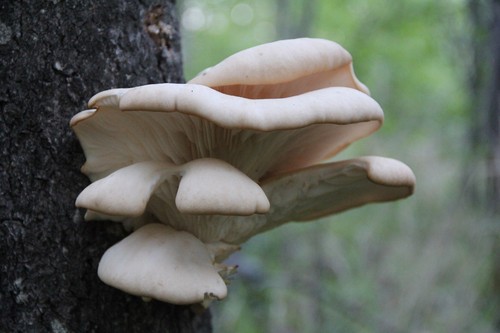
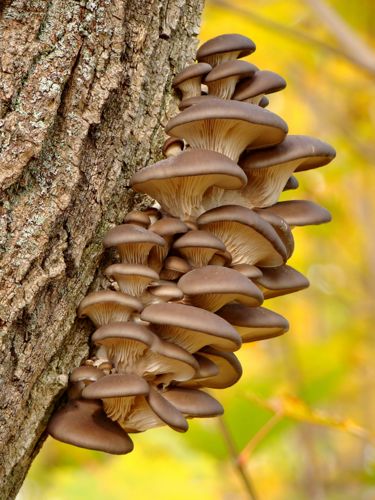
- This mushroom grows in shelves or clusters on dead or dying hardwood trees, such as oak, maple, beech, and poplar, as well as on logs and stumps. It prefers deciduous forests.
- Key characteristics
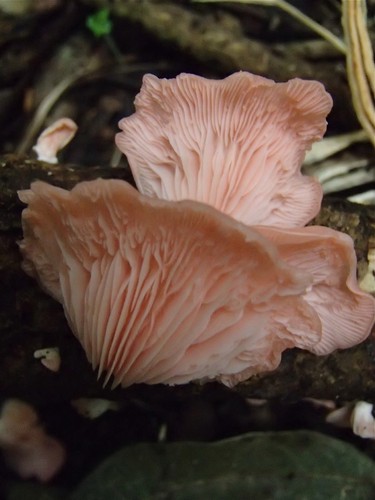
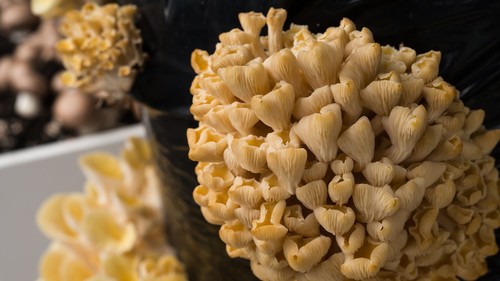
- The Oyster Mushroom typically has a broad, fan-shaped or oyster-shaped cap, ranging from 5-25 cm. The color can vary from white to gray, tan, or brownish, often with a wavy margin. The gills are broad, white to grayish, and decurrent (running down the stem), often branching. There is usually a short, lateral or absent stem. When present, the stem is white or off-white and can be hairy at the base. Spore print is white to lilac-gray.
- Look-alikes
- Similar looking species include the Lentinellus species (which have finely serrated gill edges and are tougher), other Pleurotus species (distinguished by subtle differences in cap color, gill attachment, or spore print), and the Elm Oyster (Hypsizygus ulmarius), which tends to grow higher on trees and has a more central stem and a whiter cap. Crepidotus species are smaller, fan-shaped, and produce a brown spore print, unlike the white-to-lilac-gray spore print of Pleurotus ostreatus.
- Ecological role
- Oyster mushrooms are saprophytic, meaning they obtain nutrients from dead organic matter. They play a crucial role in forest ecosystems as primary decomposers of dead wood, helping to break down lignin and cellulose and recycle nutrients back into the environment. They can also be a weak parasite on stressed or dying trees.