
Fungi encyclopedia
A reference for the fungi you actually find
Each entry describes one species the way you meet it in the field — the cap and its surface, what sits underneath, the stipe and its base, the spore print colour, the substrate it fruits from, and the species most often confused with it.
Showing results for “Red-belted Conk”
Red-belted Conk
Polypores
A tough perennial bracket recognised by a shiny resinous crust banded in red-orange with a cream to white growing edge, and a hard white context. It is among the most abundant decay fungi of conifer logs in northern forests.
Spore print · White
Pine Conk
Polypores
A woody, perennial bracket that forms hard hoof-shaped conks on the trunks of standing conifers, recognised by its cracked brown upper crust and irregular, maze-like yellow-brown pores.
Spore print · Yellowish brown
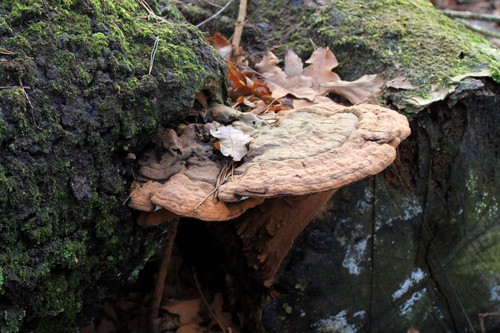
Artist's Conk
Polypores
A large perennial shelf fungus with a hard, lumpy grey-brown crust and a chalk-white pore surface that instantly bruises dark brown where scratched, the feature behind its name.
Spore print · Brown
Tinder Conk
Polypores
An unmistakable hoof-shaped perennial bracket with a hard grey banded crust and a soft brown fibrous interior. It is one of the classic decay fungi of birch and beech across the northern hemisphere.
Spore print · White to pale yellowish
Rosy Conk
Polypores
A small, tough perennial bracket whose dull grey-brown top gives no hint of the striking rose-pink pore surface beneath. Pink flesh running right through the context confirms it.
Spore print · White
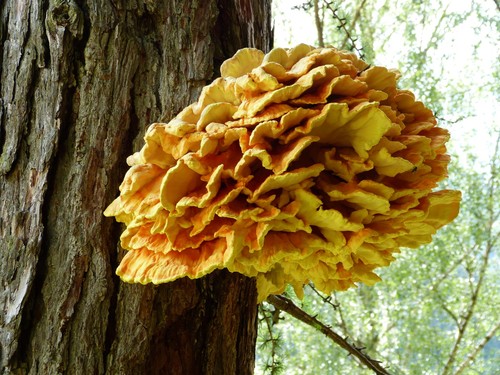
Agarikon
Polypores
A large, chalky white, hoof-shaped to column-like perennial bracket found high on old-growth conifers. Its soft, crumbly white interior and cracked outer surface set it apart from every other large conk.
Spore print · White
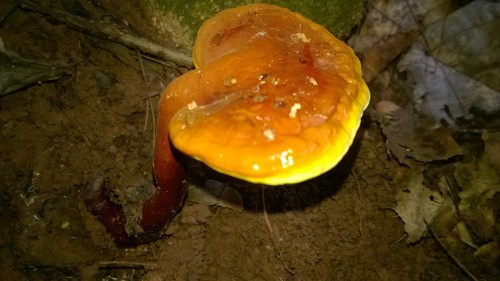
Reishi
Polypores
A hard, kidney-shaped bracket with a strikingly glossy, varnished-looking reddish-mahogany surface, a pale cream pore underside and often a lateral or eccentric stalk.
Spore print · Brown
Weeping Polypore
Polypores
A massive lumpy bracket at the foot of oak trees, unmistakable when young for the beads of amber liquid that stand all over its buff upper surface.
Spore print · Whitish to pale yellow
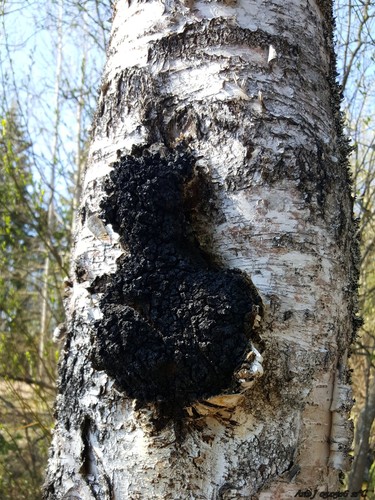
Chaga
Polypores
A black, deeply cracked sterile mass that erupts from living birch trunks like a lump of charcoal, revealing bright rusty-orange interior tissue when broken.
Spore print · Pale brown (from hidden fertile crust)
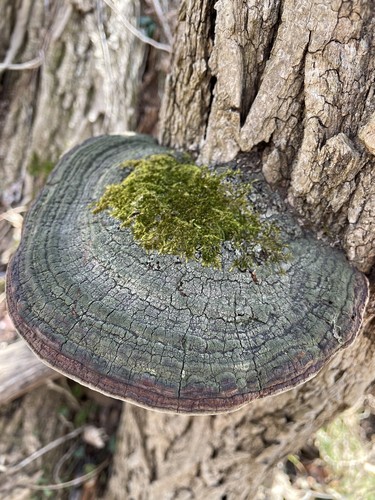
Cracked Cap Polypore
Polypores
A hard perennial conk almost restricted to black locust, its blackened upper crust splitting into deep blocky cracks above a rich rusty brown pore surface.
Spore print · Pale yellowish to whitish
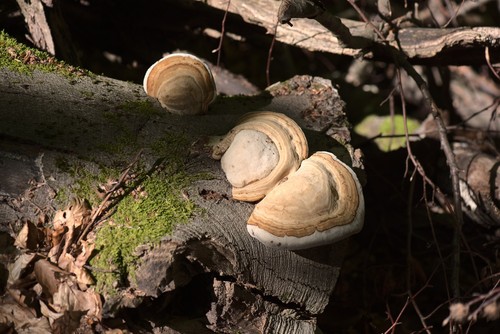
Hoof Fungus
Polypores
A hard, grey, hoof-shaped perennial bracket banded with concentric ridges, growing high on birch and beech trunks and adding a new pore layer each year.
Spore print · White to pale yellowish
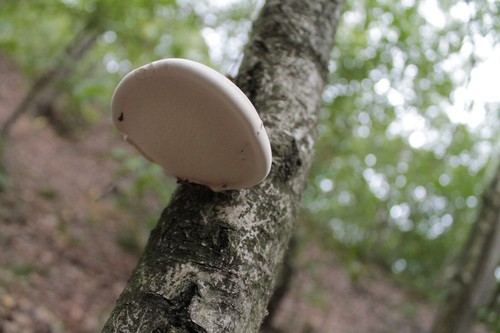
Birch Polypore
Polypores
A smooth, pale, rubbery bracket that grows almost exclusively on birch, recognised by its rounded kidney shape, thick inrolled margin and fine white pore surface.
Spore print · White
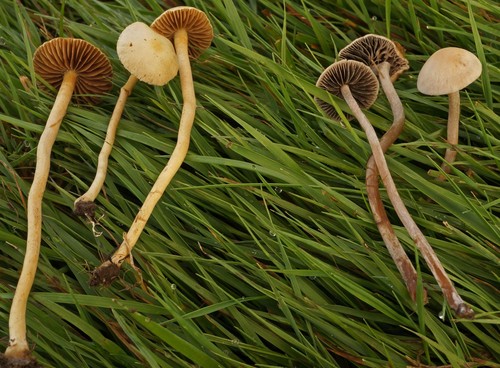
Banded Mottlegill
Gilled
A widespread mottlegill of compost heaps and manured ground, recognised by a hygrophanous reddish-brown cap that dries with a darker band around the margin and a jet-black spore print.
Spore print · Black
Red Banded Webcap
Gilled
A large brick-coloured birch webcap, instantly known by the two to five bright cinnabar-red belts wrapped around its stout club-shaped stipe.
Spore print · Rusty brown