
Fungi encyclopedia
A reference for the fungi you actually find
Each entry describes one species the way you meet it in the field — the cap and its surface, what sits underneath, the stipe and its base, the spore print colour, the substrate it fruits from, and the species most often confused with it.
Showing results for “Honey Fungus / Honey Mushroom”
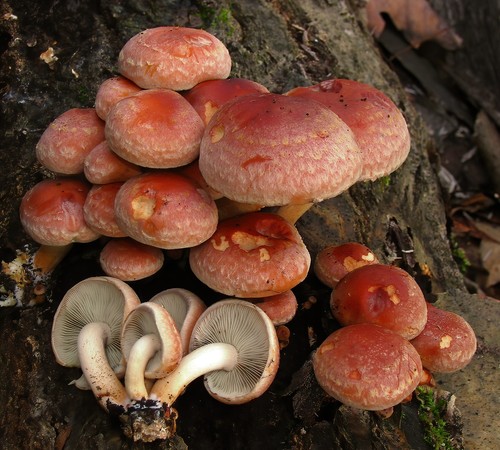
Brick Cap
Gilled
A clustering wood-rotting fungus with a brick-red cap fading to buff at the rim, pale gills that age to greyish purple-brown, and a rusty-based stem with only a faint fibrous ring zone.
Spore print · Purple-brown
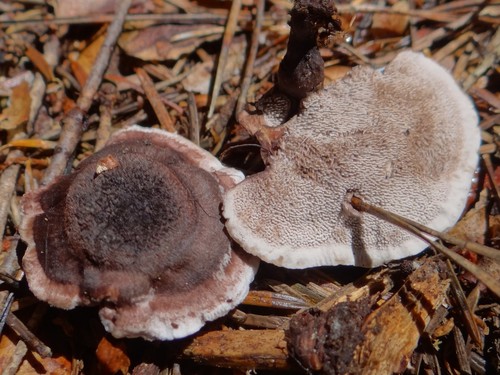
Woolly Tooth
Toothed
A thin, leathery toothed fungus forming zoned cinnamon funnels that fuse into rosettes across mossy conifer floors. Its white spore print separates it from the similar brown-spored Hydnellum species.
Spore print · White
Ash Dieback
Cups & Discs
A minute white cup fungus that fruits in summer on the blackened leaf stalks of ash lying in the litter. Its asexual stage produces diamond-shaped bark lesions and crown dieback on living ash trees.
Spore print · White
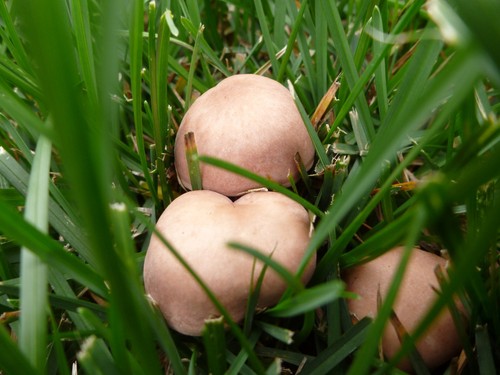
Pink Domecap
Gilled
A small grassland fungus with a neat rose-pink dome-shaped cap and matching pink stipe, contrasting sharply with crowded white gills. The white spore print separates it from the pink-spored grassland species.
Spore print · White
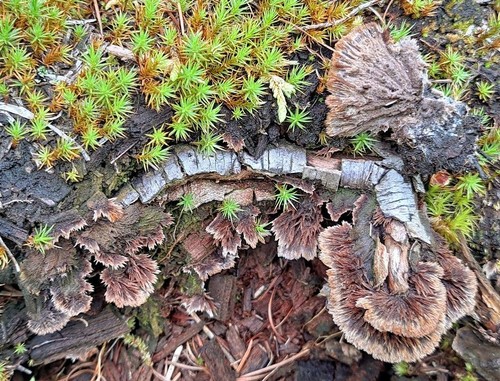
Earthfan
Other Fungi
A tough, fibrous fungus forming overlapping rust- to chocolate-brown fans and rosettes on sandy ground, with a pale fringed edge and a warty, purplish-brown underside. It is a familiar sight around young pines on heathland and in nurseries.
Spore print · Purple-brown
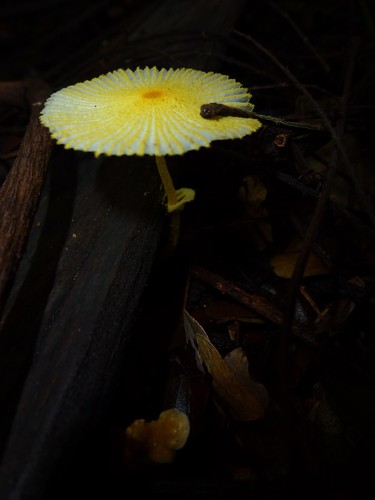
Fragile Dapperling
Gilled
Perhaps the most insubstantial gilled mushroom in the field guide: a wafer-thin, deeply pleated yellowish-green cap stretched over its gills like a parasol skin, on a stem no thicker than a wire. It collapses to a smear within hours of opening.
Spore print · White
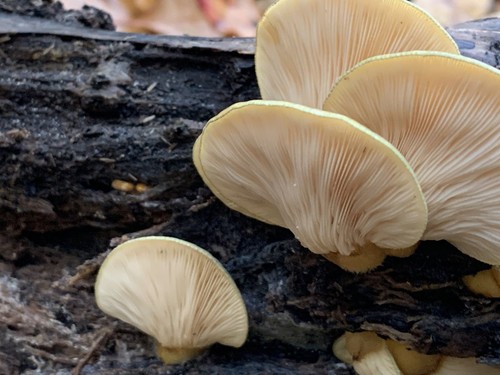
Late Fall Oyster
Gilled
A cold-weather bracket with an olive to yellow-green tacky cap, crowded orange-yellow gills and a short stubby lateral stipe, fruiting on hardwood logs after most other mushrooms have finished.
Spore print · White to pale yellowish
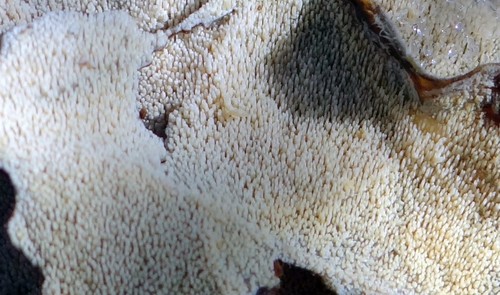
Tear Dropper
Crusts
A thin, closely attached crust fungus on dead conifer wood whose cream to pale ochre surface is roughened with fine spines and often beaded with clear droplets when fresh. It is one of the small resupinate fungi easiest to name by that weeping habit.
Spore print · White
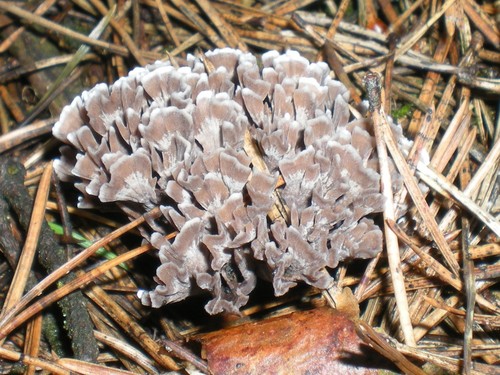
Stinking Earthfan
Corals & Clubs
An upright, tough, coral-like fungus with purple- to blackish-brown branches ending in flattened, whitish, fan-shaped tips, growing from soil in conifer woodland. Its strong, penetrating odour usually announces it before it is seen.
Spore print · Purple-brown
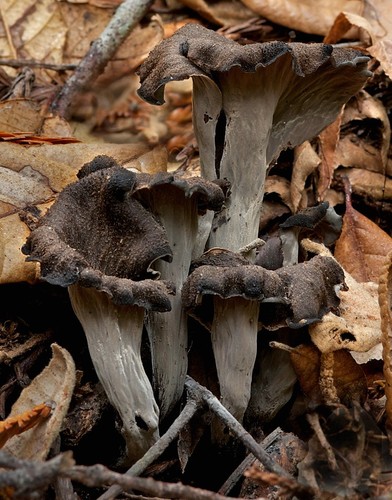
Black Trumpet
Other Fungi
A thin, hollow, vase-shaped fungus in dark grey to almost black, with a smooth or faintly wrinkled outer fertile surface and no true gills. It grows in dense troops in deep leaf litter, where its colouring makes it remarkably hard to see.
Spore print · White to pale cream
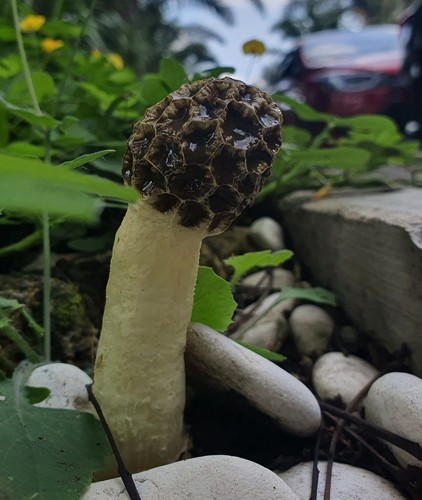
Dune Stinkhorn
Stinkhorns
A stinkhorn of sand dunes and light soils, rising from a distinctly violet to pinkish-lilac egg on pink cords. The white stalk carries a pitted, honeycombed head coated in olive spore slime.
Spore print · Olive-brown (spores in the slimy gleba)
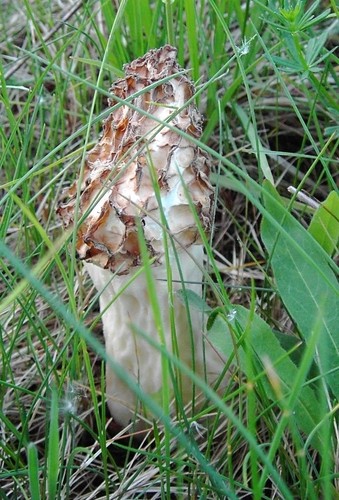
Thick-footed Morel
Morels & Allies
The traditional name for the largest yellow morels, distinguished by a swollen, deeply furrowed and chambered stalk base beneath a broad ochre honeycomb cap. Specimens can exceed 25 cm in height.
Spore print · Cream to pale yellow
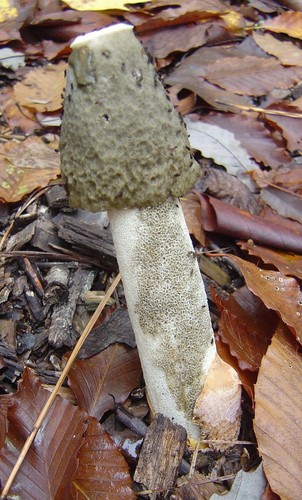
Ravenel's Stinkhorn
Stinkhorns
A North American stinkhorn with a nearly smooth, granular head rather than the honeycombed network of its relatives, rising from a pinkish-purple egg on sawdust and wood chips.
Spore print · Olive-brown (spores in the slimy gleba)
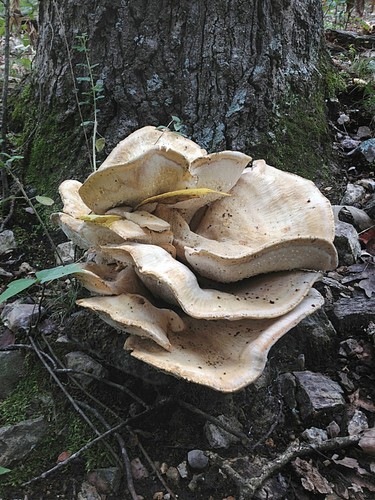
Berkeley's Polypore
Polypores
One of the largest fungi of eastern North American forests, forming a massive rosette of thick cream to tan fans with coarse angular pores at the base of oaks.
Spore print · White
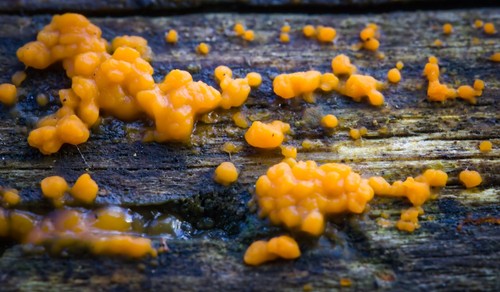
Common Jellyspot
Jellies
Minute orange-yellow jelly blobs scattered in numbers over damp dead wood and old fence posts, among the most frequently encountered of all small fungi.
Spore print · Whitish to pale yellow
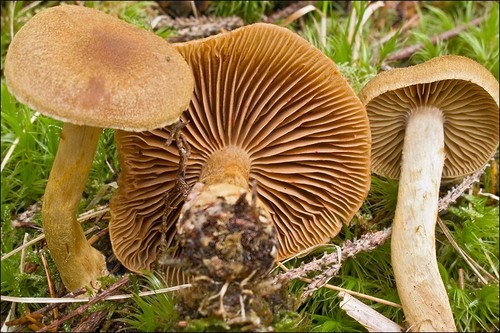
Green Skinhead
Gilled
An unusual olive-green webcap with a dry, finely felted cap, green gills that rust with age and greenish-yellow flesh. Green is rare among gilled fungi, making it easy to spot.
Spore print · Rusty brown
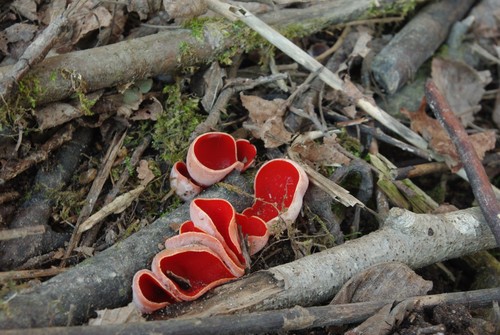
Scarlet Elf Cup
Cups & Discs
A vivid scarlet cup 1-5 cm across, lined with intense red on the inside and whitish and felty on the outside, growing on damp mossy hardwood sticks. It is one of the earliest and most colourful fungi of the year.
Spore print · White
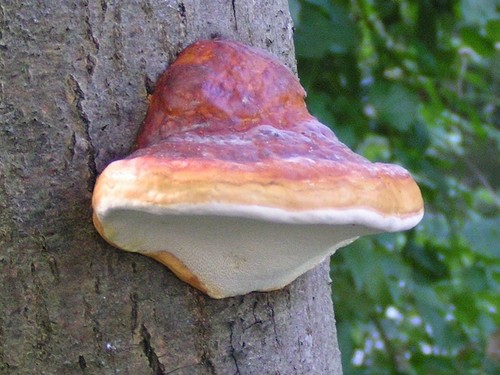
Red-belted Conk
Polypores
A tough perennial bracket recognised by a shiny resinous crust banded in red-orange with a cream to white growing edge, and a hard white context. It is among the most abundant decay fungi of conifer logs in northern forests.
Spore print · White
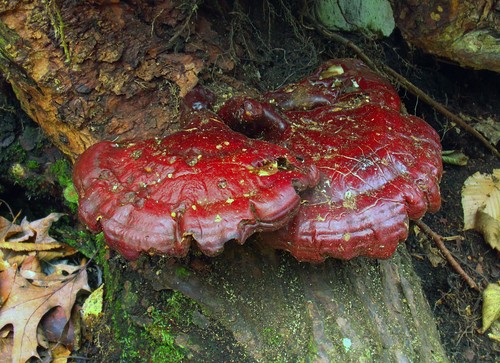
Hemlock Varnish Shelf
Polypores
A shiny, varnish-coated bracket with a mahogany-red upper surface and creamy white pore layer, fruiting almost exclusively on dead eastern hemlock. Its lacquered finish and conifer substrate make it one of the most recognisable shelf fungi of northern forests.
Spore print · Brown
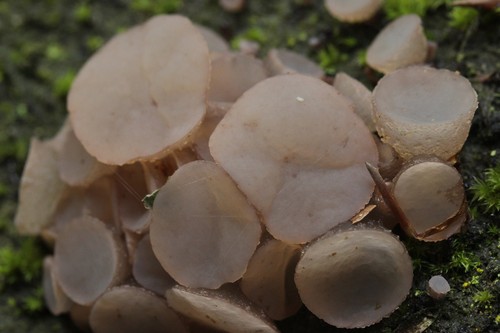
Beech Jellydisc
Jellies
Translucent, gelatinous pinkish-buff discs crowded together on fallen beech wood, often forming knobbly cushions. The soft rubbery texture and pale lilac tint distinguish it from darker jelly fungi.
Spore print · White
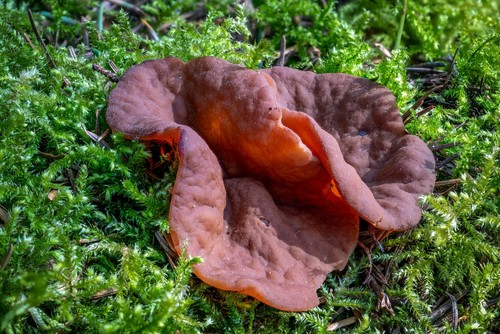
Pig's Ears
Cups & Discs
A large reddish-brown ascomycete that begins as a deep cup and flattens into a wrinkled, ear-like saucer on decaying conifer wood. Its short ribbed stub of a stalk and pale, scurfy underside separate it from the true cup fungi.
Spore print · White to pale cream