
Fungi encyclopedia
A reference for the fungi you actually find
Each entry describes one species the way you meet it in the field — the cap and its surface, what sits underneath, the stipe and its base, the spore print colour, the substrate it fruits from, and the species most often confused with it.
Showing results for “Not a mushroom/fungus”
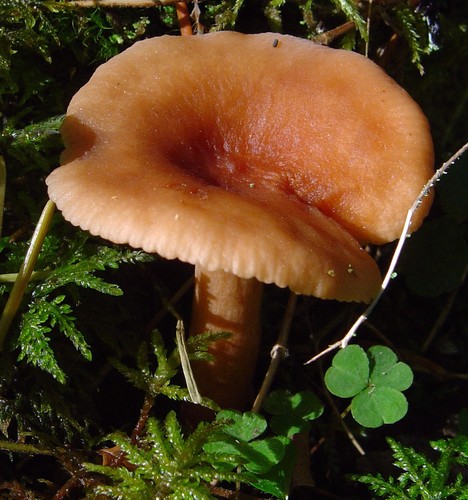
Birch Milkcap
Gilled
A small tawny orange-brown birch associate with a matt, slightly wrinkled cap and a small pointed umbo. Its scanty white latex slowly turns yellow when smeared on a white tissue.
Spore print · Pale cream
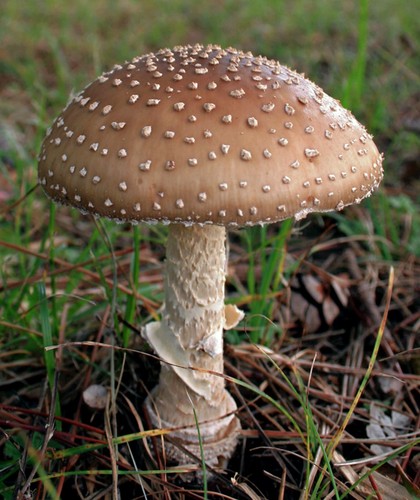
Panther Cap
Gilled
A brown-capped Amanita speckled with small pure-white warts, with a strongly grooved cap margin, white unchanging flesh, and a stem base finished with an abrupt collar-like rim.
Spore print · White
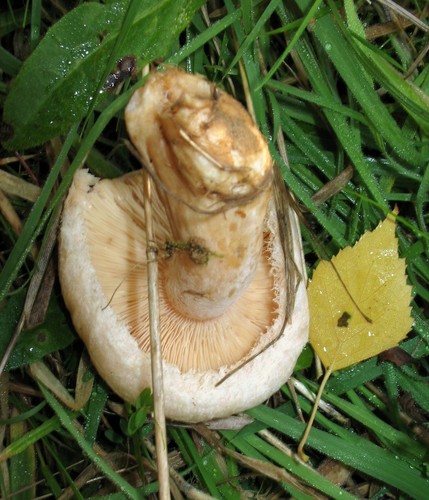
Bearded Milkcap
Gilled
A small pale milkcap of sandy birch ground, recognised by its almost unzoned whitish-pink cap, finely downy inrolled margin and unchanging white latex.
Spore print · Cream
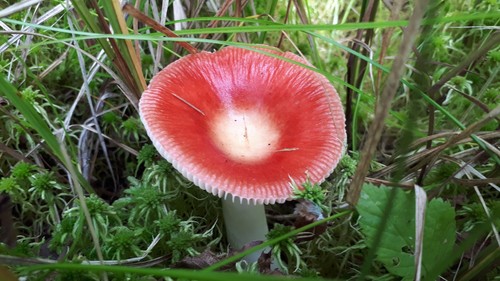
The Sickener
Gilled
A vivid scarlet brittlegill of damp conifer woodland and sphagnum, with a shiny cap whose skin peels almost to the centre, pure white gills, a white chalky stem and a white spore print.
Spore print · White
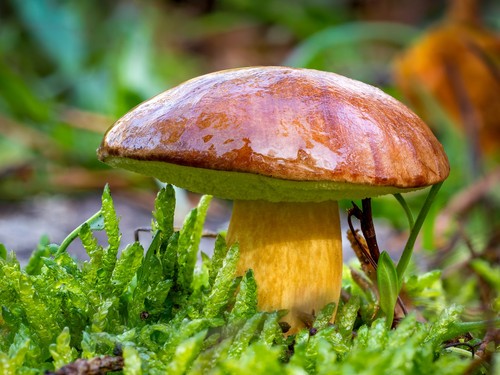
Bay Bolete
Boletes
A rich bay-brown bolete whose lemon-yellow pores flush blue-green within seconds of being touched. The stipe is brown-streaked and lacks the raised netting of the King Bolete.
Spore print · Olive-brown
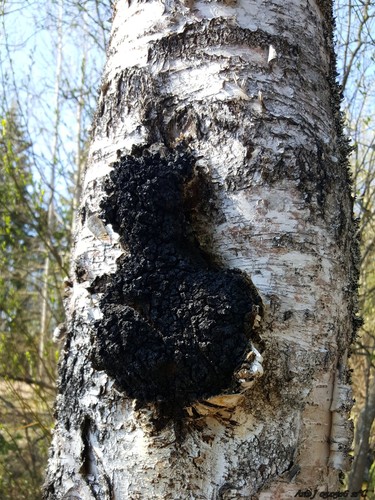
Chaga
Polypores
A black, deeply cracked sterile mass that erupts from living birch trunks like a lump of charcoal, revealing bright rusty-orange interior tissue when broken.
Spore print · Pale brown (from hidden fertile crust)
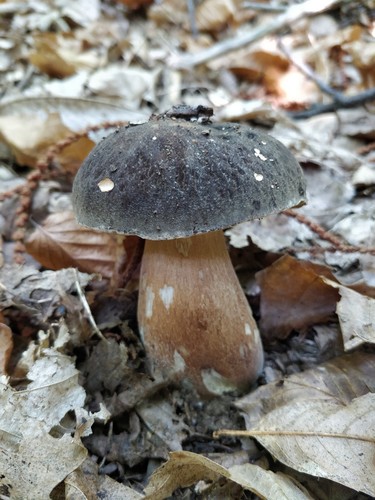
Bronze Bolete
Boletes
The darkest member of the porcini group, with a sooty bronze to almost black velvety cap over a brown stipe finely netted in pale lines. Flesh white and unchanging.
Spore print · Olive-brown
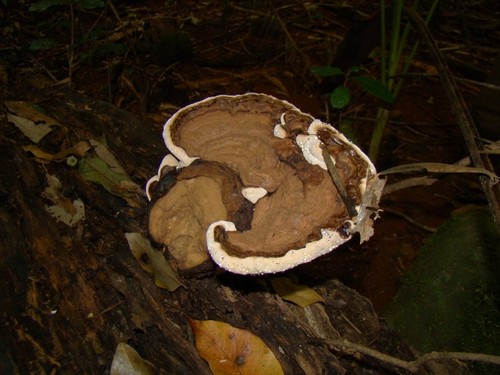
Southern Bracket
Polypores
A heavy, perennial bracket with a thick, hard, dull brown crust and a white pore surface that bruises brown at a touch. Clouds of cocoa-brown spores often dust the bracket and everything below it in late summer.
Spore print · Cocoa brown
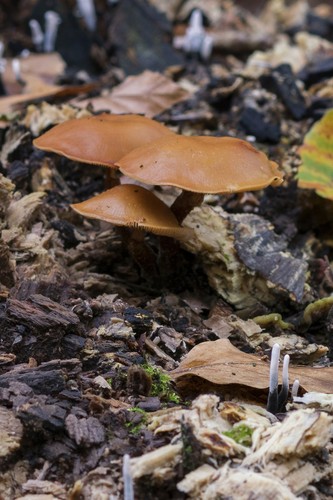
Galerina marginata
Gilled
A small, ringed, tawny-brown wood-rotting agaric with a strongly hygrophanous cap and a rusty spore print, fruiting in troops on decaying logs and mossy stumps.
Spore print · Rust-brown
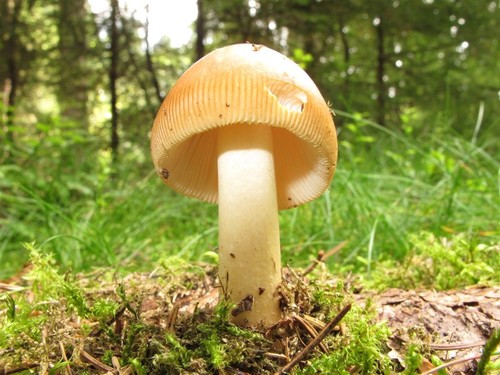
Orange Grisette
Gilled
A tall ringless Amanita with a glowing apricot-orange cap, free white gills and a stem banded with orange-cream chevrons above a large white membranous sac.
Spore print · White
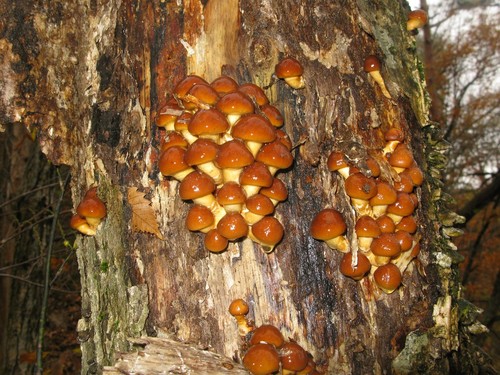
Nameko
Gilled
A small amber-brown East Asian Pholiota famous for the thick clear gelatinous layer coating its cap, growing in clusters on dead hardwood and widely grown on inoculated logs.
Spore print · Rusty brown
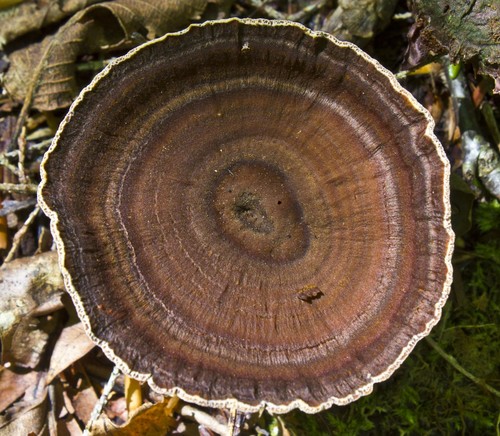
Tiger's Eye
Polypores
A small, thin, leathery funnel-shaped polypore on a slender central stalk, its cap silky and banded in concentric rings of rust, ochre and grey-brown with a brown pore surface underneath.
Spore print · Yellowish brown
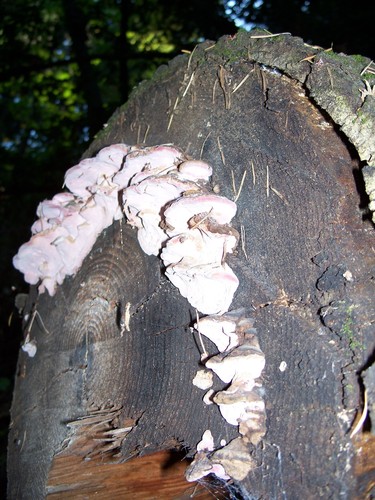
Rosy Conk
Polypores
A small, tough perennial bracket whose dull grey-brown top gives no hint of the striking rose-pink pore surface beneath. Pink flesh running right through the context confirms it.
Spore print · White
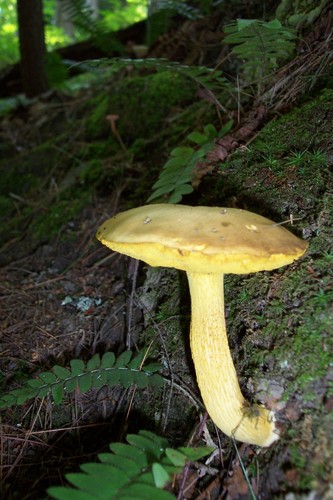
Ornate-stalked Bolete
Boletes
A firm woodland bolete recognised by its brilliant chrome-yellow stipe covered in a raised network of ridges. Grey to olive caps sit above yellow pores that darken when handled.
Spore print · Olive-brown
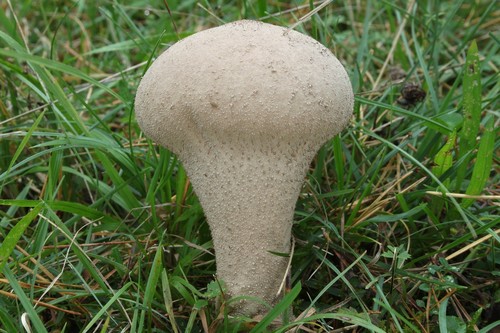
Pestle Puffball
Puffballs
A tall club- or pestle-shaped puffball with a rounded fertile head raised on a long thick sterile stalk. The head wall breaks away completely at maturity, leaving the stalk standing in the litter.
Spore print · Olive-brown spore mass
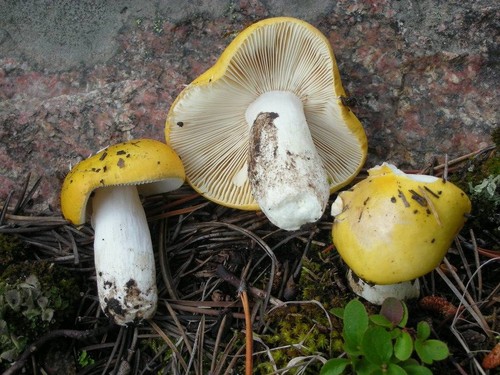
Yellow Swamp Brittlegill
Gilled
A striking pure chrome-yellow brittlegill of boggy birch woods, identified by its bright unfaded cap and by flesh that turns grey and eventually black where cut or bruised.
Spore print · Pale ochre
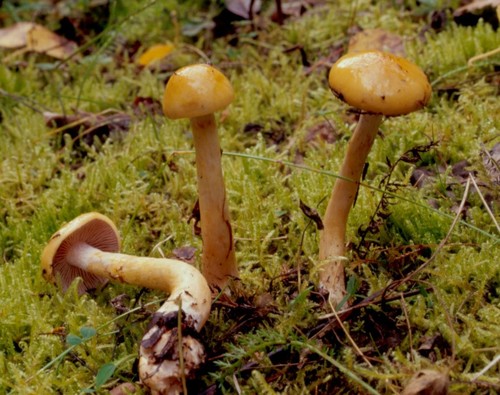
Yellow Webcap
Gilled
A slimy-capped webcap in warm ochre-yellow, distinguished by pale bluish-violet young gills and a bluish stem apex above a glutinous, banded stem. Common with birch on damp acid soils.
Spore print · Rusty brown
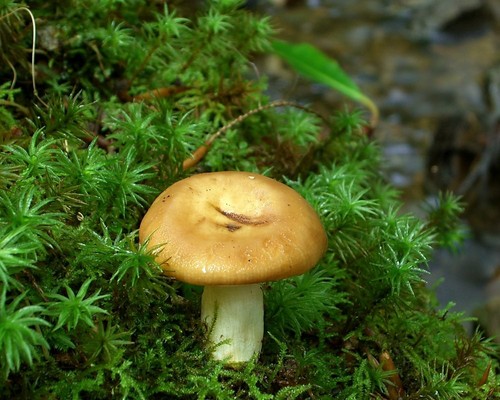
Sepia Brittlegill
Gilled
A dull sepia-brown brittlegill of grassy parkland and path edges, recognised by its strongly ridged cap margin and strong unpleasant odour. It is typically found under oak and lime.
Spore print · Cream
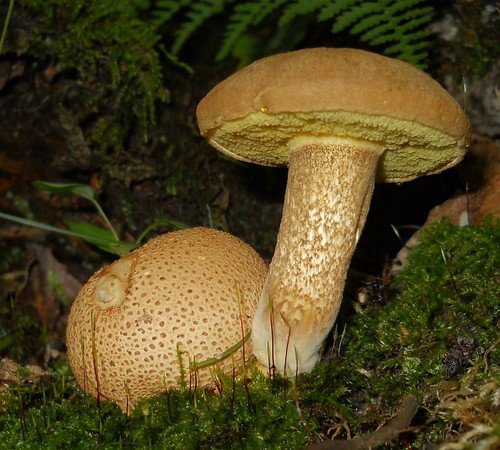
Parasitic Bolete
Boletes
A small olive-yellow bolete that grows nowhere except attached to the base of a common earthball, usually with several fruitbodies clustered around a single host.
Spore print · Olive-brown
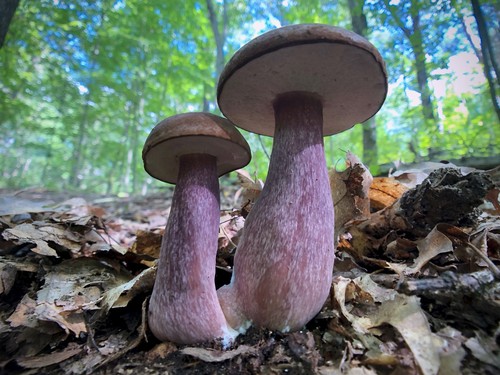
Violet-gray Bolete
Boletes
A handsome bolete with a deep violet-purple cap and matching stipe, white pores that age pink, and unchanging white flesh. A common oak associate in eastern North America.
Spore print · Pinkish-brown
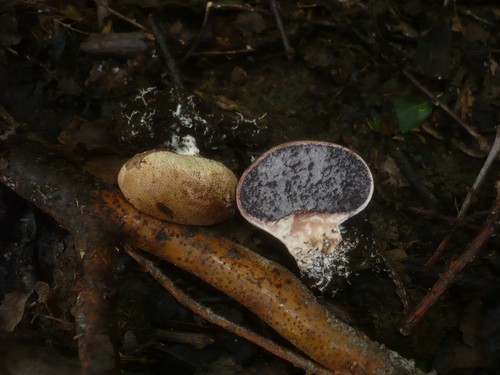
Scaly Earthball
Puffballs
A tan to ochre earthball whose thin, finely scaly skin sits on an unusually long, furrowed rooting stalk. The interior ripens from white to a dusty blackish-brown spore mass.
Spore print · Blackish brown (spore mass)
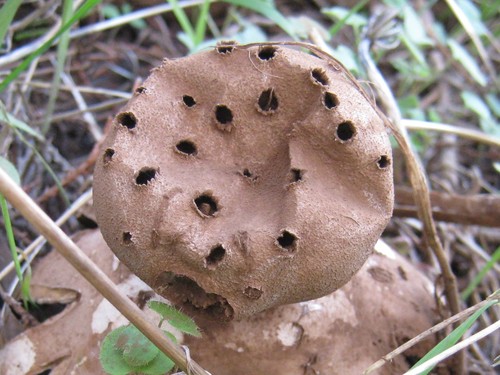
Pepperpot Earthstar
Puffballs
The only earthstar with a spore sac perforated by many mouths and propped on a cluster of little columns, like a pepper pot on legs. A scarce, unmistakable species of dry sandy ground.
Spore print · Brown
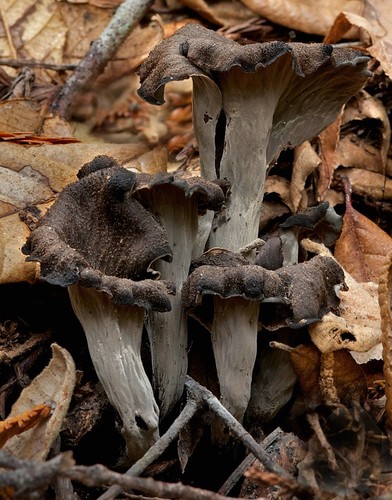
Horn of Plenty
Other Fungi
A thin-fleshed, hollow, grey-black trumpet that grows in dense troops among leaf litter. Its funnel shape, near-smooth outer surface and lack of any true gills make it distinctive.
Spore print · White to pale cream
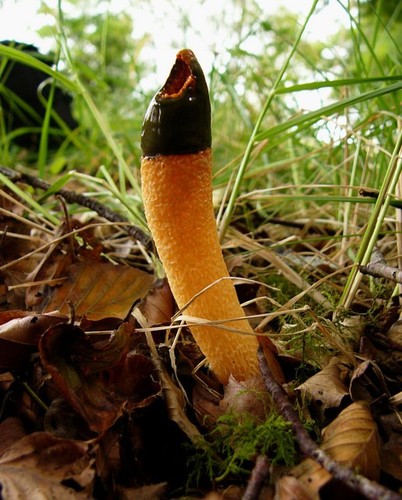
Dog Stinkhorn
Stinkhorns
A slim, delicate stinkhorn whose tapering pale stalk ends in an orange tip smeared with dark spore slime. It has no separate cap, which distinguishes it from the larger Phallus species.
Spore print · Olive-brown (spores in the slimy gleba)